From Mountain to Jar: The Complete Journey of Authentic ACTIZEET® Shilajit
Every jar of ACTIZEET® Shilajit carries a journey behind it that most buyers never get to see, one that starts on an exposed rock face at extreme altitude and ends only after careful purification and lab verification. Here is that full journey, step by step, and why each stage matters for the resin you actually receive.
Shilajit has a way of sounding almost mythical in marketing copy, "ancient mountain resin," "rock sweat of the Himalayas," and so on. The actual story is less mystical and more interesting, a genuinely demanding journey involving high altitude collection, careful purification, and lab testing before a single gram reaches a customer. Understanding this journey is also the best way to judge whether a specific jar of shilajit is worth trusting.
Most buyers never see any of this. A finished jar on a shelf gives no visual indication of whether the resin inside travelled through a genuine, carefully controlled process, or a shortcut version designed to look similar while skipping the steps that actually matter for safety and potency. The only real way to close that gap is to understand what the full journey is supposed to look like, so you know what questions to ask before you buy, and what answers should actually satisfy you.
This post follows that journey from start to finish, using ACTIZEET® Shilajit as the specific example, so you can see exactly what genuine shilajit sourcing looks like in practice, not just in theory.
Step 1: High Altitude Himalayan Origin
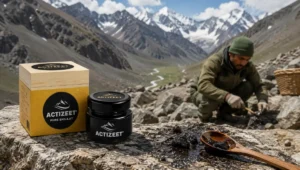
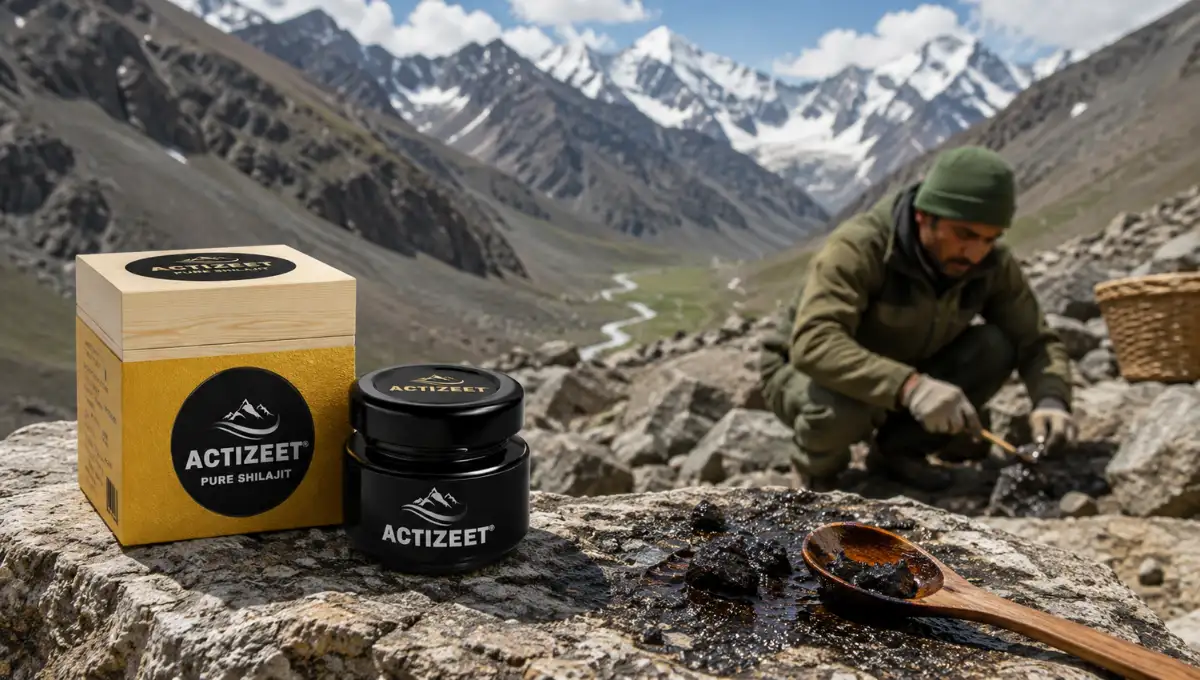
The journey begins on exposed rock faces high in the Himalayan range, typically between 16,000 and 18,000 feet, where centuries of trapped plant material and mineral rich rock slowly transform into the dark, resin like substance we know as shilajit. This altitude is not a marketing detail. It reflects the specific combination of pressure, temperature cycling and mineral exposure needed for genuine shilajit to form at all.
Geologically, this formation process is a slow one, involving plant material, mostly mosses, lichens and other organic matter, becoming trapped between layers of sedimentary rock over long stretches of time. Seasonal temperature shifts and specific microbial activity gradually transform this material into a dense, mineral rich exudate. This is why shilajit is often described as sitting somewhere between a botanical and a mineral substance, and why the exact rock strata a deposit forms within genuinely affects the quality of what eventually seeps out. No two deposits are entirely identical, which is part of why sourcing from a consistent, well understood region matters so much for delivering a reliable product batch after batch.
Why Region Matters More Than the Word "Himalayan"
Not every mountain range, and not every altitude within the Himalayas, produces resin of comparable quality. This is why ACTIZEET® sourcing focuses specifically on verified high altitude belts rather than relying on the word "Himalayan" alone, since that word by itself says very little about the actual quality of a specific batch. A supplier able to speak specifically about which region and altitude a batch came from is offering considerably more useful information than one relying on the word Himalayan as a stand alone quality claim.
Step 2: Seasonal Collection by Hand
Shilajit collection remains a largely manual, seasonal activity. During the warmer summer months, when temperatures rise enough to soften the resin, local collectors carefully scrape the exudate from rock crevices, a slow, physically demanding process that naturally limits how much raw material can be gathered each year. This work often takes place at genuinely difficult altitude, requiring collectors to travel to and work in terrain that is neither easy nor particularly safe, which is part of why fair treatment and compensation of these collectors matters as a genuine sourcing consideration, not just an ethical afterthought.
Why This Limits Supply, and Why That Is a Good Sign
Because collection depends on this narrow seasonal window and cannot be industrialized without damaging the source, genuine Himalayan shilajit is naturally supply limited. A brand offering seemingly unlimited, consistently available shilajit at a very low price is often a sign that something in the sourcing story does not add up, whether that means diluted material, a lower quality substitute, or a supply chain that has quietly cut corners somewhere between the mountain and the bottle. Treat abundant, cheap availability as a question mark rather than a convenience, especially for an ingredient that is inherently difficult and slow to collect in the first place.
See this exact sourcing journey reflected in the finished product.
Shop ACTIZEET® Shilajit ResinStep 3: Why Raw Shilajit Cannot Be Sold As Is
Raw shilajit, straight off the mountain, typically contains soil, plant debris, fungal growth, and in many cases meaningful heavy metal content absorbed from the surrounding rock. This is not a flaw specific to any one source. It is simply the nature of an unprocessed geological exudate, and it is exactly why purification is not optional. Classical Ayurvedic pharmacology recognised this centuries ago, which is why every traditional reference to shilajit as a therapeutic substance assumes a purification step has already taken place, never raw material used directly. Any brand marketing "raw" or "unprocessed" shilajit as somehow more pure or natural is working against, not with, this long standing traditional understanding.
A pharmacognosy study on Shilajit extracts confirmed significant fulvic acid content in properly processed resin, a compound researchers have linked to much of Shilajit's traditional bioactivity, underscoring why the purification stage matters so much for preserving these compounds rather than simply removing visible debris.
Step 4: The Purification Journey
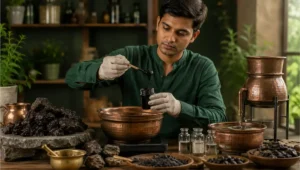
This is where raw resin becomes something safe and genuinely usable. ACTIZEET® follows a purification approach rooted in the classical Ayurvedic Shodhana method, refined with modern process controls to protect heat sensitive compounds along the way. Each stage below builds on the one before it, and skipping any single stage would leave a meaningfully less pure, less consistent finished resin.
Visible impurities, stones, plant matter and discoloured material, are removed by hand before any further processing begins. This early sorting step is simple but essential, since it prevents obviously unsuitable material from ever entering the more delicate purification stages that follow.
The raw resin is dissolved in clean water, allowing water soluble beneficial compounds to separate from insoluble rock particles and debris, then filtered repeatedly to clarify the solution. Multiple filtration passes are often needed before the liquid reaches the clarity required for the next stage.
The filtered liquid is slowly concentrated back into a semi solid resin using controlled, low temperature methods designed specifically to avoid degrading fulvic acid and other heat sensitive compounds. This stage takes considerably longer than a high heat evaporation method would, but it preserves far more of the resin's original potency.
The purified resin is inspected for texture, colour and dissolution behaviour, confirming it matches the expected profile of genuine, well purified shilajit before it moves to testing. Any batch that does not meet this internal check moves back for further processing rather than continuing forward.
Step 5: Lab Testing and Verification
Purification alone does not guarantee a safe finished product. This is why batch specific lab testing sits at the center of the ACTIZEET® process, not as an afterthought, but as the stage that actually confirms what a specific jar contains. Even a carefully purified batch can vary from the last one, since raw material itself varies by season and collection site, which is exactly why every batch is tested individually rather than relying on results from a previous batch.
What Gets Tested
- Fulvic acid content, confirming the resin's key carrier compound is present at a meaningful concentration.
- Heavy metal screening for lead, arsenic, cadmium and mercury against recognised safety limits.
- Microbial testing to rule out yeast, mould and pathogenic contamination.
- Moisture and total ash content, confirming the resin was properly concentrated and free of excess mineral residue.
A systematic review of preclinical Shilajit research described the substance as rich in humic substances, fulvic and humic acids, minerals and trace elements, while specifically cautioning that much of the existing evidence remains preclinical, a reminder that quality sourcing and testing matter more than any single marketing claim about benefits.
Why Independent Testing Matters
Wherever possible, this testing is conducted through independent, accredited laboratories rather than relying only on in house assessment, since a brand testing its own product internally, without external verification, carries an inherent conflict of interest worth being aware of as a buyer. A Certificate of Analysis from an outside laboratory, referencing a specific batch number, is one of the clearest pieces of documentation a buyer can actually verify, rather than simply trusting a general "lab tested" claim printed on the label.
Step 6: From Purified Resin to Your Jar
Once a batch passes testing, it is packaged into dark, airtight containers specifically chosen to protect the resin from light and moisture, both of which can gradually degrade its potency over time. This final packaging step is easy to overlook, but it directly affects how well the resin holds its quality between the day it is bottled and the day you actually use it. A clear glass or plastic jar might look attractive on a shelf, but it offers considerably less protection than dark, properly sealed packaging, regardless of how good the resin inside happened to be on the day it was bottled.
Independent research summarised by a supplement research database notes that Shilajit studies typically use material standardised to a defined fulvic acid percentage, illustrating why batch specific standardisation and protective packaging matter for delivering a consistent product, not just a resin that looked acceptable on the day it left the purification stage.
Why This Journey Actually Matters to You
Every stage described above exists to answer one practical question: does this specific jar of shilajit genuinely contain what it claims, safely and consistently. Skipping any single stage, rushed collection, incomplete purification, no independent testing, weakens that answer considerably, regardless of how convincing the packaging or marketing looks.
This is also the simplest way to evaluate any shilajit brand, including ACTIZEET®. Ask where it comes from, how it was purified, and whether batch specific lab documentation is available. A brand willing to walk you through this journey in specific detail, rather than vague reassurance, is one worth trusting. If a brand cannot answer these basic questions about its own sourcing, that gap is worth treating as seriously as any single red flag covered elsewhere in shilajit buying guides.
Protecting the Journey After It Reaches You
The care that goes into sourcing and purifying shilajit does not stop mattering once it reaches your home. Keeping the jar tightly sealed, stored away from direct sunlight and excess heat, and using a clean, dry spoon each time you take a dose all help preserve the potency this entire journey worked to protect. A few careless months of poor storage can undo some of what months of careful sourcing and purification achieved, which is worth remembering the next time you leave a jar sitting open on a sunny kitchen counter rather than tucked away in a cool, dark cupboard.
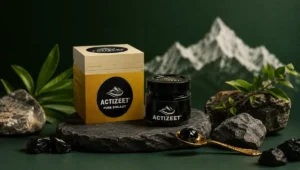
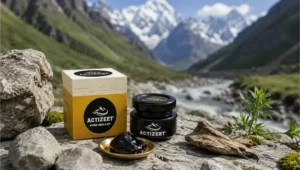
ACTIZEET® Shilajit Resin is sourced from verified high altitude Himalayan terrain and carried through exactly the purification and testing journey described in this post, so the resin in your jar reflects the full care that went into getting it there.
Shop ACTIZEET® Shilajit Resin →Frequently Asked Questions
A Journey Worth Knowing Before You Buy
Genuine shilajit is not simply scraped off a rock and bottled. It travels through altitude, season, careful purification and lab verification before it ever reaches a jar, and each stage exists specifically to protect both its safety and its potency.
Knowing this journey turns shilajit shopping from a guessing game based on packaging into an informed decision based on a few specific, checkable questions, where it comes from, how it was purified, and whether batch testing is genuinely available. Those three questions cover most of what actually separates a trustworthy jar from an imitation.
ACTIZEET® Shilajit Resin is built around this full journey, so you can bring it into your routine with real confidence in where it came from and how it was made.