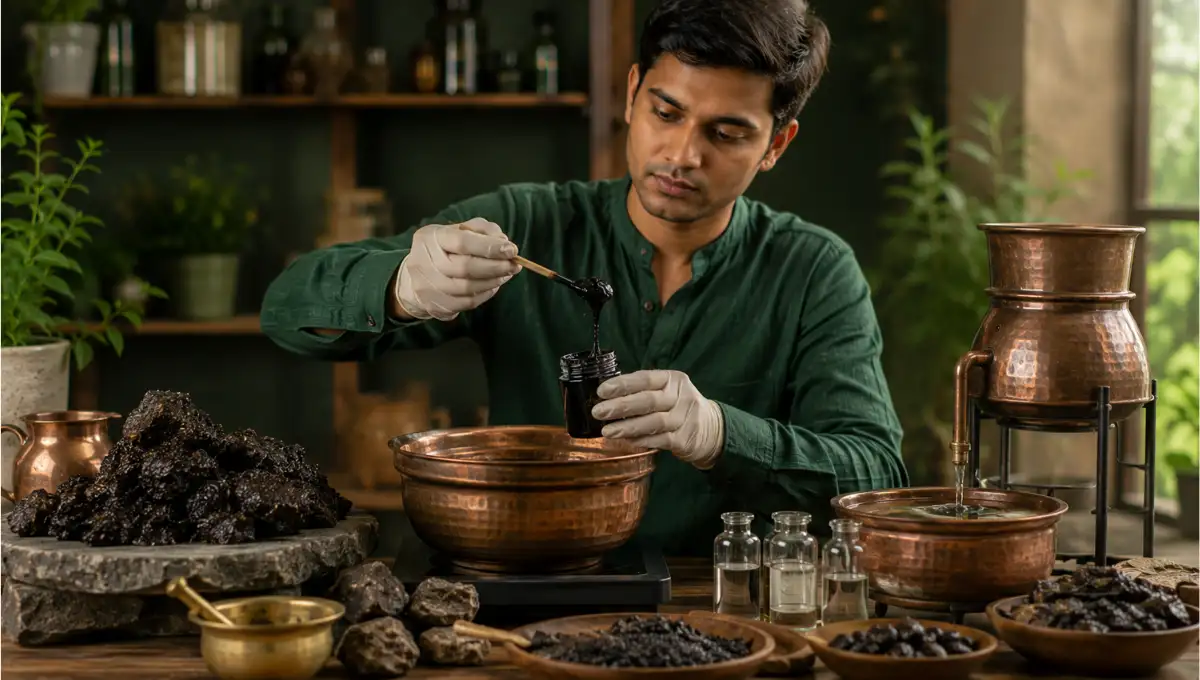
Traditional Shilajit Purification Explained: Why Processing Determines Quality
Raw shilajit and the resin in a jar you actually use are not the same thing. Between the two sits a purification process centuries in the making, and how carefully that process is followed determines almost everything about whether a specific product is genuinely safe, potent and worth trusting.
Most conversations about shilajit quality focus on where it comes from, the Himalayan region, the altitude, the collection method. Origin matters, but it is only half the story. What happens after collection, the purification process, is arguably just as important, and it is the step most buyers know the least about.
This gap in understanding is easy for a careless producer to exploit. A jar of shilajit gives no visual indication of whether it was purified carefully over several days, or rushed through a shortcut process designed to save time and cost. The only way to close this gap is to understand what genuine purification actually involves, so you know what questions to ask before buying, and what a satisfying answer to those questions should actually sound like.
This post explains exactly what traditional shilajit purification involves, why raw resin cannot simply be used as collected, what the classical Shodhana process actually removes and preserves, and how to tell whether a specific product was purified properly before it reached your own shelf.
Why Raw Shilajit Cannot Be Used As Collected
Shilajit forms over centuries as plant material and mineral rich rock interact under specific pressure and temperature conditions at high altitude. This natural formation process, however remarkable, does not produce a clean, ready to consume substance. What comes off the mountain and what eventually ends up in a properly made jar are two genuinely different things.
What Raw Shilajit Typically Contains
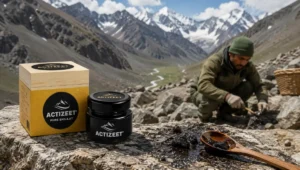
Freshly collected shilajit generally contains soil, small stones, plant debris, fungal growth, and in many cases, meaningfully elevated levels of heavy metals absorbed from the surrounding rock over the resin's long formation period. None of this is unique to any particular source. It is simply the nature of an unprocessed geological exudate, regardless of how carefully the collection itself was carried out.
A systematic review of preclinical Shilajit research described the substance as rich in humic substances, fulvic and humic acids, minerals and trace elements, while specifically noting that much of the existing evidence remains preclinical, a reminder that raw material composition alone does not guarantee safety without a genuine purification process applied afterward.
Why This Matters More Than People Assume
Some marketing describes "raw" or "unprocessed" shilajit as though this were somehow more pure or natural. In reality, this framing works against centuries of traditional understanding, since classical Ayurvedic pharmacology has never recommended raw, unpurified shilajit for direct consumption. A brand using this language is either unaware of this traditional context or choosing to ignore it in favour of a marketing angle that sounds appealing on the surface.
The Traditional Shodhana Method: Step by Step
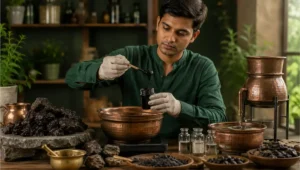
Shodhana is the classical Ayurvedic purification process applied to many herbal and mineral substances, shilajit included, designed specifically to remove impurities while preserving beneficial compounds. Each stage below builds directly on the one before it, and skipping any single stage weakens the overall result considerably.
Raw resin is first sorted by hand, removing visible stones, plant matter and discoloured material before any further processing begins. This early stage catches obvious impurities that would otherwise complicate later purification steps, and it requires genuine attentiveness rather than a rushed, cursory pass through the raw material.
The sorted resin is dissolved in clean water, allowing water soluble beneficial compounds, including fulvic acid, to separate from insoluble rock particles, sediment and other debris that do not dissolve. This step alone can take considerable time to complete thoroughly, since rushing it risks leaving some resin only partially separated from the impurities it needs to be freed from.
The dissolved solution passes through multiple filtration stages, gradually removing finer particulate matter until the liquid reaches a clear, consistent state ready for the next stage. A single filtration pass is rarely sufficient, which is why this step is described as repeated rather than a one time action.
The filtered liquid is slowly concentrated back into a semi solid resin using low, carefully controlled heat, specifically chosen to avoid degrading fulvic acid and other heat sensitive compounds that a faster, higher heat process would compromise. This stage often takes considerably longer than a rushed industrial evaporation method would allow.
The purified resin is checked for texture, colour and dissolution behaviour before moving on to lab testing, confirming it matches the expected profile of genuine, properly purified shilajit. Any batch that does not meet this internal standard is sent back through relevant stages rather than allowed to proceed forward toward packaging and sale.
See this exact purification process reflected in a real product.
Shop ACTIZEET® Shilajit ResinWhat Traditional Purification Actually Removes
Understanding exactly what a proper purification process removes helps explain why each of the five stages described above genuinely matters, rather than being an arbitrary sequence of steps.
- Soil, sand and small stones mixed in during natural formation and collection from the mountainside.
- Plant debris and organic matter that becomes trapped in the resin but is not part of shilajit itself.
- Fungal growth that can develop during storage before processing begins.
- A meaningful portion of excess heavy metal content absorbed from surrounding rock over the resin's formation period.
Why Heavy Metal Reduction Matters So Much
Shilajit forms in direct, prolonged contact with mineral rich rock, which naturally means some heavy metal absorption occurs over the resin's long formation period. Proper purification, combined with sourcing from carefully selected regions, is specifically aimed at bringing these levels down to a genuinely safe range, which is exactly why batch specific heavy metal testing after purification matters so much, rather than assuming purification alone guarantees a safe result without independent confirmation.
What Traditional Purification Preserves
Purification is not simply about removal. A properly executed process is just as focused on protecting the compounds that make shilajit valuable in the first place, and this dual focus is exactly what separates a genuinely careful purification method from a purely mechanical cleaning step.
A pharmacognosy study on Shilajit extracts confirmed significant fulvic acid content in properly processed resin, a compound researchers have linked to much of shilajit's traditional bioactivity, underscoring why purification methods are specifically designed to protect this compound rather than simply remove visible debris without regard for what else might be lost in the process.
Why Low Heat Matters Specifically
Fulvic acid and related compounds are genuinely heat sensitive. A purification process that relies on high, rapid heat to speed up concentration risks degrading exactly the compounds that give purified shilajit its value, which is why a properly executed Shodhana process deliberately trades speed for careful, low temperature processing, even when this means a considerably longer production timeline.
Modern Adaptations to the Classical Method
Modern shilajit processing generally does not abandon the traditional Shodhana framework. Instead, it layers additional process controls on top of it, refining execution rather than replacing the underlying method with something entirely different.
Hygiene and Facility Standards
Modern facilities apply defined hygiene protocols throughout the purification process, reducing contamination risk in ways that would not have been consistently possible using purely traditional, informal methods alone, particularly relevant given the scale at which purification now often needs to happen.
Precise Temperature Monitoring
Where traditional practice relied on experienced judgment to gauge appropriate heat levels, modern processing can apply precise temperature monitoring throughout concentration, reducing the risk of accidental overheating that could degrade beneficial compounds, even when the person overseeing the process is highly experienced.
Batch Documentation
Each stage of modern purification is documented, giving a traceable record for every batch rather than relying on informal memory of how a specific batch was handled. This documentation is also what ultimately supports the batch specific testing and Certificate of Analysis a genuinely transparent brand should be able to provide on request.
Common Purification Shortcuts and Why They Are a Problem
Understanding what genuine purification involves also makes it easier to spot where a producer might be cutting corners. The table below summarizes some of the more common shortcuts and exactly why each one compromises the final product.
| Shortcut | Why It Compromises Quality |
|---|---|
| Skipping filtration stages | Leaves fine sediment and impurities in the final resin |
| Using high, rapid heat | Degrades fulvic acid and other heat sensitive compounds |
| No independent heavy metal testing after processing | Leaves contaminant levels unverified and unconfirmed |
| Selling "raw" unpurified resin | Skips purification entirely, leaving known contaminants intact |
Each of these shortcuts saves time or cost for a producer, and each one compromises either the safety or the potency of the final product, sometimes both at once. None of these shortcuts are necessarily visible from the outside, which is exactly why the verification methods described later in this post matter so much.
How to Verify Purification Actually Worked
Understanding the purification process is useful, but you also need practical ways to check whether it was actually carried out properly for the specific product you are considering.
The Dissolution Test
A small piece of genuine, properly purified shilajit should dissolve almost completely in warm water within a few minutes, leaving minimal gritty residue. Significant leftover sediment after this simple test suggests incomplete purification, regardless of how the product is marketed, and this test can be performed at home in a few minutes with nothing more than a glass of warm water and a bit of patience while it dissolves.
Requesting Batch Specific Lab Documentation
The most reliable way to confirm purification worked is a Certificate of Analysis covering heavy metal screening and fulvic acid content, tied to the specific batch number on your product, ideally issued by an independent laboratory rather than the brand's own internal testing alone. A brand unable or unwilling to provide this documentation on request is a meaningful reason for caution, regardless of how confident its marketing language otherwise sounds.
Independent research summarised by a supplement research database notes that Shilajit studies typically use material standardised to a defined fulvic acid percentage, illustrating why confirming this specific figure through testing matters more than trusting a general purity claim printed on packaging without any batch specific documentation behind it.
How Long Traditional Purification Should Take
A properly executed purification process rarely happens quickly. Between sorting, dissolution, repeated filtration and slow, low heat concentration, genuine purification often spans multiple days rather than being completed in a single quick pass, and this extended timeline is itself a reasonable sign of a careful process rather than an inefficiency worth questioning.
Why Purification Determines Quality More Than Origin Alone
A perfectly sourced batch of shilajit, collected from a genuinely excellent high altitude region, can still end up as a poor quality, potentially unsafe final product if purification is rushed or skipped. Origin sets an upper limit on what a batch could become, but purification is what actually determines whether that potential is realized safely, and this distinction is one many buyers overlook when comparing products purely on the strength of their sourcing claims.
This is why evaluating a shilajit brand should never stop at checking origin alone. Ask specifically how a product is purified, and whether that process is verified through independent testing afterward, since these two questions together tell you far more than origin alone ever could. A brand proud of its sourcing story but vague about purification is only telling you half of what actually matters.
ACTIZEET® Shilajit Resin is carried through a purification process rooted in classical Shodhana, refined with modern hygiene and temperature controls, and verified through independent batch specific testing before it ever reaches your jar. This same standard applies to every batch we produce, not selectively to a single flagship product.
Shop ACTIZEET® Shilajit Resin →Frequently Asked Questions
Purification Is Where Quality Is Actually Decided
Origin gives shilajit its potential, but purification is what actually determines whether that potential becomes a safe, genuinely valuable final product. A careful, properly executed Shodhana process, verified afterward through independent testing, is what separates a trustworthy jar of shilajit from one that only looks the part.
The next time you are comparing shilajit products, ask about purification specifically, not just origin. That single question, and how directly a brand can answer it, tells you more about genuine quality than almost anything else you could check.
ACTIZEET® Shilajit Resin is built around exactly this standard, traditional purification method, modern process controls, and independent batch testing before it ever reaches you.