Authentic Himalayan Shilajit: Science, Sourcing, Purification and How to Choose Genuine Shilajit
Shilajit has become one of the most searched natural wellness ingredients in the world, but the market is also flooded with diluted, synthetic and poorly purified versions sold under the same name. This guide walks through exactly how authentic Himalayan Shilajit forms, what it actually contains, how it is purified and tested, and what to check before you buy, so you can tell the real thing from an imitation with confidence.
Walk into any online store and search for Shilajit, and you will find hundreds of listings, all claiming to be pure, authentic and sourced from the Himalayas. Prices range from a few hundred rupees to several thousand for what looks like the same dark, tar like resin. For a first time buyer, there is genuinely no obvious way to tell a well sourced, properly purified product apart from a jar of processed peat, shoe polish, or heat treated soil extract dressed up with a Himalayan label.
This is not a small problem. Because Shilajit is a raw geological exudate rather than a manufactured chemical, its quality depends entirely on where it comes from, how carefully it was purified, and whether the finished product was actually tested in a lab before it reached your kitchen shelf. Two products can look almost identical in colour and texture, yet one may carry active fulvic acid and dibenzo alpha pyrone content that supports its traditional use, while the other is little more than tinted filler with trace amounts of the real thing.
This guide breaks down the entire subject in plain language, starting with the science of how Shilajit actually forms, moving through traditional and modern purification methods, and ending with a practical checklist you can use the next time you are deciding what to buy. We will also look at where ACTIZEET® Shilajit Resin fits into this picture and why its sourcing and purification process is built around the same standards discussed throughout this article.
Why "Authentic" Himalayan Shilajit Actually Matters
The word authentic gets used so loosely in the supplement world that it has almost stopped meaning anything. Every listing claims to be authentic, pure, and sourced directly from the Himalayas. But Shilajit is one of the rare categories where this word carries real, measurable weight, because the entire value of the product depends on three variables working together correctly: where it was collected, how it was purified, and whether the final resin retains the bioactive compounds that made it worth collecting in the first place.
Unlike a herb you can grow in a controlled farm, Shilajit is a natural mineral pitch that seeps out of rock crevices at high altitude, formed over centuries from the slow breakdown of plant material trapped under geological pressure. This means the raw material itself is never uniform. Some deposits carry a rich concentration of fulvic acid and dibenzo alpha pyrones, while others are little more than mineral rich clay with almost none of the compounds that give real Shilajit its reputation. Add to this the fact that raw Shilajit, straight off the mountain, is not safe to consume without proper purification, and it becomes clear why the word authentic needs to describe an entire process, not just a label on a jar.
When you understand what actually separates a genuine, well processed Shilajit resin from a diluted or synthetic imitation, choosing the right product stops being a guessing game based on price or packaging, and becomes a short list of concrete things you can check for yourself.
What Is Shilajit? The Geology and Science Behind It
Shilajit is a sticky, tar like substance that seeps out of layered rock formations in high altitude mountain ranges, most notably the Himalayas, but also parts of the Altai, Caucasus and Andes ranges. In classical Ayurvedic texts, it is described as "rock sweat," a fitting description for a substance that oozes out of exposed rock faces during the warmer months, when temperature changes cause it to soften and slowly emerge from mineral seams.
Geologically, Shilajit is best understood as a biomass transformation product. Over the course of centuries, plant material, mostly bryophytes like mosses and lichens along with other organic matter, becomes trapped between layers of sedimentary rock. Under sustained pressure, seasonal temperature shifts and the slow biochemical activity of specific microorganisms, this organic matter undergoes a process similar to humification, the same broad chemical transformation that produces humic substances in soil and peat, except compressed and concentrated by the unique mineral environment of high altitude rock.
The result is a dense, resin like exudate rich in humic and fulvic acids, oxygenated aromatic compounds known as dibenzo alpha pyrones, and a wide spectrum of trace minerals absorbed from the surrounding rock strata. This is why Shilajit is often described as a herbo mineral substance rather than a purely botanical or purely mineral one. It genuinely straddles both categories, which is also part of why sourcing and purification matter so much. The same geological process that concentrates beneficial compounds can also concentrate naturally occurring heavy metals from the rock, which is a subject we will return to in detail later in this guide.
Raw Shilajit vs Purified Shilajit
It is important to separate two terms that are often used interchangeably but mean very different things. Raw Shilajit refers to the unprocessed exudate as it is collected directly from rock crevices, typically mixed with soil, plant debris, insect matter, fungal growth and, in many cases, meaningful concentrations of heavy metals absorbed from the surrounding geology. Purified Shilajit refers to the resin after it has gone through a filtration and concentration process designed to remove these contaminants while preserving the beneficial compounds.
Consuming raw, unprocessed Shilajit directly is not recommended and is not how the substance has traditionally been used. Every classical Ayurvedic reference to Shilajit as a therapeutic substance assumes a purification step has already taken place. This distinction alone explains a large share of the confusion in the modern market, where some sellers market unrefined material as more "natural" or "pure," when in reality it is simply unprocessed and potentially unsafe.
Inside the Resin: Fulvic Acid, Humic Acid, DBPs and Minerals
To understand what genuine Shilajit is supposed to contain, it helps to break its composition down into four broad categories: humic substances, dibenzo alpha pyrones, trace minerals, and a smaller group of other organic compounds including amino acids and fatty acids.
Humic Substances: Fulvic Acid and Humic Acid
Humic substances make up the largest portion of Shilajit by weight, and within this group, fulvic acid is generally considered the most important carrier compound. Fulvic acid is a small molecule, low in molecular weight compared to humic acid, which allows it to bind minerals and other bioactive compounds and carry them across biological membranes more efficiently.
A pharmacognosy study on complement fixing activity confirmed that Shilajit extracts contain significant amounts of fulvic acid, which researchers have suggested is responsible for many of the therapeutic properties historically attributed to Shilajit. This is one reason fulvic acid content is increasingly used as a benchmark figure on lab reports for Shilajit resin.
Humic acid, the higher molecular weight counterpart to fulvic acid, is present in even larger quantities within Shilajit, in some analyses accounting for the majority of the resin by dry weight. Humic acid contributes to the resin's binding capacity and its characteristic dark colour and texture, though it is fulvic acid's smaller size that gives it the bioavailability that has attracted the most research interest.
Dibenzo Alpha Pyrones (DBPs)
Alongside the humic substances, genuine Shilajit contains a smaller but pharmacologically significant group of oxygenated aromatic compounds called dibenzo alpha pyrones, often abbreviated as DBPs. These compounds, along with their derivatives, are considered a marker of authenticity by some researchers, since they appear specifically in Shilajit and are not simply a feature of any humic material. Purified Shilajit compositions described in pharmaceutical literature typically specify a minimum DBP content alongside a defined fulvic acid range, which is one reason serious manufacturers test for both rather than fulvic acid alone.
Trace Minerals and Other Bioactive Compounds
Genuine Himalayan Shilajit typically contains a broad spectrum of trace minerals absorbed from the surrounding rock over centuries, commonly including iron, zinc, copper, magnesium, potassium and calcium, among many others reported in smaller quantities. These minerals are not simply mixed into the resin the way they would be in a multivitamin. They exist in a chelated, ionic form, bound to fulvic acid molecules, which is part of what distinguishes naturally formed Shilajit from a synthetic mineral blend designed to mimic its appearance.
Smaller quantities of amino acids, polyunsaturated fatty acids and other plant derived organic compounds round out the composition, reflecting Shilajit's origin as a transformed plant and microbial biomass rather than a purely inorganic mineral deposit.
A recent systematic review of preclinical Shilajit research described the substance chemically as rich in humic substances, fulvic and humic acids, along with dibenzo alpha pyrones, minerals and trace elements, noting that these compounds underpin the antioxidant and anti-inflammatory activity observed in laboratory studies, while cautioning that much of this evidence remains preclinical rather than clinically confirmed in humans.
Antioxidant and Free Radical Activity
A large share of the laboratory interest in Shilajit centres on the antioxidant behaviour of its humic substances and DBP compounds. Fulvic acid in particular has a chemical structure that allows it to donate and accept electrons readily, a property that underlies much of the free radical scavenging activity reported in preclinical studies. This is also part of why heat damage during processing matters so much. Excessive or prolonged heat exposure can break down these same reactive structures, leaving a resin that looks identical on the outside but has lost a meaningful share of its original antioxidant capacity.
The Traditional Role of Shilajit in Ayurveda
Shilajit occupies a specific and long standing place in classical Ayurvedic pharmacology, categorised as a Rasayana, a term used for substances traditionally associated with supporting vitality, resilience and healthy aging over sustained use rather than short term effect. Classical texts including the Charaka Samhita describe Shilajit in considerable detail, noting variations in its appearance and quality depending on which mineral it exuded alongside, a system of classification that predates modern chemical analysis by many centuries but reflects a similar underlying idea, that not all Shilajit is equivalent in quality or composition.
Traditional Ayurvedic practice never treated Shilajit as something to be consumed straight from the source. The entire framework of Shodhana purification exists precisely because classical physicians recognised that raw mineral exudates needed to be processed before they were fit for internal use. This traditional caution is worth remembering in a modern market where "raw" and "unprocessed" are sometimes marketed as more desirable, when the classical tradition itself treats purification as an essential, non optional step rather than something that reduces the product's value.
Shilajit was also traditionally combined with other herbs and minerals in compound formulations, adjusted to the individual and the season, rather than used as a single isolated ingredient at a fixed dose. Modern single ingredient resin products, including the format most commonly sold today, represent a simplified version of this tradition, which is part of why sourcing and purification quality matter even more when the product is not being buffered or balanced by other formulation components the way it traditionally would have been.
Where Genuine Himalayan Shilajit Actually Comes From
Authentic Himalayan Shilajit is collected from rock faces at extreme altitude, typically between 16,000 and 18,000 feet, across specific belts of the Himalayan range spanning parts of India, Nepal, Bhutan and Tibet. The altitude is not incidental. It reflects the specific combination of pressure, temperature cycling, mineral composition and slow microbial activity needed for the humification process to occur in the way that produces genuine, bioactive Shilajit.
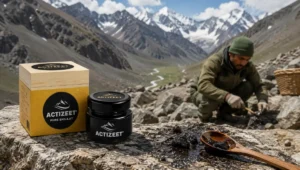
Collection itself remains a largely manual and seasonal activity. During the summer months, when temperatures rise enough to soften the resin, local collectors scrape the exudate from exposed rock crevices, a labour intensive process that limits how much raw material can realistically be gathered each season. This is part of the reason genuine Himalayan Shilajit has always commanded a premium price relative to bulk produced supplements, and part of why the modern market has seen so many diluted or entirely synthetic alternatives appear to meet rising global demand at a lower cost.
Why Region and Altitude Are Not Just Marketing Language
Not every mountain range, and not every altitude within the Himalayas, produces resin of comparable quality. Lower altitude deposits tend to show a different mineral and organic compound profile compared to material collected from higher, more mineral dense strata. This is why vague claims like "sourced from the Himalayas" printed on a label mean very little without more specific information about the region and altitude of collection. A brand that can speak clearly about where its raw material comes from, ideally naming the specific belt or range, is generally a stronger signal of genuine sourcing than generic claims alone.
It is also worth noting that a significant share of Shilajit sold globally, including material marketed as Himalayan, is never actually verified against its claimed origin. Isotope and mineral fingerprinting methods exist that can, in principle, confirm geological origin, but these are rarely used outside of specialised research settings. In practice, buyers are left relying on brand transparency and third party lab documentation rather than an independently verifiable origin certificate, which makes sourcing transparency from the brand itself even more important.
Sustainable and Ethical Collection Practices
Because genuine Shilajit collection depends on manual harvesting at extreme altitude during a narrow seasonal window, sustainability is a real consideration, not just a marketing phrase. Overharvesting from the same rock faces without allowing natural replenishment can degrade local deposits over time, and collection at extreme altitude carries genuine safety risk for the local communities who do this work. Brands that maintain long term relationships with the same collection communities, rotate harvesting sites responsibly, and pay collectors fairly tend to have more consistent access to genuinely high quality raw material year over year, compared to buyers who source opportunistically from whichever supplier offers the lowest price that season. This is another reason continuity and transparency in a brand's supply chain is worth paying attention to, beyond the immediate question of purity.
Resin, Powder or Capsules: Which Form Preserves Authenticity Best?
Once you move past the question of sourcing and purification, a related question comes up often: does the finished format, resin, powder or capsule, affect how authentic or effective a Shilajit product actually is? The honest answer is that format mainly affects convenience and shelf stability, not the underlying quality of the raw material, though each format does carry its own practical trade offs worth understanding.
Traditional Resin
Resin is the closest format to how purified Shilajit has traditionally been produced and used. Its pliable, sticky texture makes it easy to visually and physically assess using the checks described earlier in this guide, and because it undergoes minimal additional processing beyond purification and concentration, it tends to retain the fullest profile of heat sensitive compounds when made correctly. The trade off is that resin is less convenient to dose precisely and can be messier to handle than powder or capsules, particularly while travelling.
Powder
Shilajit powder is typically made by further drying purified resin and grinding it into a fine consistency. This format is easier to measure into consistent doses and mixes more readily into drinks, but the additional drying step, if not carefully controlled, introduces another point where heat sensitive compounds can degrade. Powder is also somewhat harder to assess visually for authenticity compared to resin, since texture based checks like malleability are no longer applicable once the resin is dried and ground.
Capsules
Capsules offer the most convenience and the most consistent per dose measurement, which appeals to buyers who want a no mess, travel friendly option. The main consideration with capsules is that you lose the ability to perform any of the direct physical checks, texture, dissolution or smell, since the resin or powder is sealed inside the capsule shell. This makes lab documentation and brand transparency even more important when choosing a capsule based product, since visual and tactile verification is simply not possible.
| Format | Main Advantage | Main Trade Off |
|---|---|---|
| Resin | Closest to traditional form, easiest to verify visually and physically | Less convenient to dose precisely, can be messier to handle |
| Powder | Easier to measure and mix into drinks | Extra drying step can affect heat sensitive compounds if not controlled |
| Capsules | Most convenient, precise and travel friendly | No way to visually or physically verify the contents yourself |
None of these formats is inherently more authentic than another. What matters far more is whether the raw material behind any of them was genuinely sourced, properly purified and actually lab tested. A resin with no available lab documentation is not automatically more trustworthy than a well tested capsule, and the reverse is equally true.
Traditional Purification: The Ayurvedic Shodhana Process
Raw Shilajit as it is collected from the mountainside is not something anyone should consume directly. It typically contains soil, small stones, plant debris, insect fragments, fungal growth and, in many cases, elevated levels of heavy metals absorbed from the surrounding rock. Classical Ayurvedic pharmacology addressed this problem centuries ago through a purification method known as Shodhana, a term that broadly translates to purification or detoxification, applied to a wide range of raw herbal and mineral substances, not just Shilajit.
The classical Shodhana process for Shilajit generally follows a sequence of steps refined over generations of Ayurvedic pharmaceutical practice:
- Manual sorting to remove visible impurities such as stones, plant matter and discoloured material before any processing begins.
- Dissolution of the raw resin in a large volume of clean water, traditionally sourced from natural springs or rivers, allowing the water soluble bioactive compounds to separate from insoluble rock particles and debris.
- Repeated filtration cycles to strain out sediment, using cloth or fine mesh filters, sometimes carried out multiple times to progressively clarify the solution.
- Slow evaporation of the filtered liquid, traditionally over low, controlled heat, to concentrate the dissolved compounds back into a semi solid resin.
- In some classical formulations, the filtered liquid is combined with herbal decoctions before final concentration, intended to further support the purification and stabilisation of the resin.
This aqueous extraction approach works precisely because Shilajit's beneficial compounds, fulvic acid, humic acid and mineral chelates, are water soluble, while a meaningful portion of the problematic contaminants, including rock particles and organic debris, are either insoluble or significantly reduced through repeated filtration. It is a genuinely elegant, low intervention method, though it has real limitations when it comes to consistently reducing dissolved heavy metal content, which is where modern analytical methods have become an important complement to traditional practice.
Modern Purification and Lab Standardisation
Contemporary Shilajit production builds on the traditional Shodhana framework while adding analytical testing and, in many cases, more controlled processing methods designed to protect heat sensitive compounds like fulvic acid and DBPs, which can degrade under excessive or prolonged heat exposure.
Low Heat Concentration
Where traditional methods relied on open evaporation, which can be difficult to control precisely, modern facilities increasingly use low temperature, controlled evaporation or vacuum concentration methods. These approaches take longer than high heat drying, but they preserve significantly more of the resin's original bioactive profile, since fulvic acid and DBPs are known to be sensitive to prolonged high temperature exposure.
Multi Stage Filtration
Beyond basic cloth filtration, well equipped producers use progressively finer filtration stages, sometimes including membrane based filtration, to remove increasingly small particulate matter and reduce microbial load, without relying on aggressive chemical treatment that could compromise the resin's natural composition.
Batch Testing Before and After Processing
The most meaningful difference between a rigorously produced Shilajit and a poorly processed one is not usually the purification method itself, but whether the raw material and finished product are actually tested at each stage. Reputable producers test incoming raw material for baseline heavy metal levels and microbial contamination before processing even begins, then test the finished, purified resin again to confirm both bioactive content and contaminant levels fall within acceptable limits. Without this testing step, purification is essentially a matter of trust rather than verification, regardless of how carefully the traditional or modern process was followed.
The Heavy Metal Question: Why Testing Is Non Negotiable
Because Shilajit forms directly from rock strata, it naturally has the potential to absorb heavy metals present in the surrounding geology, most commonly lead, arsenic, cadmium and mercury, along with less frequently discussed elements like thallium. This is not unique to Shilajit. Many root vegetables, leafy greens and mineral rich foods absorb trace heavy metals from soil in a similar way. The difference is that Shilajit is consumed in a concentrated form, which makes contaminant levels in the raw material and the effectiveness of purification meaningfully more important.
Independent research into Shilajit sperm parameters, summarised in a supplement research database, involved oligospermic men given daily Shilajit standardised to a defined fulvic acid percentage, illustrating the kind of standardisation researchers rely on when studying the substance under controlled conditions. The same database notes that despite Shilajit's long history of traditional use, there is still very little high quality human research available on it, which is an important reminder to treat marketing claims with appropriate caution regardless of a brand's sourcing standards.
This is precisely why purification alone is not the finish line. A brand can follow every step of a rigorous Shodhana or modern purification process and still end up with a finished resin that carries heavy metal levels above safe limits, simply because the raw material sourced for that particular batch had unusually high contamination to begin with. The only reliable way to know whether a specific batch is safe is direct laboratory testing of the finished product, not an assumption based on the purification method used.
For this reason, any brand selling Shilajit resin or powder should be able to provide a Certificate of Analysis for the specific batch you are purchasing, showing tested levels for lead, arsenic, cadmium and mercury at minimum, ideally alongside microbial testing and a fulvic acid content assay. If a brand cannot produce this documentation on request, that alone is a meaningful reason for caution, regardless of how the product is marketed.
Quality Testing: What a Genuine Certificate of Analysis Shows
A Certificate of Analysis, often shortened to COA, is a lab report generated by an accredited third party testing facility for a specific manufacturing batch. For Shilajit, a genuinely useful COA should cover several distinct categories, and understanding what each one means helps you evaluate a product far more accurately than reading front label claims alone.
Fulvic Acid Content
This figure, usually expressed as a percentage, indicates how concentrated the resin's primary carrier compound is. Genuine, well purified Himalayan Shilajit resin commonly falls within a defined percentage range depending on sourcing and processing, and a batch specific figure on the COA is far more meaningful than a generic percentage printed on marketing material that never changes between batches.
Heavy Metal Screening
This section should report tested levels for lead, arsenic, cadmium and mercury at a minimum, measured against recognised safety limits. Some more thorough labs also screen for additional elements such as thallium, which has drawn attention in recent independent testing of commercial Shilajit products.
Microbial Testing
Because Shilajit is collected from a natural environment and undergoes an aqueous purification process, microbial testing for total plate count, yeast, mould and pathogenic organisms such as E. coli and Salmonella is an important part of confirming the product is safe for regular consumption.
Pesticide and Residual Solvent Screening
While less relevant to Shilajit than to cultivated herbs, some labs include this screening as an additional safeguard, particularly relevant if any solvent based extraction step was used at any stage of processing.
Total Ash and Acid Insoluble Ash
These two related tests measure the mineral and inorganic residue left behind after a sample is incinerated under controlled conditions. Total ash reflects the overall mineral content of the resin, which is expected to be reasonably high given Shilajit's mineral rich nature, while acid insoluble ash specifically measures residue that does not dissolve in dilute acid, typically indicating sand, silica or other insoluble contaminants that should not be present in appreciable amounts in a well purified resin.
Loss on Drying and Moisture Content
This test measures how much of the resin's weight is water, which matters both for shelf stability and for confirming the resin has been concentrated properly during purification. A resin with excessive moisture content is more prone to microbial growth during storage and may indicate an incomplete evaporation or concentration step during processing.
A trustworthy Shilajit brand will make its Certificate of Analysis available and specific to the batch you are buying, not a single generic report reused indefinitely across every production run. If a COA is dated, batch coded and easy to request, that transparency is one of the strongest signals of genuine quality control you can find before purchase.
Seven Practical Checks to Identify Genuine Shilajit
Beyond lab documentation, there are several practical, hands on checks you can perform yourself before and after purchase to help judge whether a Shilajit resin is likely to be genuine.
Genuine, properly purified Shilajit resin should be pliable at room temperature, similar in texture to a thick, sticky tar or soft toffee. It should soften noticeably when gently warmed between the fingers. A resin that is rock hard, brittle, or crumbles easily is often a sign of poor purification, excessive processing, or the addition of fillers that do not behave like natural Shilajit.
A small piece of genuine Shilajit resin, roughly the size of a grain of rice, should dissolve almost completely in warm water within a few minutes, leaving little to no undissolved residue at the bottom of the glass. Significant leftover sediment, especially gritty or sandy material, often points to added filler, unremoved rock particulate, or a poorly purified batch.
Genuine resin is typically a deep blackish brown, glossy when warm, and consistent in colour throughout rather than streaked or patchy. Overly matte, dull or unevenly coloured material can indicate old stock, poor storage, or blending with unrelated substances such as coal tar derivatives, which have unfortunately been used to mimic Shilajit's appearance in low quality products.
Authentic Shilajit has a distinctive earthy, mineral smell, sometimes described as similar to damp rock or asphalt, and a naturally bitter taste. A resin with little to no smell, or one that tastes primarily sweet, salty or artificially flavoured, is unlikely to be genuine, unpurified Himalayan Shilajit.
A brand that can name the specific region or altitude range its Shilajit is collected from, rather than relying on the generic word Himalayan alone, is generally more credible than one offering no sourcing detail at all. This level of specificity usually reflects a closer, more accountable relationship with the raw material supply chain.
As covered in detail earlier in this guide, an available, batch coded Certificate of Analysis covering fulvic acid content, heavy metals and microbial testing is one of the clearest indicators of a brand's commitment to quality control, well beyond what packaging claims alone can demonstrate.
Shilajit resin is sensitive to moisture, air and light, all of which can gradually degrade its active compounds over time. Look for dark, airtight, resealable containers designed to limit exposure after each use, particularly important if you are purchasing a larger quantity meant to last several months.
Want a Shilajit resin that checks every box on this list?
Shop ACTIZEET® Shilajit ResinCommon Myths and Red Flags of Fake Shilajit
The growing global demand for Shilajit has, unfortunately, also created a market for imitation products designed to mimic its appearance without any of its actual composition. Being aware of the most common myths and red flags can save you from an expensive mistake.
Myth: "If It Melts Like Wax Over a Flame, It Is Real"
A popular informal test online involves holding a piece of Shilajit over a flame and checking whether it catches fire like wax or melts and bubbles instead. In reality, this test is unreliable, since several adulterants, including certain resins and tars, can produce a similar reaction. A proper dissolution test in warm water, combined with lab documentation, is far more informative than any flame based home test.
Myth: "Darker and Harder Always Means More Potent"
Colour and hardness alone say very little about actual fulvic acid content or purity. Some adulterated products are deliberately made harder and darker specifically to appear more "concentrated" to buyers who rely on this assumption. Texture should be considered alongside dissolution behaviour and lab results, never as a standalone indicator.
Red Flag: No Sourcing or Testing Information Anywhere
If a product listing, website or packaging makes no mention of sourcing region, purification method or lab testing at all, and relies purely on generic claims like "100% pure" or "authentic Himalayan," treat this as a significant warning sign rather than reassurance.
Red Flag: Prices That Are Dramatically Lower Than the Market Average
Genuine Himalayan Shilajit is labour intensive to collect and requires a genuine purification process, both of which carry real cost. A price point drastically below comparable, properly documented products is one of the more reliable practical signals that corners have likely been cut somewhere in the sourcing or purification chain.
Myth: "A Bitter Taste Alone Proves It Is Genuine"
Bitterness is a genuine characteristic of authentic Shilajit, but it is not proof on its own. Some adulterated products are deliberately formulated with bitter tasting additives specifically to pass this informal test. Bitterness should be treated as one supporting data point alongside dissolution behaviour, texture and lab documentation, never as a standalone confirmation of authenticity.
Red Flag: Marketing That Focuses Only on Benefits, Never on Sourcing or Safety
Listings that spend all their space describing potential benefits while saying almost nothing about where the material comes from, how it was purified, or whether it has been tested, are prioritising persuasion over transparency. A brand confident in its sourcing and quality control usually has no hesitation discussing these details openly, since it reflects well on the product rather than raising doubts about it.
Who Should Be Cautious with Shilajit
Even genuine, well purified Shilajit is a concentrated mineral rich substance, and it is not automatically appropriate for everyone. Pregnant and breastfeeding women are generally advised to avoid Shilajit, since there is limited research on its safety during pregnancy and lactation. People managing conditions related to iron overload, such as haemochromatosis, should be cautious given Shilajit's naturally high iron content, and the same caution applies to anyone with a diagnosed sensitivity to trace minerals found in the resin.
Because Shilajit can interact with certain medications, particularly those affecting iron levels, blood pressure or blood sugar, anyone currently taking prescription medication should speak with their doctor before adding Shilajit to their routine, rather than assuming a natural origin automatically rules out the possibility of an interaction. Children and adolescents are also generally advised to avoid Shilajit supplementation unless specifically guided by a qualified practitioner, since research in these age groups is essentially absent.
None of this is a reason to avoid genuine, well tested Shilajit altogether. It simply reflects the same basic principle that applies to any concentrated natural substance: the fact that something is traditional and natural does not exempt it from needing appropriate caution in specific circumstances.
Genuine vs Fake Shilajit: A Side by Side Comparison
Sometimes the clearest way to understand a subject is to see the two extremes placed next to each other. The table below summarises the practical differences between genuine, well purified Himalayan Shilajit and the kind of imitation or poorly processed material that unfortunately circulates widely online.
| Characteristic | Genuine Shilajit | Fake or Poorly Processed Shilajit |
|---|---|---|
| Texture | Pliable, softens gently when warmed | Rock hard, brittle, or unusually sticky like tar |
| Dissolution | Dissolves almost completely in warm water | Leaves significant gritty or sandy residue |
| Smell | Distinct earthy, mineral aroma | Little to no smell, or artificial fragrance |
| Sourcing Claims | Names a specific region or altitude range | Uses only the generic word "Himalayan" with no detail |
| Lab Documentation | Batch specific Certificate of Analysis available on request | No documentation offered, or a single generic report reused indefinitely |
| Price | Reflects the labour and processing cost involved | Unusually low compared to properly documented products |
Quality Checklist at a Glance
| What to Check | Why It Matters | Simple Way to Verify |
|---|---|---|
| Texture | Confirms proper purification and absence of hardening fillers | Should be pliable and soften slightly when warmed between fingers |
| Dissolution | Indicates purity and absence of insoluble grit or filler | Should dissolve almost completely in warm water within minutes |
| Fulvic Acid Content | Reflects the concentration of the resin's key active compound | Check the Certificate of Analysis for a batch specific percentage |
| Heavy Metal Testing | Confirms lead, arsenic, cadmium and mercury are within safe limits | Request the brand's lab report for the specific batch you are buying |
| Sourcing Detail | Confirms genuine high altitude Himalayan origin, not a generic claim | Look for a named region or altitude range, not just the word Himalayan |
| Packaging | Protects potency from moisture, light and air exposure | Dark, airtight, resealable packaging designed for repeated use |
Why ACTIZEET® Is a Trusted Choice for Authentic Himalayan Shilajit
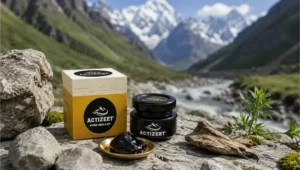
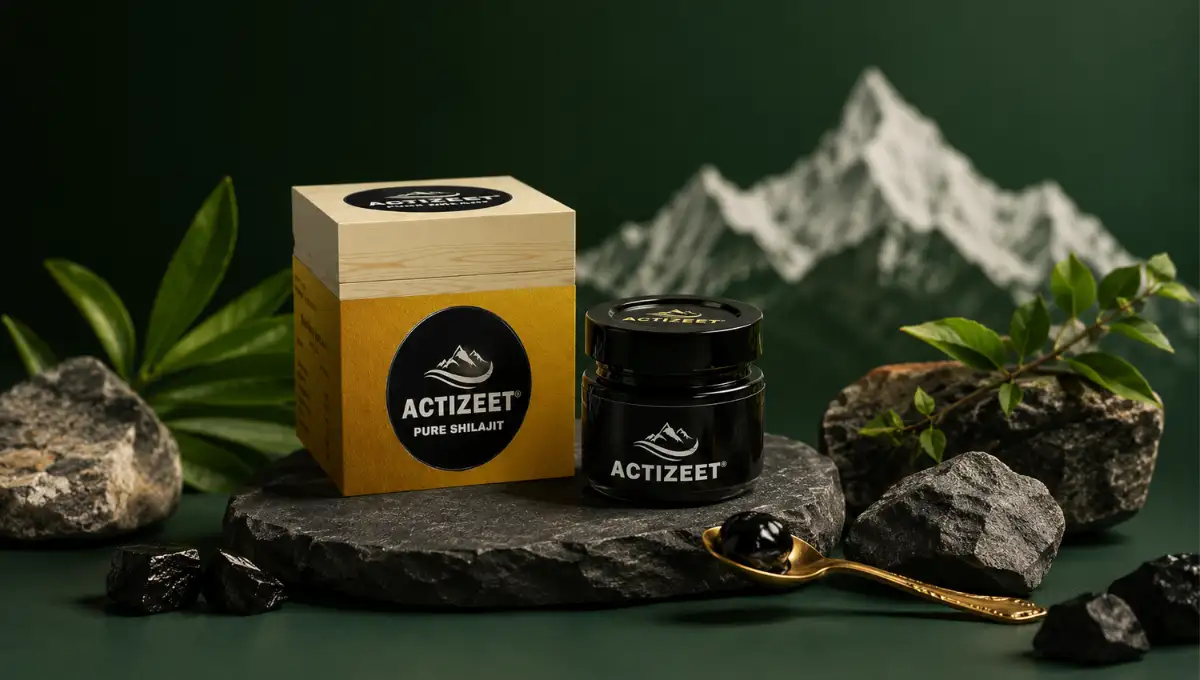
ACTIZEET® Shilajit Resin is sourced from high altitude Himalayan terrain and taken through a careful purification process designed to protect its natural fulvic acid and mineral profile while addressing the exact contamination concerns discussed throughout this guide. Every batch is made with the checklist above in mind, from sourcing transparency to a texture and dissolution profile consistent with genuine, well purified resin, so you can bring this traditional Himalayan Rasayana into your daily routine with real confidence in what you are actually consuming.
Order ACTIZEET® Shilajit Resin Now →How to Use Shilajit Resin Daily
Once you have a genuine, well purified Shilajit resin, using it correctly is straightforward. Most people take a small amount, roughly the size of a grain of rice to a small pea, once daily, dissolved in warm water, milk or herbal tea. The resin should dissolve fully within a few minutes of stirring, leaving a smooth, slightly earthy tasting liquid.
Because Shilajit has a naturally bitter, mineral taste, many people prefer taking it dissolved in warm milk with a small amount of honey, which softens the flavour considerably without affecting how the resin dissolves. It is best taken consistently as part of a daily routine rather than occasionally, since the traditional use of Shilajit as a Rasayana, a category of substances associated with sustained vitality in Ayurveda, has always been built around steady, long term use rather than a single dose approach.
- Start with a small amount, roughly the size of a grain of rice, and observe how your body responds over the first week.
- Dissolve the resin completely in warm water, milk or tea before drinking, rather than swallowing it directly.
- Take it consistently at the same time each day, since traditional use favours a steady daily habit over occasional dosing.
- Store the resin in a cool, dry place away from direct sunlight, and reseal the container tightly after each use.
- Speak with your doctor before use if you are pregnant, currently breastfeeding, managing a chronic condition, or taking prescription medication.
Best Time of Day to Take Shilajit
Many traditional and modern users prefer taking Shilajit in the morning, on an empty stomach or shortly before breakfast, since this is when its traditional use as a vitality supporting Rasayana is most commonly recommended. Others prefer splitting a slightly larger daily amount into a morning and evening dose. Neither approach is definitively superior, and the right timing often comes down to personal routine and how your body responds, which is why starting with a single consistent time of day and adjusting gradually tends to work best.
How Long Before You Notice a Difference
Because Shilajit has traditionally been used as a long term Rasayana rather than a fast acting remedy, most people are advised to allow several weeks of consistent daily use before drawing conclusions about how it fits into their routine. This mirrors the broader pattern seen in the limited clinical research available on Shilajit, where study durations are typically measured in weeks rather than days. Patience and consistency matter more with a substance like this than with something designed for immediate, short term effect.
Proper Storage to Preserve Potency
Once opened, Shilajit resin should always be resealed tightly and kept away from direct sunlight, excess humidity and temperature extremes. A cool, dry cupboard away from the stove or a sunny windowsill is generally ideal. Using a clean, dry spoon or applicator each time you take a dose, rather than fingers, also helps limit moisture and contamination introduced into the container over repeated use, which further protects the resin's potency across its shelf life.
Frequently Asked Questions
Choosing Authentic Himalayan Shilajit Comes Down to a Few Verifiable Checks
Finding genuine Himalayan Shilajit does not have to be a gamble based on packaging or price alone. It comes down to understanding how the resin forms, confirming it has gone through a proper purification process, checking its texture and dissolution behaviour, and asking for batch specific lab documentation covering fulvic acid content and heavy metal safety. Once you know what genuine sourcing and purification actually involve, telling authentic Shilajit apart from an imitation becomes a quick, informed decision rather than an uncertain one.
ACTIZEET® Shilajit Resin is built around exactly these standards, from high altitude Himalayan sourcing to careful purification and batch testing, so you can bring this traditional Rasayana into your daily routine with real confidence in what you are consuming.