
How to Identify Pure Essential Oils: 15 Signs Every Buyer Should Know
Purity is not something you can judge from a pretty bottle or a confident label. Here are 15 specific, practical signs that actually help you tell a genuinely pure essential oil apart from a diluted or synthetic one, covering the label, the bottle, simple home tests, and the questions worth asking a brand directly before you buy.
Pure essential oils and diluted or synthetic ones can sit side by side on a shelf, priced completely differently, using nearly identical marketing language. Without a specific way to check what you are actually looking at, telling them apart becomes a guessing game based on packaging, price or brand reputation alone, which is exactly the situation this guide is designed to fix.
Most buyers do not need a laboratory to make a genuinely informed decision. What actually helps is knowing the specific, practical signs worth checking, some visible on the label before you even open the box, others requiring nothing more than a piece of paper and a few minutes at home. None of these signs alone is completely definitive, but taken together they give you a considerably clearer picture than trusting a single confident claim on the front of a bottle. Think of this checklist the way you might approach buying any specialized product for the first time, a handful of specific things worth learning once, then applying consistently every time you shop afterward.
This guide breaks purity down into 15 specific, checkable signs, organized into what to look for on the label, what to check on the bottle itself, what a genuine oil should smell and feel like, and what documentation a trustworthy brand should be willing to provide. Read through the whole list once before your next purchase, then keep it handy as a quick reference for future comparisons, since the same fifteen signs apply consistently regardless of which specific oil you are shopping for.
Label and Packaging Signs
These first five signs can all be checked before you even open a package, simply by reading the label and product photos carefully. They form the fastest initial filter for ruling out a clearly weak listing, and most of them take only seconds to check once you know exactly where to look.
A genuinely pure oil states its complete Latin botanical name, not just a common name like "lavender." True lavender should specifically be Lavandula angustifolia, distinct from a cheaper lavandin hybrid often sold under the same common name. This single detail is the foundation every other sign in this guide builds on.
Steam distillation, cold pressing or another specific method should be named clearly. A listing with no extraction detail at all is giving you meaningfully less information than one that specifies it, since the wrong method for a given plant can genuinely compromise the final oil's chemical profile.
Genuine oils often state where the plant was actually grown, since growing region meaningfully affects an oil's chemical profile. A listing with no origin information at all is harder to verify, and a specific region carries more weight than a broad continent or country name alone.
A product labeled as a single, pure essential oil should list nothing else, no carrier oil, no fragrance additive, no preservative. Any additional ingredient on a "100% pure" product is a direct contradiction worth questioning, regardless of how small the listed quantity appears to be.
This detail allows any lab documentation you receive to be matched against the specific bottle you purchased, rather than a generic report that could apply to any batch the brand has ever produced. A missing batch number makes any testing claim considerably harder to verify.
Bottle and Packaging Signs
Beyond what the label says, the physical bottle itself offers real, checkable clues about whether a brand has thought carefully about preserving what is actually inside, details that are often overlooked in favor of simply reading the front label text.
Genuine essential oils are sensitive to light degradation. A clear glass or plastic bottle is one of the fastest, easiest signs to rule out a listing without needing to read any further, since it indicates the brand has not accounted for basic potency preservation from the outset.
A well designed cap that limits flow and air exposure each time the bottle is opened is a small but genuine quality signal, helping preserve the oil between uses and preventing accidental overuse from an uncontrolled pour spout.
Genuine essential oils range from clear to naturally amber or golden, depending on the plant. An unusually vivid, artificial looking colour, particularly bright blue or green beyond what a plant like chamomile or eucalyptus naturally produces, deserves scrutiny, since natural pigmentation rarely appears this saturated.
See these exact purity signs reflected in a real product.
Shop ACTIZEET® Essential OilsSensory and Physical Signs
Once a bottle is in your hands, a few simple, low tech checks can reveal more than any label ever could, none of them requiring special equipment beyond a sheet of paper and your own senses, making this category the most accessible for anyone shopping without lab access.
Genuine essential oils contain dozens of aromatic compounds and their scent typically shifts subtly as it evaporates, an initial top note giving way to a different character minutes later. A flat, single note scent that does not change is more characteristic of a synthetic fragrance oil, which is generally engineered to smell consistent rather than to evolve naturally.
Place a single drop on plain paper. A genuine, undiluted essential oil generally evaporates fully without leaving a persistent oily ring behind. An oil diluted with a fatty carrier oil often leaves a visible residual mark once the volatile compounds have evaporated, usually within thirty minutes to a few hours depending on the specific oil.
Most pure essential oils feel lighter and less greasy than a carrier oil when rubbed between the fingers, and they absorb or evaporate more quickly. An oil that feels distinctly heavy or oily may be cut with a carrier oil, though a few naturally thicker oils, like sandalwood or vetiver, are reasonable exceptions to this general pattern.
Documentation and Regulatory Signs
The final layer of signs moves beyond what you can see or smell and into what a brand is actually willing to prove. This is where genuine purity claims separate most clearly from marketing language, since documentation is considerably harder to fabricate convincingly than a well written product description.
The U.S. Food and Drug Administration clarifies that essential oils have no formal regulatory definition, and that terms like "therapeutic grade" carry no standardized legal meaning, noting that a plant origin alone does not automatically make an ingredient safe.
Gas chromatography mass spectrometry testing verifies an oil's actual chemical composition. A brand that can provide this documentation on request, referencing your specific batch, offers considerably more assurance than a generic purity claim, since it confirms identity and screens for dilution or synthetic substitution directly.
"Therapeutic grade," "medical grade" and similar terms sound official but are not legally standardized. A brand relying on these terms without any further specific detail is giving you a weaker signal than one offering actual testing documentation, regardless of how confidently the term is used in marketing copy.
Brand and Seller Signs
The last two signs shift focus away from the product itself and toward the brand and seller behind it, since even a genuinely well made oil can become a poor purchase if bought through an unreliable source or an unverified third party listing.
Oils requiring large amounts of raw plant material, such as rose or melissa, are genuinely expensive to produce. A price dramatically below the typical range for that specific oil usually signals dilution or substitution rather than a good deal, and comparing price per millilitre rather than the sticker price alone gives a fairer basis for this comparison.
Ask a brand directly about extraction method, sourcing region or GC-MS testing. A brand confident in its purity will answer specifically. One that responds with vague reassurance, or redirects you back to generic marketing copy already visible on the page, is telling you something too.
The National Center for Complementary and Integrative Health describes aromatherapy as the therapeutic use of essential oils from plants including lavender, tea tree and bergamot, noting that quality and preparation can vary considerably between products, which is exactly why checking specific purity signs matters more than trusting a brand name or price point alone.
Why Purity Actually Matters, Not Just for Peace of Mind
Purity is not simply a matter of getting what you paid for. Aromatherapy research, including studies on lavender oil for anxiety, depends entirely on the tested material being genuinely what it claims to be. A diluted or adulterated oil will not behave the same way in a diffuser or on your skin, regardless of how convincing the label looked at the point of purchase, and any expected sensory or aromatherapy experience you were hoping for is unlikely to match what genuine, well tested material would have delivered.
A systematic review examining lavender essential oil inhalation for anxiety analysed eleven randomised controlled trials involving nearly a thousand participants, a result that only holds meaning if the oil used was genuinely pure lavender, illustrating why the 15 signs in this guide matter beyond simple product satisfaction.
Not Every Sign Carries Equal Weight
With fifteen signs to consider, it helps to know which ones matter most if you can only check a handful before making a decision. Signs one, four and twelve, botanical identity, a clean ingredient list, and available GC-MS testing, form the strongest core of this checklist, since together they address identity, dilution and independent verification directly, the three questions that matter most regardless of which specific oil you happen to be evaluating.
Packaging and sensory signs, while genuinely useful, function best as supporting evidence rather than standalone proof. A brand that gets the core identity and testing signs right, but uses a slightly less ideal bottle cap, is still a considerably safer choice than one with attractive packaging and no verifiable sourcing or testing information behind it at all. Think of the fifteen signs as a layered system, where the core three carry the most weight and everything else adds useful, corroborating detail on top.
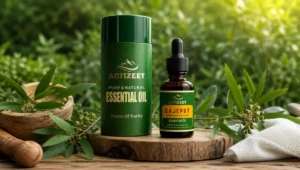
ACTIZEET® Essential Oils are built to meet every sign covered in this guide, full botanical labeling, correct extraction methods, dark glass packaging, and GC-MS testing available on request. We would encourage you to hold any brand, including us, to this exact same 15 point standard before you buy.
Shop ACTIZEET® Essential Oils →Frequently Asked Questions
Purity Is Checkable, Not Just a Feeling
Identifying a genuinely pure essential oil does not require special expertise, just a specific list of signs to check, label detail, bottle type, simple sensory tests, and available documentation. Running through these 15 signs takes only a few minutes and protects you far better than trusting a confident label alone.
You do not need every single sign present to feel reasonably confident, but the signs covering botanical identity, dilution and lab testing deserve the most weight. Keep this list handy the next time you are comparing two bottles, and let specifics guide your decision rather than packaging or price alone.
ACTIZEET® Essential Oils is built to meet every one of these signs, so you can shop with real confidence in what is actually in the bottle.