How ACTIZEET® Sources Premium Essential Oils for Purity and Quality
A small glass bottle of essential oil gives you almost no clue about how it was actually grown, extracted and verified before it reached your shelf. Here is the specific, step by step process ACTIZEET® follows to source premium essential oils, and why each stage matters for what you actually smell and use.
Premium essential oils are not defined by an attractive bottle or a confident sounding label. They are defined by a series of specific, checkable decisions made long before that oil ever reaches you, correct botanical species, thoughtful growing and harvest timing, the right extraction method, and batch specific lab testing. Skip any one of these steps and the word "premium" starts to mean considerably less than it should.
Most buyers never see any of this. A small glass bottle on a shelf gives no visual indication of whether the oil inside came from the correct plant species, was extracted using an appropriate method, or was tested for authenticity before bottling. The only real way to judge a specific bottle is to understand what the full sourcing process is supposed to look like, so you know exactly what to ask a brand before you buy.
This post walks through exactly how ACTIZEET® approaches this process for its essential oil range, so you can see what genuine sourcing actually looks like, not just what it sounds like in marketing copy.
Step 1: Starting With Correct Botanical Identity
Before anything else, sourcing begins with confirming the exact botanical species and, where relevant, the specific plant part used, flower, leaf, peel or resin. Many plants sold under a similar common name belong to different species entirely, with meaningfully different chemical profiles and aromas. This confirmation is the foundation everything else in this process builds on, since even the most careful extraction and testing cannot compensate for starting with the wrong plant.
Why the Full Botanical Name Matters
True lavender essential oil should come specifically from Lavandula angustifolia, not a cheaper lavandin hybrid sold under a similar sounding name. ACTIZEET® treats this species confirmation as a non negotiable first step, since every later decision, extraction method, expected aroma profile, testing benchmark, depends on first knowing exactly which plant you are working with. A brand that cannot speak specifically to this detail is starting from a shaky foundation, regardless of how confident the rest of its marketing sounds.
Step 2: Choosing the Right Growing Regions and Harvest Timing
Once the correct species is confirmed, growing conditions and harvest timing become the next major factor in a plant's eventual oil quality. Climate, soil and the specific point in a plant's growth cycle at which it is harvested all genuinely affect the concentration and character of its aromatic compounds. Two plants of the identical species can produce noticeably different oil depending on where and when they were grown and harvested.
Harvesting at the Right Moment
Many aromatic plants yield noticeably different oil depending on when exactly they are harvested, often a narrow window tied to flowering stage or time of day. ACTIZEET® prioritizes working with growers who harvest at this optimal point rather than on a purely convenient industrial schedule that ignores this natural variation, since rushing a harvest purely for logistical convenience can genuinely reduce the concentration of an oil's most valuable aromatic compounds. Lavender harvested slightly too early or too late, for example, can produce a noticeably different aromatic balance compared to lavender cut at its peak flowering point.
The National Center for Complementary and Integrative Health describes aromatherapy as the therapeutic use of essential oils from plants including lavender, tea tree, lemon and bergamot, and notes that quality and consistency across different products can vary considerably, underscoring why growing conditions and harvest timing genuinely matter well before an oil ever reaches a diffuser.
See this exact sourcing approach reflected in the finished product.
Shop ACTIZEET® Essential OilsStep 3: Matching Extraction Method to the Plant
Different plants respond better to different extraction techniques, and using the wrong method for a given plant can genuinely compromise the final oil's quality and chemical profile. This is why extraction method is a genuine sourcing decision at ACTIZEET®, chosen deliberately for each specific plant rather than applied uniformly across the entire range for the sake of simplicity.
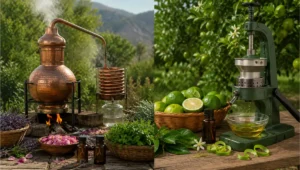
Used for most of our range, including lavender, peppermint and eucalyptus, steam distillation passes steam through plant material to release aromatic compounds, which are then condensed and separated from the resulting water. This remains the most widely applicable extraction method across a broad range of aromatic plants.
Citrus oils, including lemon and bergamot, are extracted through cold pressing, a mechanical process that presses oil directly from the peel without heat, preserving a brighter, fresher aromatic profile than a heat based method would typically produce for these specific plants.
Regardless of method, we prioritize processing conditions that avoid excessive heat exposure, since many of an oil's most valuable aromatic compounds are genuinely heat sensitive and can degrade under a rushed, high temperature process, even when the underlying extraction method itself is otherwise appropriate for the plant.
Step 4: Direct Relationships With Growers and Distillers
Rather than sourcing opportunistically from whichever supplier offers the lowest price in a given season, ACTIZEET® favors direct, consistent relationships with the same growers and distillers over time. Building these relationships takes more effort upfront, but it gives us a level of visibility into the actual growing and distillation process that an opportunistic, price driven sourcing strategy simply cannot match.
Why Consistency Beats a Lower One Time Price
A relationship measured in years, rather than single transactions, gives far greater visibility into how a specific oil was actually grown, harvested and distilled. It also allows for genuine collaboration on improving quality over successive seasons, something an unfamiliar, one time supplier simply cannot offer, since trust and shared quality expectations take time to build on both sides. A distiller who understands exactly what we expect from a batch, season after season, is far more likely to flag a problem early than one working with us for the first time.
Step 5: Batch Specific GC-MS Lab Testing
Correct sourcing and careful extraction still need to be verified before an oil is genuinely ready for sale. This is where gas chromatography mass spectrometry testing, commonly abbreviated GC-MS, comes in, confirming a batch's actual chemical composition rather than assuming it matches whatever came before it. Natural plant material varies from harvest to harvest, which is exactly why each batch is tested individually rather than relying on results from an earlier production run.
What GC-MS Testing Actually Confirms
- Botanical identity, confirming the oil matches the expected chemical profile for its claimed species.
- Absence of synthetic dilution or fragrance additives.
- Concentration of key aromatic compounds specific to that plant.
- Screening for residual solvents, relevant for oils extracted through solvent based methods.
The U.S. Food and Drug Administration clarifies that essential oils have no formal regulatory definition, and that terms like "therapeutic grade" carry no standardized legal meaning, noting that a plant origin alone does not automatically make an ingredient safe, which is exactly why independent chemical verification matters more than a label claim alone.
Why Independent Testing Matters
Wherever possible, this testing is conducted through independent, accredited laboratories rather than relying solely on in house assessment, since independent verification removes the inherent conflict of interest involved in a company grading its own product. A GC-MS report referencing a specific batch, issued by an outside laboratory, gives you something genuinely checkable rather than a general "lab tested" claim printed on the packaging.
A systematic review examining lavender essential oil inhalation specifically for anxiety analysed eleven randomised controlled trials, finding that the large majority reported reduced anxiety following inhalation, a result that depends entirely on the oil tested actually being genuine, correctly extracted lavender rather than a diluted or substituted imitation.
Step 6: Packaging That Protects What You Paid For
Once a batch passes testing, it is bottled in dark amber glass, chosen specifically because essential oils are sensitive to light degradation over time. A beautifully clear bottle might look appealing on a shelf, but it offers considerably less protection than dark glass, regardless of how good the oil inside happened to be on the day it was bottled. This final step is easy to overlook, but it directly affects how well an oil holds its aromatic profile between the day it leaves our facility and the day you actually open it.
Why This Process Actually Matters to You
Every stage described above exists to answer one practical question: does this specific bottle of oil genuinely contain what it claims, at the concentration it claims, free of dilution or synthetic substitution. Skipping any single stage, wrong species, mismatched extraction method, no independent testing, weakens that answer considerably, regardless of how convincing the packaging or marketing looks.
This is also the simplest way to evaluate any essential oil brand, including ACTIZEET®. Ask for the full botanical name, ask how the oil was extracted, and ask whether a GC-MS report is available for the specific batch you are buying. A brand able to answer these questions specifically, rather than with vague reassurance, is one worth trusting with something you diffuse or apply regularly, especially if you plan to use it consistently as part of a daily routine.
Storing Your Oils Correctly at Home
The care taken throughout sourcing and testing does not stop mattering once a bottle reaches your home. Keeping oils tightly capped, away from direct sunlight and heat, and limiting how long a bottle sits open, all help preserve the potency this entire process worked to protect. A genuinely well sourced oil can still lose real value if left uncapped on a sunny windowsill for months at a time.
ACTIZEET® Essential Oils are built around exactly this process, correct botanical sourcing, extraction methods matched to each plant, direct grower relationships, and GC-MS testing before any bottle reaches your shelf. Whether you are exploring a single oil like lavender or building a broader diffuser blend collection, every ACTIZEET® oil reflects the same standard described throughout this post.
Shop ACTIZEET® Essential Oils →Frequently Asked Questions
A Process Worth Knowing Before You Buy
Premium essential oils are the product of a specific, checkable process, not just an attractive bottle. From correct botanical identity through matched extraction methods and independent GC-MS testing, each stage exists to protect both the oil's authenticity and its potency.
Knowing this process turns essential oil shopping from a guessing game based on scent and packaging into an informed decision built on a few specific, checkable questions, the correct species, the extraction method used, and whether batch testing is genuinely available. Those three questions cover most of what actually separates a genuinely premium oil from an imitation.
ACTIZEET® Essential Oils is built around this full process, so you can bring genuine, verified essential oils into your daily routine with real confidence in how they were sourced and made.