Steam Distillation vs Cold Pressing: How Essential Oils Are Extracted
An essential oil bottle rarely explains how the oil inside was actually separated from its plant. Steam distillation and cold pressing are the two most common methods, and neither is simply a stylistic choice, each is matched to the specific chemistry of the plant it works with, and using the wrong one genuinely compromises the final result.
Most essential oil shopping focuses on scent, brand and price, and rarely touches on how the oil actually got out of the plant in the first place. This is a genuine gap, since extraction method shapes an oil's final chemical profile, aroma and even how it should be used, sometimes as significantly as the plant species itself.
Understanding extraction method also helps explain why certain oils cost meaningfully more than others, and why a citrus oil and a lavender oil, sold in similar looking bottles, went through completely different production processes before reaching the shelf, involving different equipment, timelines and levels of technical complexity.
This guide explains exactly how steam distillation and cold pressing work, why each method suits a different category of plant, and what this means for the quality and character of the oil you actually end up using.
What Is Steam Distillation?
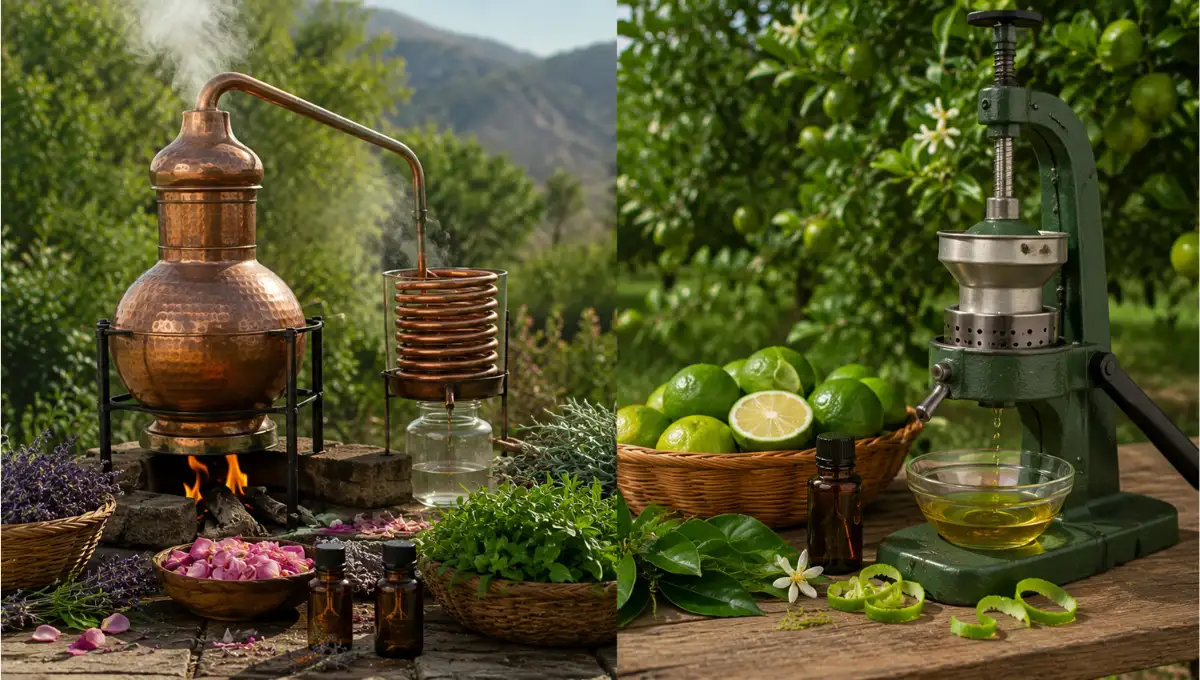
Steam distillation is the oldest and most widely used method for extracting essential oils, responsible for the majority of oils found on a typical shelf, including lavender, peppermint, eucalyptus and rosemary. The basic principle has remained largely unchanged for centuries, even as modern equipment has made the process more precise, consistent and repeatable across large production batches.
Plant material, flowers, leaves, or stems, is placed in a chamber, and steam is passed through it. The heat causes tiny pockets of essential oil within the plant's cell structure to release their volatile aromatic compounds, a process that generally takes anywhere from thirty minutes to several hours depending on the specific plant.
The steam, now carrying the released aromatic compounds, travels through a connected tube into a condenser, where it cools back into liquid form. This condensation stage is carefully controlled to protect the delicate compounds now suspended within the cooling vapor as it transitions from gas back into liquid.
Since essential oil and water do not mix, the condensed liquid naturally separates into two distinct layers, the essential oil, and a fragrant water known as hydrosol, which is often collected separately as a gentler byproduct. The oil is then carefully skimmed from the top of this mixture and bottled.
A recent review of essential oil extraction techniques explains that in steam distillation, plant material is heated by steam rather than direct contact with water, and that only volatile components can be recovered through this method, since heavier aromatic compounds cannot be separated using steam alone, a limitation that directly shapes which plants suit this technique and which ones require an alternative approach instead.
What Is Cold Pressing?
Cold pressing, sometimes called expression, is a mechanical extraction method used almost exclusively for citrus fruits, lemon, orange, bergamot, grapefruit and lime. Unlike steam distillation, this method involves no heat, water or chemical solvent at any stage.
A Mechanical Process, Not a Chemical One
Rather than using heat or steam, cold pressing physically presses or pierces the citrus peel, releasing the essential oil stored in small glands just beneath its surface. The oil and juice are then separated through centrifugation, without any heat applied at any stage of the process, keeping the final oil as close as possible to its natural, unprocessed state and original chemical composition.
Why "Cold" Matters in the Name
The absence of heat is precisely why this method carries the word "cold" in its name. Citrus oils contain aromatic compounds that are genuinely sensitive to heat degradation, making cold pressing a deliberately gentler alternative to steam distillation for this specific category of plant material, one specifically developed around citrus fruit's particular chemistry rather than applied generically.
See both extraction methods reflected across a real, verified product range.
Shop ACTIZEET® Essential OilsWhy Extraction Method Is Not a Matter of Preference
It is tempting to think of extraction method as simply a production choice a brand makes, but in practice, the plant itself largely determines which method actually works, leaving considerably less room for arbitrary choice than buyers often assume, regardless of how a specific brand might prefer to market its process.
Citrus Oils Do Not Suit Steam Distillation Well
Citrus peel oils are located in glands close to the fruit's surface and can degrade under the heat involved in steam distillation, losing some of their bright, fresh character. Cold pressing avoids this issue entirely by extracting the oil without heat, preserving the sharp, true to fruit aroma citrus oils are known for.
Flowers and Leaves Generally Do Not Suit Cold Pressing
Most aromatic plants store their essential oil deep within specialized cell structures that cold pressing cannot access mechanically. Steam distillation's ability to penetrate plant tissue and release these compounds is exactly why it works for lavender, peppermint and similar plants, where cold pressing simply would not be effective, regardless of how much pressure or force might be applied.
Steam Distillation: Best Suited Plants
The table below highlights a few of the most common steam distilled oils, each chosen specifically because its aromatic compounds are stored in a way steam distillation can effectively access.
| Plant | Part Used | Why Steam Distillation Suits It |
|---|---|---|
| Lavender | Flowering tops | Oil stored in glandular trichomes released effectively by steam |
| Peppermint | Leaves | Volatile compounds concentrated in leaf oil glands |
| Eucalyptus | Leaves | Robust, heat tolerant aromatic compounds suited to this method |
| Rosemary | Leaves and flowering tops | Traditional method with well documented, consistent results |
Cold Pressing: Best Suited Plants
Cold pressing is used almost exclusively for citrus fruit peels, where the oil sits accessibly close to the surface and benefits directly from avoiding heat exposure. Unlike the wider variety of plants suited to steam distillation, this method's applicability remains genuinely narrow and specific.
- Lemon, prized for a bright, fresh top note that heat can dull.
- Sweet orange, a widely used, approachable citrus oil.
- Bergamot, valued for its distinctive, complex citrus profile.
- Grapefruit and lime, both similarly suited to gentle, heat free extraction.
Other Extraction Methods Worth Knowing About
Steam distillation and cold pressing cover most oils on the market, but a few other methods exist for specific plants where neither approach works well, and knowing about them helps round out the full picture of how essential oils are actually made.
CO2 Extraction
Carbon dioxide extraction uses pressurized CO2 as a solvent, capable of extracting a broader range of compounds than steam distillation while avoiding heat exposure entirely. This method tends to be more expensive but can produce an oil closer in aroma to the original raw plant material, since it captures a wider spectrum of the plant's natural aromatic profile than steam distillation typically allows for.
A comparative study of camphor tree essential oil extraction found that supercritical CO2 extraction produced a substantially higher extraction yield and identified more distinct chemical compounds than steam distillation of the same plant material, while also helping prevent oxidation and loss of heat sensitive substances, illustrating why this method is sometimes chosen despite its higher cost and greater equipment complexity.
Solvent Extraction and Absolutes
Some delicate flowers, jasmine and rose among them, yield very little oil through steam distillation and are instead processed using a chemical solvent to produce a concentrated extract known as an absolute. This method requires careful, thorough solvent removal to ensure a clean, safe final product, and reputable producers test the finished absolute specifically to confirm residual solvent levels fall within an acceptable, genuinely safe range before it is ever bottled and sold.
Quality and Aroma Differences Between Methods
Extraction method genuinely shapes an oil's final character, not just its production cost, and this difference is often noticeable even to a fairly casual, untrained nose comparing two bottles side by side.
Steam Distilled Oils Tend to Smell "Cooked" or Rounded
The heat involved in steam distillation can soften an oil's sharper top notes slightly, producing a rounder, more settled aroma compared to the raw plant. This is a genuinely normal characteristic of the method, not a defect, and it is part of the expected profile for oils like lavender and eucalyptus that have been steam distilled for generations without any meaningful complaint about this specific quality.
Cold Pressed Oils Tend to Smell Brighter and Fresher
Without heat exposure, cold pressed citrus oils generally retain a brighter, more true to fruit aroma, closer to what you would smell zesting the fruit itself. This freshness is precisely what cold pressing is specifically designed to preserve, and it is a big part of why citrus oils are rarely, if ever, produced using the heat based steam distillation method instead.
Why Extraction Method Affects Price
Cold pressing is generally less expensive than steam distillation, since citrus peel is often a byproduct of juice production, while CO2 extraction tends to be the most expensive method due to specialized equipment requirements. Understanding this helps explain why a cold pressed lemon oil and a CO2 extracted rose oil sit at genuinely different price points, beyond simple market positioning, reflecting real differences in equipment cost, raw material availability and processing complexity that a buyer rarely sees directly but pays for indirectly through the final retail price.
How to Check Which Method Was Used Before Buying
Extraction method should be stated clearly on a genuine essential oil listing. If a citrus oil is labeled as steam distilled rather than cold pressed, or a delicate flower oil claims steam distillation without any mention of solvent extraction for context, it is worth asking the brand directly for clarification, since these mismatches can signal a listing written carelessly or without genuine technical accuracy.
The National Center for Complementary and Integrative Health describes aromatherapy as the therapeutic use of essential oils extracted from plants including lavender, tea tree, lemon and bergamot, noting that quality and preparation methods can vary considerably between products, which is exactly why checking extraction method specifically matters more than trusting a brand name alone.
A Quick Mismatch Check
As a simple rule, citrus oils should be cold pressed, and flowers or leaves should be steam distilled, CO2 extracted, or solvent extracted into an absolute. A citrus oil claiming steam distillation, or a delicate flower oil with no explanation of its extraction method at all, is worth double checking directly with the seller before you buy.
Why This Check Takes Only a Minute
Most reputable listings state extraction method directly in the product description or specification section, so this check rarely requires anything more than reading the page carefully or asking a single direct question if the information is missing entirely.
ACTIZEET® Essential Oils are extracted using the method genuinely suited to each specific plant, steam distillation for lavender and peppermint, cold pressing for citrus oils, with the method clearly stated for every product in our range. We believe this level of specific detail matters more than a general purity claim alone.
Shop ACTIZEET® Essential Oils →Frequently Asked Questions
The Right Method Depends on the Plant, Not Preference
Steam distillation and cold pressing are not interchangeable production choices, they are methods matched specifically to different plant chemistry, flowers and leaves suited to steam, citrus peels suited to mechanical pressing. Understanding this helps you evaluate any essential oil more specifically than judging by scent or price alone.
The next time you are comparing two bottles, check the extraction method against the plant itself. A mismatch between the two is one of the simplest, most reliable signs worth watching for, regardless of how polished the rest of the listing appears.
ACTIZEET® Essential Oils is built around using the correct, plant specific extraction method for every oil we offer, clearly stated so you know exactly how your oil was made.