Traditional Wisdom Meets Modern Science: How Ancient Wellness Practices Continue to Inspire Research
Long before clinical trials and lab equipment existed, healers across the world were carefully observing which plants eased fever, which roots calmed the stomach, and which barks reduced pain, passing that knowledge down through generations by trial, memory and necessity. A remarkable number of these observations have since been confirmed, refined or directly built upon by modern science. This guide explores exactly how that convergence happens, what it has already produced, and what it means for how we choose wellness products today.
It is easy to think of traditional medicine and modern science as opposites, one built on centuries of observation and cultural practice, the other built on controlled trials and molecular biology. In reality, the relationship between the two is far more collaborative than that framing suggests. Some of the most important medicines in modern pharmacology, from aspirin to the leading treatment for malaria, trace their origin directly back to a traditional remedy that scientists later studied, isolated and refined.
This is not a story about traditional medicine being "proven right" in some simple, complete sense, nor is it a story about modern science replacing tradition entirely. It is a genuinely more interesting story about two different knowledge systems, one built on generations of careful observation, the other built on systematic testing, working together to produce discoveries that neither could likely have reached alone.
Understanding how this relationship actually works matters for reasons well beyond historical curiosity. It shapes how pharmaceutical researchers still approach drug discovery today, it explains why certain herbs and practices attract sustained scientific interest while others remain understudied, and it gives everyday buyers a genuinely useful framework for evaluating the wellness products that draw on traditional knowledge in their marketing, separating products built on real, documented substance from those borrowing the language of tradition without any of the depth behind it.
This guide walks through how this convergence actually happens, some of the most significant examples of traditional knowledge inspiring major scientific breakthroughs, the specific research methods scientists use to study traditional practices, what current research says about systems like Ayurveda and Traditional Chinese Medicine, and what all of this means for how you evaluate modern wellness products, including those from ACTIZEET®, that draw on this same traditional foundation. By the end, the goal is not just historical appreciation, but a genuinely practical framework you can carry into your next wellness purchase.
What "Traditional Wisdom Meets Modern Science" Actually Means
The phrase gets used loosely in wellness marketing, often as a vague suggestion that a product is somehow both ancient and scientifically validated at once. The actual, more precise meaning is narrower and more interesting than that. It refers to a specific, repeatable pattern: a traditional healing system identifies that a particular plant, mineral or practice produces a noticeable effect, this observation gets passed down and refined across generations, and modern researchers later investigate that specific claim using controlled scientific methods, sometimes confirming it, sometimes refining it, and sometimes finding the traditional explanation was incomplete even where the underlying effect turns out to be real.
This is fundamentally different from simply slapping a scientific sounding label onto a traditional product without any actual research behind it, a pattern common enough in wellness marketing that it is worth naming directly. Genuine convergence involves real, published research, peer review, and a level of scientific scrutiny that traditional use alone does not provide, applied specifically to claims that traditional systems originated.
It is also worth being precise about what this convergence does not mean. It does not mean every traditional practice will eventually be validated by science, nor does it mean modern science and traditional systems always reach the same conclusions about mechanism, even when they agree on the underlying observed effect. A traditional system might correctly identify that a specific plant reduces fever, explained through its own internal framework, while modern research later identifies an entirely different biochemical mechanism responsible for that same observed effect. Both observations can be genuinely valuable and mutually reinforcing, even when the explanatory frameworks behind them differ considerably.
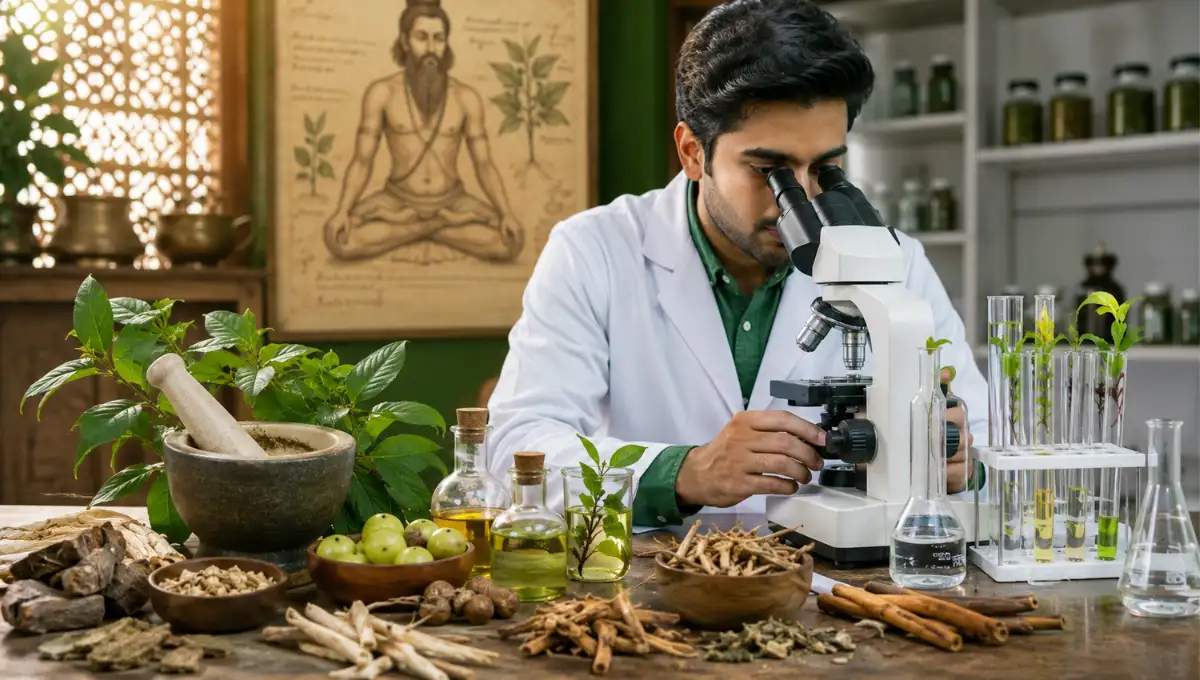
Traditional wisdom meeting modern science refers to the process by which practices, remedies or observations from traditional medical systems are studied using modern scientific methods, sometimes leading to validated treatments, refined understanding, or new avenues of pharmaceutical research.
Two Different Ways of Knowing
It helps to understand traditional and modern medical knowledge as two genuinely different methods for arriving at reliable information, each with real strengths and real limitations, rather than ranking one as simply superior to the other. Framing the relationship as a competition, tradition versus science, tends to obscure what is actually the more accurate and more useful picture: two complementary approaches to the same underlying question of what actually helps the human body, arrived at through very different, but not necessarily incompatible, processes.
| Aspect | Traditional Knowledge Systems | Modern Scientific Method |
|---|---|---|
| Time Horizon | Built over generations, sometimes centuries | Typically validated within years to a few decades |
| Sample Size | Large cumulative population exposure over time | Defined, controlled study populations |
| Method | Observation, trial and error, oral and textual transmission | Controlled experimentation, statistical analysis, peer review |
| Strength | Captures whole system, long term, real world effects | Isolates specific cause and effect precisely |
| Limitation | Difficult to separate correlation from causation, or one active ingredient from many | Can miss whole system or long term effects not captured in a shorter trial |
Neither approach alone tells the complete story. Traditional knowledge is exceptionally good at identifying that something works, accumulated through generations of real world use across large populations, but it is generally much weaker at explaining precisely why or isolating exactly which component is responsible. Modern science excels at exactly this precision, isolating mechanism and active compound, but it can be slower, more expensive, and sometimes misses subtler, whole system effects that only become apparent over the kind of extended time horizon traditional use naturally provides. The most productive research happens when these two strengths are combined deliberately, which is precisely what disciplines like ethnopharmacology and reverse pharmacology, covered later in this guide, are designed to do.
A Brief History of This Convergence
The relationship between traditional healing knowledge and formal scientific medicine is considerably older than most people assume, and it did not begin as an adversarial one. Early modern pharmacology, particularly through the eighteenth and nineteenth centuries, drew heavily on folk and traditional plant knowledge as its starting point, long before molecular biology or controlled clinical trials existed as tools. In many respects, the modern pharmaceutical industry as we know it today emerged directly out of this earlier, less formalized tradition of investigating folk remedies, rather than starting from some entirely separate, purely laboratory based origin point.
Quinine, isolated from cinchona bark in the early nineteenth century, came directly from South American indigenous knowledge of the bark's fever reducing properties, later adopted by European colonizers and eventually isolated as a purified compound. Digitalis, a foundational heart medication, was derived from foxglove after physician William Withering documented its traditional use as a folk remedy for dropsy, what we now understand as fluid retention linked to heart failure, in the late eighteenth century. Aspirin's active compound traces back to salicin, found in willow bark, used for pain and fever across multiple ancient cultures including ancient Egypt and Greece, long before its isolation and chemical refinement in the nineteenth century. Each of these examples followed a broadly similar pattern: a substance already trusted through generations of direct human use, later subjected to the isolation, purification and standardization techniques that transformed a plant based folk remedy into a precisely dosed modern medicine.
What changed over the twentieth century was not the underlying relationship between traditional knowledge and drug discovery, which remained genuinely productive throughout, but the formalization of scientific method around it, randomized controlled trials, systematic pharmacological testing, and eventually genomic and molecular tools that allow researchers to understand not just whether a traditional remedy works, but precisely why and how at a cellular level.
It is worth noting that much of this early extraction of traditional knowledge occurred during the colonial era, often without meaningful credit, compensation or consent extended to the indigenous and local communities whose accumulated observation made these discoveries possible in the first place. This is not a minor historical footnote, and it connects directly to a broader ethical discussion covered later in this guide. The more recent, ongoing shift toward formal ethnopharmacological documentation, benefit sharing agreements and genuine collaboration with traditional knowledge holders represents a meaningful, if still incomplete, correction to this earlier pattern.
Case Study: Artemisinin and a Nobel Prize
No single example illustrates this convergence more powerfully than the discovery of artemisinin, now considered one of the most important pharmaceutical interventions of the past half century.
The Problem
By the late 1960s, malaria treatment was in genuine crisis. The disease was resurging, existing drugs like chloroquine were losing effectiveness as resistant strains spread, and more than 240,000 synthetic compounds had already been screened by researchers worldwide without producing a viable new treatment.
Turning to Traditional Texts
Chinese researcher Tu Youyou turned specifically to traditional Chinese medical texts from the Zhou, Qing and Han dynasties in search of a historical treatment for fever, eventually identifying sweet wormwood, or Artemisia annua, as a promising candidate. After discovering that a key ancient text specified a cold extraction method rather than the boiling process her team had initially tried, and adjusting her lab methods accordingly, she succeeded in isolating the compound that would become known as artemisinin, a discovery for which she was awarded the 2015 Nobel Prize in Physiology or Medicine.
Why the Ancient Detail Mattered
What makes this story particularly striking from a scientific perspective is how specific the traditional knowledge that unlocked the breakthrough turned out to be. Early attempts to extract the active compound using standard heat based methods failed entirely, producing inconsistent results in testing. It was only after Tu Youyou returned to the original historical text and noticed a specific instruction to soak the plant material in cold water, rather than boil it, that her team succeeded, since heat was in fact destroying the very compound they were trying to isolate. This detail, preserved in a centuries old text for reasons the original authors could not have explained in modern chemical terms, turned out to be scientifically essential.
The Outcome
Artemisinin based combination therapies are now recommended by the World Health Organization as the first line treatment for malaria worldwide, and are credited with saving millions of lives since their introduction. Tu Youyou herself, in her Nobel lecture, described the discovery as "a gift from traditional Chinese medicine to the world," directly crediting the traditional knowledge base her research began from rather than treating it as a mere historical footnote to a modern discovery.
What makes this case study especially valuable for understanding this broader convergence is how clearly it demonstrates that traditional knowledge and modern science each contributed something the other could not have provided alone. The traditional text supplied a specific plant candidate and a specific, non obvious extraction detail that decades of purely synthetic drug screening had never surfaced. Modern pharmacological science supplied the tools to isolate the exact active compound, confirm its mechanism, standardize its dosing, and eventually scale its production to treat hundreds of millions of malaria cases worldwide. Removing either half of this partnership, the traditional text or the modern laboratory, would very plausibly have meant the discovery never happened at all, or happened considerably later, at a real and significant human cost.
Explore products rooted in traditional wisdom and modern quality standards.
Shop ACTIZEET®Other Landmark Discoveries Rooted in Traditional Medicine
Artemisinin is the most widely publicized recent example, but it is far from the only case where traditional knowledge directly shaped a major pharmaceutical discovery.
| Modern Drug or Discovery | Traditional Origin | Modern Application |
|---|---|---|
| Aspirin (salicin/salicylic acid) | Willow bark, used across ancient Egypt, Greece and beyond | Pain relief, fever reduction, cardiovascular protection |
| Quinine | Cinchona bark, South American indigenous knowledge | Historic antimalarial, still used in some formulations |
| Digoxin | Foxglove, English folk remedy for dropsy | Heart failure and certain arrhythmia treatment |
| Artemisinin | Sweet wormwood, traditional Chinese medicine texts | First line antimalarial combination therapy |
| Metformin | Galega officinalis, traditional European herbal use | First line treatment for type 2 diabetes |
| Reserpine | Rauwolfia serpentina, traditional Ayurvedic use | Early antihypertensive and antipsychotic research |
Metformin's story is particularly interesting for how indirect the path from tradition to modern drug actually was. Galega officinalis, also known as goat's rue, was used in traditional European herbal medicine for symptoms we would now associate with diabetes. Researchers eventually identified guanidine compounds within the plant as the source of its blood sugar lowering effect, and metformin was developed as a safer, more effective synthetic descendant of that original compound family, now standing as one of the most widely prescribed medications in the world.
Reserpine, extracted from the Ayurvedically documented plant Rauwolfia serpentina, known in Sanskrit texts as sarpagandha, offers a similarly instructive example. Traditional Ayurvedic practitioners had long used the root for calming and sedative purposes. Twentieth century research identified reserpine as the active compound, and its study contributed meaningfully to early psychiatric pharmacology and blood pressure research, even though reserpine itself has since been largely superseded by newer medications with a better safety profile.
Taxol and the Pacific Yew
Paclitaxel, marketed as Taxol, one of the most important chemotherapy drugs used against several cancer types, was isolated from the bark of the Pacific yew tree following a large scale plant screening program in the 1960s. While its discovery came through systematic screening rather than direct traditional medicinal use of the Pacific yew specifically, some indigenous communities in the Pacific Northwest had documented traditional uses for yew bark and needles, and the discovery is frequently cited alongside other traditional plant derived drugs as an example of how carefully investigating plant chemistry, whatever the starting point, can uncover genuinely transformative medicines.
Capsaicin and Chili Peppers
Capsaicin, the compound responsible for the heat in chili peppers, has a long history of traditional use across Central and South America, both as food and as a topical remedy for pain. Modern research has since led to FDA approved capsaicin based topical treatments for certain types of chronic nerve pain, a direct application of a compound whose traditional use long predates any understanding of the specific receptor, known as TRPV1, that modern researchers eventually identified as responsible for its effects.
How Scientists Actually Study Traditional Practices
Understanding the actual research methods involved helps explain why some traditional claims get validated relatively quickly while others remain unconfirmed or contested for decades.
Ethnopharmacology
Ethnopharmacology is the academic discipline dedicated specifically to studying how different cultures traditionally use plants and other natural substances for medicinal purposes, documenting this knowledge systematically and investigating the biological basis behind it. Ethnopharmacologists often work directly with traditional healers and communities to record detailed use patterns before any laboratory work even begins.
Ethnobotanical Surveys and Documentation
Before any laboratory testing begins, researchers frequently conduct structured ethnobotanical surveys, systematically interviewing traditional healers and community members about which plants are used, for what purpose, in what preparation, and at what dose. This documentation step is genuinely foundational rather than a formality, since it creates the searchable knowledge base that later guides which plants researchers prioritize for deeper laboratory investigation, out of the tens of thousands of plant species that could theoretically be studied. Well conducted ethnobotanical surveys also serve an important preservation function in their own right, formally recording knowledge that might otherwise only exist through oral transmission and risk being lost as traditional practices decline in some regions.
Reverse Pharmacology
Reverse pharmacology, a research approach particularly associated with the scientific study of Ayurveda, begins with an existing traditional treatment already understood to be reasonably safe and clinically observed to work, then works backward through laboratory and clinical investigation to identify the specific mechanism of action, in contrast to conventional drug development, which typically starts by identifying a molecular target and then searches for compounds that interact with it.
This approach carries a genuine practical advantage. Because the starting point is a substance already used safely by humans over a long period, some of the early safety hurdles that make conventional drug development so slow and expensive are, in principle, already partially addressed, though rigorous modern safety and efficacy testing remains essential regardless of traditional use history.
Bioprospecting and Compound Isolation
Once a traditional plant or substance is identified as a promising research candidate, chemists work to isolate its individual chemical components, testing each one separately to determine which specific compound, or combination of compounds, is responsible for the observed effect. This is precisely the step that transformed sweet wormwood, a whole plant used in traditional preparation, into artemisinin, a single, precisely defined chemical compound that could be manufactured, dosed and studied with pharmaceutical precision.
Clinical Validation
The final and most rigorous stage involves formal clinical trials, testing the isolated compound or traditional preparation against a placebo or existing treatment in a controlled human study, following the same regulatory standards applied to any other pharmaceutical candidate. This stage is where a genuinely large share of traditional remedies currently remain, promising in laboratory and preliminary research, but not yet supported by the same volume of large scale, rigorous clinical trial evidence expected of a fully established modern pharmaceutical.
Ayurveda and What Modern Research Is Finding
Among the world's traditional medical systems, Ayurveda has attracted a particularly active and growing body of modern scientific research, partly due to its detailed textual tradition and partly due to sustained institutional research investment within India.
Herbs With Notable Research Interest
Ashwagandha has become one of the most researched adaptogenic herbs globally, with a growing number of randomized controlled trials examining its effect on stress, cortisol and sleep quality. Turmeric's curcumin content has been extensively studied for antioxidant and anti-inflammatory activity, though researchers continue working to solve its natural bioavailability limitations. Bacopa monnieri, known as Brahmi, has accumulated a meaningful body of research specifically around cognitive performance and memory. Boswellia serrata, the source of frankincense resin, has drawn research interest for joint comfort and inflammatory response.
Ayurgenomics: A Newer Research Frontier
A more recent and genuinely novel area of research, sometimes referred to as Ayurgenomics, investigates whether the constitutional categories described in classical Ayurveda, the doshas, correlate with measurable genetic or biological markers. This research remains at a relatively early stage, but represents an interesting example of traditional conceptual frameworks generating entirely new scientific research questions, rather than traditional knowledge simply being tested against pre-existing modern categories.
Institutional Research Investment
India's Ministry of AYUSH and affiliated research councils have invested substantially in formal Ayurvedic research infrastructure over recent decades, funding clinical trials, standardizing herbal quality benchmarks, and supporting the kind of reverse pharmacology research described earlier in this guide. This institutional backing is part of why Ayurvedic herb research has grown so significantly in volume and rigor compared to several decades ago, even though considerable work remains before many traditional Ayurvedic claims reach the same evidentiary standard as established pharmaceutical treatments.
The Standardization Challenge in Ayurvedic Research
One recurring obstacle in Ayurvedic clinical research deserves specific mention. Classical Ayurvedic formulations are frequently multi herb combinations, adjusted individually according to a patient's constitution, which sits in real tension with the standardized, single variable design that modern randomized controlled trials generally require to produce clean, interpretable results. Researchers have responded to this tension in different ways, some choosing to study single, standardized herbs like ashwagandha in isolation to meet conventional trial design requirements, others working to develop research methodologies better suited to studying personalized, multi herb formulations without losing the individualized character that is central to classical Ayurvedic practice. Both approaches are active areas of ongoing methodological development within the field.
Traditional Chinese Medicine and Modern Research
Traditional Chinese Medicine has produced, through artemisinin, one of the clearest and most celebrated examples of traditional knowledge translating directly into a globally significant modern pharmaceutical. This success has helped drive continued research interest into other TCM derived compounds and formulations.
Beyond Artemisinin
Arsenic trioxide, derived from a traditional Chinese mineral remedy, has become an established treatment for a specific form of leukemia following extensive modern clinical research. Huperzine A, extracted from Chinese club moss and long used in traditional preparations, has been studied for its effect on memory and cognitive function, drawing research interest in the context of neurodegenerative disease research.
Classical Formulas in Recent Research
During the COVID-19 pandemic, several classical Chinese medicine formulas were studied and, in some cases, formally approved in China as part of broader treatment protocols following clinical research into their effect on disease symptoms and progression, illustrating that this research relationship between traditional formulas and modern clinical investigation continues actively today rather than being confined to historical examples.
Acupuncture: A Practice Alongside Herbal Medicine
Traditional Chinese Medicine encompasses more than herbal formulations, and acupuncture represents a genuinely distinct research case worth noting separately. Rather than involving an isolatable chemical compound the way herbal medicine research generally does, acupuncture research has focused on physiological mechanisms, including effects on nerve signaling and localized blood flow, and has accumulated a meaningful body of clinical trial evidence specifically for certain types of pain, leading several national health bodies to include it as a recognized option within broader pain management guidelines, even as researchers continue investigating and debating the precise mechanisms involved.
Other Traditional Systems Contributing to Science
While Ayurveda and Traditional Chinese Medicine receive the most research attention globally, they are far from the only traditional systems that have meaningfully contributed to modern pharmacology. Traditional medical knowledge developed independently across essentially every inhabited region of the world, and a genuinely global view of this convergence needs to look beyond the two most frequently discussed systems.
Indigenous and Amazonian Plant Knowledge
A significant share of plant derived pharmaceutical compounds, including several important cancer treatments, originated from indigenous knowledge of Amazon rainforest plant species, gathered through generations of careful observation by communities with deep, direct familiarity with their local ecosystems.
African Traditional Medicine
African traditional medicine, encompassing a wide range of regional practices across the continent, has contributed several plant derived compounds to modern pharmacological research, and continues to be an active area of ethnopharmacological documentation and investigation, particularly as researchers work to formally record traditional knowledge that has historically been transmitted primarily through oral tradition.
European Folk Medicine
As covered earlier with willow bark, foxglove and Galega officinalis, European folk medicine traditions contributed foundational knowledge to several of modern pharmacology's most widely used medications, a history that is sometimes underappreciated given how thoroughly these traditional origins have been absorbed into mainstream medical practice.
The World Health Organization's Global Traditional Medicine Strategy for 2025 to 2034 explicitly recognizes traditional, complementary and integrative medicine as deeply embedded in culture and local practice worldwide, and specifically prioritizes strengthening the research evidence base behind these systems as part of a broader effort to responsibly integrate them into national health systems globally.
The Ethics of Traditional Knowledge: Biopiracy and Benefit Sharing
Any honest discussion of traditional knowledge informing modern science needs to address a genuinely uncomfortable part of this history. For much of the twentieth century, researchers and pharmaceutical companies frequently extracted traditional knowledge from indigenous and local communities, patented the resulting discoveries, and generated substantial commercial profit, often without any meaningful compensation, credit or consent returned to the communities whose knowledge made the discovery possible in the first place. This pattern has come to be known as biopiracy, and it represents a real, documented ethical failure within the broader history covered in this guide.
Notable Historical Cases
Several well documented cases illustrate this problem clearly, including attempts to patent traditional uses of turmeric and neem that were ultimately challenged and overturned specifically because the underlying traditional knowledge was shown to already be public, longstanding practice within India, undermining the novelty claim patent law requires. These successful challenges were significant precedents, establishing that documented traditional knowledge could serve as prior art capable of blocking an inappropriate patent claim.
The Nagoya Protocol and Modern Frameworks
In response to this pattern, international frameworks have since developed specifically to address it. The Nagoya Protocol, an international agreement under the Convention on Biological Diversity, establishes formal requirements around access to genetic resources and traditional knowledge, including fair and equitable benefit sharing with the communities and countries of origin when that knowledge contributes to a commercial discovery. Compliance with these frameworks remains uneven globally, and meaningful benefit sharing does not always reach the specific communities whose knowledge was originally involved, but the existence of these frameworks reflects a genuine, if incomplete, shift toward more ethical engagement with traditional knowledge.
What This Means for Responsible Engagement
For any brand or researcher genuinely drawing on traditional knowledge, ethical engagement means more than avoiding outright patent theft. It means fair compensation to growers and source communities, genuine credit given to the traditional systems and cultures a product's knowledge originates from, and transparency about sourcing relationships rather than treating traditional origin purely as an appealing marketing narrative detached from the actual people and communities involved.
This is also a genuinely useful lens for buyers to apply when evaluating a brand's story. A company that speaks about its traditional sourcing region only in vague, romanticized terms, without any specific detail about who it actually works with or how those communities benefit, is telling a considerably thinner story than one that can speak concretely about its supplier relationships, fair pricing practices, and the specific origin of the traditional knowledge behind its products.
The Real Challenges of Validating Traditional Knowledge
It would be misleading to present this convergence as a simple, always successful process. Genuine, significant challenges exist, and being honest about them is part of respecting both traditional knowledge and scientific rigor. Understanding these obstacles also helps explain why so many traditional remedies remain in a kind of scientific limbo, neither disproven nor fully validated, rather than clearly confirmed or rejected one way or the other.
Whole Plant Complexity
Traditional remedies are frequently whole plant preparations or multi herb formulations containing dozens of interacting compounds, whereas modern pharmacology generally prefers isolating a single active compound for precise dosing and mechanism study. This mismatch means some traditional formulations lose part of their original effect when reduced to a single isolated compound, a phenomenon researchers sometimes describe as the loss of synergistic or entourage effects between multiple plant compounds working together.
Funding and Research Priority Gaps
Pharmaceutical research funding overwhelmingly favors patentable, synthesizable compounds over naturally occurring plant substances that are more difficult to patent in their original form, creating a structural funding bias against fully investigating many traditional remedies to the same depth as synthetic drug candidates, regardless of how promising early research might look.
Standardization Difficulties
Natural plant material varies in chemical composition depending on growing conditions, harvest timing and processing method, making the kind of precise, repeatable dosing standard modern clinical trials require considerably harder to achieve consistently compared to a synthetic compound manufactured to an exact specification.
Publication and Language Bias
A significant share of traditional medicine research, particularly research conducted within the originating country of a given tradition, gets published in regional journals or in languages other than English, making it considerably less visible to the broader international research community and less likely to be included in major systematic reviews and meta-analyses, which tend to draw primarily from English language, internationally indexed journals. This creates a genuine visibility gap where meaningful research may already exist but remains underrepresented in the evidence base that most global health authorities and researchers actually consult.
The Risk of Overclaiming
Not every traditional remedy will ultimately be validated by rigorous modern research, and some traditional explanations for why a remedy works turn out to be incomplete or inaccurate even when an underlying real effect is eventually confirmed through a different mechanism than originally proposed. Responsible engagement with this convergence means accepting uncertainty and mixed results as a normal, expected part of the research process, not something to be glossed over in marketing.
Why This Convergence Matters for You Today
Understanding this relationship between tradition and science is not just an interesting historical curiosity. It has genuinely practical implications for how you approach wellness products and herbal supplements in your own life.
First, it means dismissing traditional remedies outright simply because they are old or unfamiliar is not a scientifically grounded position, given how many foundational modern medicines trace directly back to traditional origins. Second, it means uncritically accepting every traditional claim as automatically valid simply because it has centuries of use behind it is equally unfounded, since traditional use history alone does not constitute the same standard of evidence as a rigorous modern clinical trial. The genuinely well informed position sits between these two extremes, taking traditional knowledge seriously as a starting point for investigation, while still expecting real modern evidence before drawing strong conclusions about safety and effectiveness.
This balanced perspective is also directly useful for practical shopping decisions. A wellness product genuinely rooted in traditional use, and additionally supported by some level of modern research and quality testing, sits on considerably firmer ground than a product relying purely on either tradition or unverified scientific sounding marketing language alone.
There is also a broader, less immediately practical reason this convergence matters. Every time a traditional remedy is investigated seriously and found to have real scientific merit, it strengthens the case for continuing to invest research resources into traditional knowledge systems more broadly, rather than treating them as a historical curiosity outside the scope of modern medical research. Conversely, every well designed study that finds a traditional claim does not hold up under rigorous testing helps refine which traditional practices deserve continued attention and which explanations may need revision, a process that ultimately strengthens both traditions rather than diminishing either one.
How to Choose Products That Honor Both Traditions
With this history and these research methods in mind, evaluating a specific wellness product becomes considerably more concrete than simply trusting a brand's general marketing tone. The five criteria below translate everything covered in this guide into a practical framework you can actually apply the next time you are deciding what to buy.
Favor products with a documented, specific traditional use history, ideally referencing the actual traditional system and classification the ingredient comes from, rather than a vague, generic wellness framing.
Look for brands that reference specific, checkable studies rather than vague claims like "clinically proven" with no accompanying citation or detail you can actually verify.
A trustworthy brand distinguishes between traditional use, preliminary research and well established clinical evidence, rather than presenting all three with equal, unqualified confidence.
Traditional origin does not replace the need for modern quality verification, correct botanical identity, proper purification, and batch specific lab testing all remain essential regardless of how well documented a remedy's traditional history is.
Even well researched traditional ingredients rarely have evidence strong enough to support claims of curing or treating a diagnosed medical condition. Genuine products describe traditional use and general wellness support rather than making these stronger claims.
What This Means for the Future of Drug Discovery
Traditional knowledge is not simply a historical resource that has already been fully mined for its most significant discoveries. Researchers continue to view ethnopharmacology and reverse pharmacology as genuinely promising, underutilized approaches to a modern pharmaceutical industry facing rising development costs and declining rates of successful new drug approval through purely synthetic discovery pipelines.
Emerging Technology Meeting Old Knowledge
Newer research tools are making this traditional knowledge easier to investigate systematically than ever before. Genomic sequencing allows researchers to study how traditional formulations affect gene expression at a molecular level. Systems biology approaches, which analyze how multiple compounds interact within a biological system simultaneously, are particularly well suited to studying multi herb traditional formulations, addressing one of the standardization challenges covered earlier in this guide. Large scale bioinformatic databases now allow researchers to cross reference traditional use records against known pharmacological compound libraries far more efficiently than earlier generations of researchers ever could.
A Two Way Street Going Forward
The most promising future direction for this field treats the relationship as genuinely bidirectional rather than one directional knowledge extraction. Modern science does not simply validate or dismiss traditional claims from the outside. Increasingly, traditional practitioners, ethnobotanists and modern researchers collaborate directly, combining generations of accumulated observational knowledge with modern analytical precision in a way that respects and credits both contributions, a meaningfully different model from the historical extraction pattern discussed earlier in this guide. As global research infrastructure continues to expand and international collaboration around traditional knowledge documentation grows, it is genuinely reasonable to expect more discoveries in the coming decades that follow a similar pattern to artemisinin, a careful, respectful investigation of traditional knowledge, married to the precision tools of modern pharmacology.
Common Myths About Traditional Medicine and Science
A few persistent misconceptions tend to distort how people talk about this relationship, and clearing them up makes the rest of this discussion considerably easier to navigate honestly.
Myth: "Traditional Medicine Has Already Been Fully Disproven by Science"
This overstates the case considerably. Many traditional remedies have simply not yet been studied in enough depth to reach a firm scientific conclusion either way, and a meaningful number that have been studied show genuinely promising, if not always conclusive, results.
Myth: "If Modern Science Confirms Part of a Tradition, the Whole System Must Be Scientifically Valid"
Validating one specific claim within a large traditional system does not automatically validate every other claim within that same system. Each remedy and practice generally needs to be evaluated on its own evidence, rather than assuming a single successful example like artemisinin confirms an entire traditional framework wholesale.
Myth: "Ancient Use Alone Is Equivalent to Modern Clinical Evidence"
Long traditional use demonstrates that a substance is unlikely to cause immediate, obvious harm under typical traditional use conditions, but it does not by itself establish efficacy for a specific outcome to the standard a modern clinical trial requires, particularly for more specific or serious health claims.
Myth: "Modern Science Discovered These Compounds Independently of Tradition"
As the examples throughout this guide illustrate, a considerable number of major pharmaceutical discoveries began specifically because researchers deliberately investigated a traditional remedy, not because modern science happened to stumble onto the same answer independently through unrelated research.
Myth: "This Convergence Only Applies to Big Pharmaceutical Breakthroughs"
While artemisinin and similar landmark discoveries get the most attention, the same underlying research relationship, traditional observation informing modern investigation, applies just as much to everyday wellness ingredients like ashwagandha, turmeric or shilajit, even when the outcome is a well researched supplement rather than a single approved pharmaceutical drug. The scale of the discovery differs considerably, but the underlying research process connecting a traditional observation to a modern scientific finding is fundamentally the same one described throughout this guide.
Where ACTIZEET® Fits Into This Story
ACTIZEET® is built on exactly this idea, that traditional wellness knowledge deserves to be taken seriously as a starting point, and that modern quality standards, correct sourcing, proper purification and batch specific testing, are what allow that traditional foundation to be trusted today. From Ayurvedic herbs to Himalayan shilajit, every product in the ACTIZEET® range draws on documented traditional use while being held to the verification standards modern buyers reasonably expect. This means transparent sourcing information, correct botanical or geological identification, and lab documentation available on request, the same standards discussed throughout this guide as the practical markers of a brand genuinely honoring both traditional origin and modern accountability.
Explore ACTIZEET® Products →Frequently Asked Questions
Two Ways of Knowing, Working Toward the Same Goal
The story of traditional wisdom meeting modern science is not one of an old system being replaced by a new one. It is a genuinely ongoing collaboration, generations of careful observation providing the starting questions, and modern research providing the tools to test, refine and, where the evidence supports it, confirm what traditional healers had already noticed long before anyone could explain exactly why it worked. Artemisinin remains the clearest example, but it is far from the only one, and this relationship continues actively today across Ayurveda, Traditional Chinese Medicine and traditional systems worldwide.
For anyone choosing wellness products today, this history offers a useful lesson: take traditional knowledge seriously as a starting point, expect real modern verification before drawing strong conclusions, and choose brands that are honest about where the evidence for their products actually stands. It also offers a broader lesson about intellectual humility on both sides. Traditional systems benefit from the precision and rigor modern science brings, while modern science continues to benefit from paying genuine, respectful attention to knowledge accumulated over generations of careful human observation, long before either side had anything to prove to the other.
ACTIZEET® is built around exactly this balance, honoring traditional origin while holding every product to modern sourcing and testing standards, so you can explore this convergence with real confidence in what you are buying.