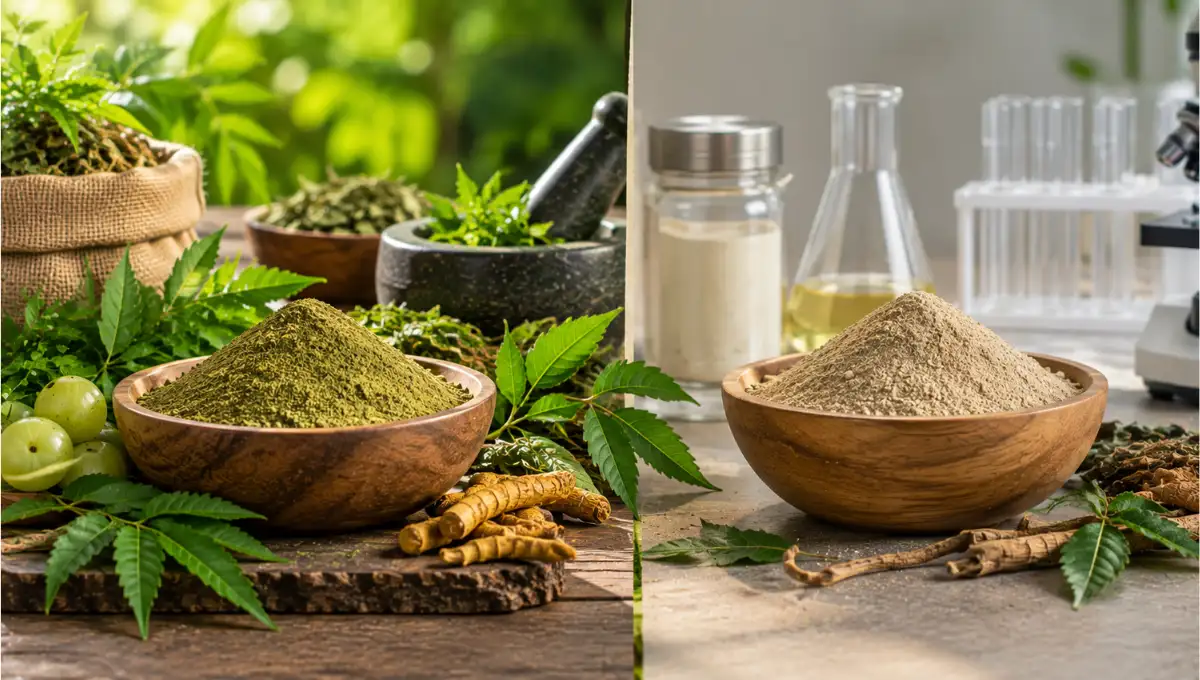
Organic vs Conventional Herbal Powders: What's the Difference?
Grinding a herb into powder changes more than its texture. It increases surface area, speeds up oxidation, and creates new opportunities for cheap fillers to hide undetected. Understanding how organic and conventional powders differ specifically in this form helps you buy with genuinely more confidence, whichever growing method you ultimately choose.
Herbal powders are everywhere, stirred into smoothies, encapsulated into supplements, blended into teas. But powder is not simply a herb in smaller pieces. Grinding fundamentally changes how a herb behaves, how quickly it degrades, and how easily its identity can be disguised, all factors that matter just as much as whether the underlying herb was grown organically or conventionally.
Most conversations about organic versus conventional herbs focus entirely on growing method, pesticide use, soil practices, certification. These are genuinely important, but they overlook a second, equally consequential set of questions specific to powder as a format, questions that apply regardless of whether the underlying herb happens to be organic or conventional in origin.
This guide looks specifically at organic versus conventional herbal powders, covering what changes once a herb is ground, why powder form introduces its own distinct risks, and how to evaluate a powder's quality regardless of which growing method produced it.
What Organic Certification Means for a Herbal Powder
Organic certification for a herbal powder confirms the same basic standard as any other organic crop, the herb was grown according to USDA National Organic Program standards, without prohibited synthetic pesticides or fertilizers, verified through annual inspection. This certification attaches to the raw agricultural material, not to any of the subsequent processing steps.
The USDA Agricultural Marketing Service specifies that organic products must be produced without excluded or prohibited methods, including genetic engineering and ionizing radiation, and must be overseen by a USDA NOP authorized certifying agent following all organic regulations, a standard that applies to the raw herb before grinding, not to how it is subsequently processed into powder.
Why This Distinction Matters for Powder Specifically
Organic certification confirms growing method, but it does not by itself confirm anything about how carefully the herb was dried, ground, sifted, packaged or stored after harvest, steps that matter enormously for a powder's final quality and safety, and that apply equally to organic and conventional material alike. A perfectly grown organic herb, ground carelessly and stored poorly, can end up a considerably weaker product than a carefully processed conventional equivalent.
The Powder Making Process: Drying and Grinding
Turning a whole herb into a fine powder involves specific processing steps, each one capable of affecting the final product's quality regardless of how the underlying herb was grown. Understanding these steps is genuinely useful, since they are where powder specific quality differences actually originate.
Drying Before Grinding
Herbs are typically dried before grinding, either through air drying, low heat drying, or freeze drying, each method carrying different implications for how well the herb's active compounds are preserved. Rushed or excessively high heat drying can degrade heat sensitive compounds before grinding even begins, meaning quality can be compromised well before the powder even reaches its final, packaged form.
Grinding to a Fine, Consistent Particle Size
Grinding equipment and technique determine the final particle size and consistency. A finer grind increases surface area even further, which can improve how easily a powder dissolves or blends, but also accelerates the same oxidation risk discussed throughout this guide, creating a genuine trade off between convenience and shelf stability worth understanding before you buy.
See herbal powders processed with attention to exactly these details.
Shop ACTIZEET® Pure HerbsWhy Powder Form Introduces Additional Considerations
A whole, dried herb and the same herb ground into powder are not equivalent in terms of shelf stability or verification, even when they originate from the exact same harvest. Treating powder as simply a convenient version of the whole herb misses these genuine, practical differences.
Oxidation and Surface Area
Grinding a herb dramatically increases its exposed surface area, accelerating oxidation and degradation of certain active compounds compared to the same herb left whole. This means a powder's shelf life and storage requirements genuinely differ from an unground herb, regardless of organic or conventional origin, and this difference deserves specific attention when evaluating any powder product.
Loss of Visual Identity Verification
A whole dried herb can often be visually identified by someone with botanical training, root shape, leaf structure, color. Once ground into powder, this visual identification becomes essentially impossible, removing one meaningful layer of quality verification that whole herbs retain, and shifting that verification burden entirely onto laboratory testing instead.
Pesticide Residue in Powder vs Whole Herb
Grinding does not create pesticide residue, but it can concentrate what is already present, since powder often includes material from across an entire batch of herb material blended together into a single, uniform product, rather than remaining separated as individual pieces the way a whole herb naturally is.
Why This Makes Organic Certification More Relevant for Powder
Because a powder blends material from potentially many individual plants into a single batch, a contamination issue affecting even a portion of the source material can end up distributed throughout the entire finished powder, rather than remaining isolated to a single, identifiable piece the way it might in a whole herb. This blending effect is a genuine, structural reason organic sourcing carries somewhat more weight for powder specifically than it might otherwise.
Common Adulterants Found in Herbal Powders
The loss of visual verification discussed earlier is exactly what makes powder form a genuinely attractive target for adulteration. The table below summarizes some of the more common issues found in poorly sourced or poorly tested herbal powder products.
| Adulterant Type | Why Powder Form Makes It Easier to Hide |
|---|---|
| Cheaper filler powders | Nearly indistinguishable by color or texture once blended |
| Starch or flour bulking agents | Adds weight and volume without any visible trace |
| Substituted lower cost species | Botanical identity cannot be visually confirmed in powder form |
| Excess moisture added for weight | Difficult to detect without specific lab testing |
The National Center for Complementary and Integrative Health notes that quality and preparation methods can vary considerably across herbal and dietary supplement products, and specifically recommends looking for third party testing and verification rather than assuming a product is exactly what its label claims, guidance particularly relevant for powder form products where visual verification is not possible in the way it might be for a whole, unground herb.
Potency and Standardization in Powder Form
A herbal powder's potency depends on the underlying herb's active compound content, but it is also affected by how the powder itself was processed and how long it has been stored since grinding, a combination of factors that is genuinely unique to powder as a format.
Freshness Matters More for Powder Than Whole Herb
Because of the accelerated oxidation discussed earlier, a powder's potency can decline meaningfully faster than the same herb left whole, making batch date and storage conditions genuinely more important considerations for powder specifically than they might be for other forms, including resin or dried whole herb kept intact and unground.
Standardized Extracts vs Simple Ground Powder
Some herbal powders are standardized to a specific active compound percentage through additional processing, while others are simply the dried herb ground finely with no further standardization. Both can be legitimate products, but they are meaningfully different, and a product description should specify which type you are actually purchasing rather than leaving this distinction ambiguous.
Signs of a Well Processed Herbal Powder
Beyond formal testing documentation, a few simple observations can give you a useful, general sense of whether a specific powder was processed with genuine care.
Consistent Texture and Color
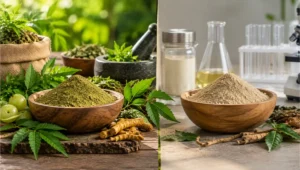
A well ground powder should feel consistently fine, without noticeable clumps or gritty inconsistencies, and should display a fairly uniform color throughout. Significant variation within a single container can suggest inconsistent grinding or blending of material from multiple, differently sourced batches, which is worth noting even before you get to formal lab results.
A Genuine, Recognizable Aroma
Many herbal powders carry a distinctive, recognizable aroma tied to their specific botanical identity. A powder with a notably faint or generic smell, particularly for a herb known for a strong characteristic scent, can sometimes indicate reduced freshness or a diluted, adulterated product, though this observation alone should never replace genuine lab testing as your primary means of verification.
Price Differences Between Organic and Conventional Powder
Organic herbal powders typically cost more than conventional equivalents, reflecting genuine underlying costs in certified growing, alongside the same processing costs, drying, grinding, packaging, that apply equally to both organic and conventional powder production.
- Certification fees and inspection costs specific to the organic growing method.
- Generally lower yields from organic farming compared to conventional methods.
- Processing costs, drying and grinding, that apply equally regardless of growing method.
- Packaging designed to limit oxygen and light exposure, relevant for either type.
Notice that two of these four cost categories apply identically to organic and conventional powder alike. This is worth keeping in mind when comparing prices, since not every dollar of the price gap between two powders reflects the organic certification itself.
When Organic Powder Matters Most
Organic certification tends to matter most for herbal powders used daily over extended periods, since cumulative pesticide exposure becomes a more meaningful consideration with sustained, regular use, and powder form's tendency to blend material from an entire batch makes even a small contamination issue more widely distributed throughout the final product, a combination of factors that genuinely strengthens the case for organic sourcing specifically in powder form.
When Conventional Powder Can Still Be High Quality
A conventionally grown herbal powder is not automatically inferior, provided the underlying herb was grown responsibly, the drying and grinding process was handled carefully, and the finished powder passes independent testing for both identity and contaminants. In powder form specifically, this independent testing arguably matters even more than growing method alone, since it is the only way to confirm what visual inspection simply cannot, regardless of whether the label ultimately says organic or conventional.
How to Verify a Powder's Quality Regardless of Certification
Request Batch Specific Testing Documentation
Since visual identification is not possible with powder, a Certificate of Analysis confirming botanical identity, potency and contaminant screening becomes considerably more important than it might be for a whole herb you could otherwise inspect yourself. This is genuinely the single most useful thing you can request before purchasing any herbal powder, regardless of price point or brand reputation.
Check Packaging and Storage Practices
Look for packaging designed to limit oxygen and light exposure, dark, sealed containers rather than clear, loosely closed bags, since this genuinely affects how well a powder's potency holds up between the time it was ground and the time you actually use it. A brand that has thought carefully about packaging has generally also thought carefully about the rest of its process, from sourcing through to the jar in your hands.
Ask About Batch Date, Not Just Expiration Date
An expiration date tells you the latest safe point of use, but a batch or grind date tells you how fresh the powder actually is right now. Given how much oxidation risk matters specifically for powder, this second piece of information is genuinely worth asking for if it is not already printed on the packaging, since it directly reflects how much of the shelf life window has already passed.
ACTIZEET® Pure Herbs are processed with attention to the specific risks powder form introduces, careful drying, controlled grinding, and independent batch testing for both identity and contaminants, regardless of organic or conventional growing origin. We treat verification as necessary for every batch, not as an exception reserved for premium products alone.
Shop ACTIZEET® Pure Herbs →Frequently Asked Questions
Powder Form Deserves Its Own Set of Questions
Organic versus conventional remains a genuinely relevant question for herbal powder, but it is only part of the picture. Grinding introduces its own considerations, oxidation risk, loss of visual verification, easier adulteration, that apply regardless of growing method and deserve their own dedicated attention.
The next time you are evaluating a herbal powder specifically, ask about batch testing, grind date and packaging alongside the organic question, rather than letting the organic label alone answer every question you might otherwise have.
ACTIZEET® Pure Herbs is built around addressing exactly these powder specific risks, alongside responsible growing practices, so you can trust what is actually in the jar.