Organic Haritaki Powder: Benefits, Uses, Dosage and Everything You Need to Know
ACTIZEET® Editorial Team | | Ayurveda & Herbal Wellness
What Is Organic Haritaki Powder?
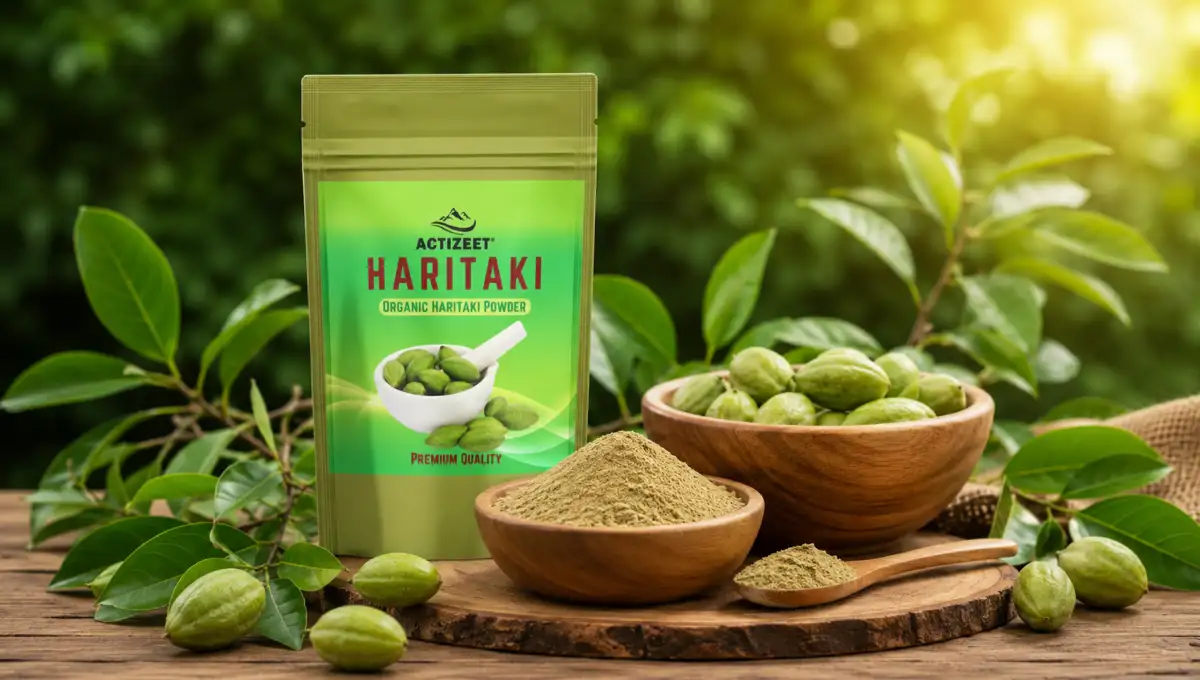
Organic Haritaki Powder is produced by drying and grinding the fruit of Terminalia chebula, a large deciduous tree native to South Asia and widely distributed across India, Nepal, Sri Lanka, and parts of Southeast Asia. The fruits are small, ribbed, and olive-shaped, ripening from green to yellowish-brown. In Ayurveda, different varieties of the fruit are recognised based on their growing region, with the variety from the Vindhya mountains considered most potent.
Haritaki holds a singular position in Ayurvedic pharmacology. It is listed as a rasayana, a class of substances that promote longevity, enhance intelligence, and restore vitality to depleted tissues. It is classified under the quality Pathya, meaning universally beneficial, which in Ayurveda is a rare designation reserved for herbs considered safe and supportive across all body types and seasons. It is also one of three fruits in Triphala, the most widely used Ayurvedic formulation in the world.
When the powder carries an organic certification, it means the fruit was grown without synthetic pesticides, chemical fertilisers, or prohibited processing treatments. For Haritaki, this matters especially because the fruit’s therapeutic compounds, particularly its tannins, are highly susceptible to interference from agricultural chemicals that can bind to and deactivate polyphenols in the finished powder. A genuinely organic product protects the integrity of these compounds from soil to shelf.
The Bioactive Compounds Behind Haritaki’s Power
The therapeutic profile of organic Haritaki Powder is unusually rich. Over 60 phytochemical compounds have been identified in Terminalia chebula fruit, with several standing out for their pharmacological significance.
Hydrolysable Tannins: Chebulinic and Chebulagic Acid
These are the signature compounds of Haritaki and the primary drivers of most of its documented bioactivities. Chebulinic acid is a powerful tannin with documented antioxidant, anti-inflammatory, and antidiabetic properties. Chebulagic acid is a hydrolysable tannin studied for its antimicrobial, anti-inflammatory, and antiviral properties. Both compounds demonstrate meaningful free-radical scavenging activity in multiple assay systems and contribute to the fruit’s exceptional antioxidant capacity.
Gallic Acid and Ellagic Acid
These phenolic acids are independently well-researched for their antioxidant, antimicrobial, and anti-inflammatory effects. Gallic acid has been shown to inhibit the growth of several bacterial and fungal species, including drug-resistant strains. Ellagic acid has documented activity against both Gram-positive and Gram-negative bacteria including MRSA, Pseudomonas aeruginosa, and E. coli, making it particularly relevant to the herb’s antimicrobial reputation.
Corilagin
This ellagitannin has attracted growing research attention for its antiviral, anti-inflammatory, and hepatoprotective properties. It is one of the compounds studied for potential activity against herpes simplex virus and other viral pathogens, which helps explain Haritaki’s traditional use during periods of illness.
Anthraquinones and Sennosides
These compounds are responsible for Haritaki’s well-known bowel-regulating properties. Anthraquinones stimulate peristaltic movement in the large intestine, producing a gentle, predictable laxative effect that encourages complete bowel emptying without cramping. This is why Haritaki is the first herb most Ayurvedic practitioners recommend for chronic constipation and sluggish digestion.
Flavonoids and Beta-Sitosterol
These compounds contribute to Haritaki’s cardiovascular and metabolic support, helping regulate lipid profiles and adding to the herb’s anti-inflammatory action.
Evidence-Backed Health Benefits of Organic Haritaki Powder
Haritaki has accumulated one of the longest and most consistent research records of any Ayurvedic herb, with over 500 published studies on PubMed alone. Below are the most well-supported benefits.
| Benefit Area | What Research and Tradition Indicate |
|---|---|
| Digestive Health | Regulates bowel motility, relieves constipation, supports gut lining integrity |
| Antioxidant Protection | Exceptional free-radical scavenging capacity from tannins, gallic acid, and ellagic acid |
| Antimicrobial Activity | Active against gram-positive, gram-negative bacteria, fungi, and viruses |
| Immune Function | Increases T-cell population, NK cells, and key immune markers in clinical study |
| Liver Health | Hepatoprotective effects documented against oxidative and toxin-induced damage |
| Blood Sugar Management | Antihyperglycaemic and antidiabetic activity shown across multiple preclinical studies |
| Cardiovascular Support | Reduces lipid levels, blood pressure, and oxidative stress markers in systematic review |
| Cognitive Support | Neuroprotective, anti-inflammatory, and synaptic repair properties studied for MCI |
| Wound Healing | Promotes keratinocyte and fibroblast proliferation and collagen synthesis |
| Oral Health | Demonstrated anti-cariogenic activity against Streptococcus mutans |
Digestive Health and Gut Function
This is the area where Haritaki’s reputation is longest-established and most consistently validated. The herb works on multiple levels of the digestive system simultaneously. The anthraquinone compounds promote gentle but effective peristalsis, encouraging consistent bowel motility without the urgency or cramping associated with harsh laxatives. The astringent tannins simultaneously support the integrity of the gut lining by reducing excessive fluid loss and toning the mucosal membrane. This dual action means Haritaki is useful for both constipation and the more complex presentation of alternating bowel habits that Ayurveda associates with Vata imbalance.
Research indexed on PubMed and published in Cureus confirmed that Terminalia chebula extracts demonstrate broad antioxidant and anti-inflammatory activity that is directly relevant to gut health, including activity against cancer cell lines and pathogens that commonly disturb gastrointestinal function. (PMC Article: PMC11300186)
Traditional Ayurvedic clinical use further documents Haritaki’s ability to stimulate digestive enzyme secretion, improve the absorption of nutrients from food, and clear ama (undigested metabolic waste) from the gut, which Ayurveda identifies as the root cause of most chronic disease.
Antioxidant and Anti-Inflammatory Action
A comprehensive review published in ScienceDirect, covering pharmacological research on Terminalia chebula from 1996 through 2021, confirmed the herb demonstrates antioxidative, anti-microbial, anti-diabetic, anti-ageing, hepatoprotective, anti-inflammatory, and antiepileptic properties across numerous laboratory approaches. The researchers noted that the herb’s broad biological activity is driven by its exceptionally rich tannin and flavonoid content, which acts across multiple oxidative and inflammatory pathways simultaneously. (ScienceDirect, 2022)
This multi-target antioxidant action makes Haritaki particularly relevant in a modern context where oxidative stress from diet, pollution, stress, and sedentary behaviour is a primary driver of chronic disease. Regular supplementation with a well-sourced organic Haritaki Powder provides a sustained, broad-spectrum antioxidant contribution that complements dietary sources of antioxidants.
Immune System Support
A notable pilot clinical study published on PubMed Central evaluated a standardised combination of Terminalia chebula fruit and Withania somnifera root extract in 40 healthy volunteers aged 35 to 60 over 28 days. Compared to placebo, the active group showed significant increases in total T-cell populations, CD4 cells, CD8 cells, natural killer (NK) cells, IL-2, IFN-gamma, and total immunoglobulin-G (IgG), all key indicators of both innate and adaptive immune function. The extract was well tolerated with no significant adverse effects. (PMC Article: PMC11165258)
This finding aligns with Haritaki’s traditional classification as an immunomodulator and rasayana. Unlike herbs that simply stimulate immune activity (which can be counterproductive in autoimmune conditions), Haritaki appears to support appropriate immune balance, helping the immune system respond more effectively without pushing it into dysregulation.
Liver Health and Hepatoprotection
Haritaki has been used as a liver tonic in Ayurvedic medicine for centuries under the classification Yakrit uttejaka, which refers to herbs that stimulate and protect the liver. Modern research has explored the hepatoprotective mechanisms of its tannin compounds, particularly corilagin and chebulagic acid, finding meaningful protection against oxidative and toxin-induced liver damage in preclinical models.
The herb is also understood in Ayurveda to support bile secretion, which has downstream effects on fat digestion, cholesterol metabolism, and the elimination of fat-soluble waste products from the liver into the digestive tract. This makes Haritaki a useful herb for people whose livers face daily challenges from pharmaceutical loads, dietary fat, alcohol, or environmental pollutants.
Blood Sugar and Cardiovascular Support
A systematic review published in the Journal of Heart Valve Disease evaluated the cardioprotective effects of Terminalia chebula across multiple studies. The reviewers concluded that the herb exhibits significant cardioprotective effects primarily through its antioxidant, anti-inflammatory, and lipid-lowering properties, with evidence showing improvements in blood pressure, reductions in total cholesterol and LDL, and modulation of oxidative stress markers in cardiovascular tissue.
On the metabolic side, multiple preclinical studies have confirmed antihyperglycaemic activity from Haritaki’s tannin and flavonoid content. These compounds appear to slow intestinal glucose absorption, improve insulin sensitivity, and reduce fasting blood sugar levels in experimentally induced diabetic models. This evidence positions Haritaki as a valuable complementary support for people managing blood sugar and metabolic health alongside dietary and lifestyle interventions.
Cognitive Function and Neuroprotection
Haritaki has always held a special place in Ayurvedic cognitive medicine as a medhya rasayana, an herb specifically indicated for the enhancement of memory, learning, and mental clarity. A PMC review examining Terminalia chebula’s potential in alleviating mild cognitive impairment (MCI) noted that its components demonstrate neuroprotective, anti-inflammatory, antioxidant, and synaptic plasticity repair properties, all of which are relevant mechanisms for maintaining brain health as people age.
A randomised, double-blind, placebo-controlled proof-of-concept study published on PubMed Central evaluated a standardised combination of Terminalia chebula and Boswellia serrata in 100 adults aged 40 to 65 with subjective memory complaints over 120 days. The study found improvements across multiple validated neuropsychological assessments including the Rey’s Auditory Verbal Learning Test and the Cambridge Neuropsychological Test Automated Battery (CANTAB), alongside improvements in sleep quality, suggesting that Haritaki’s brain-supportive properties operate through both neuroprotective and restorative mechanisms.
Wound Healing and Skin Repair
Research published on PMC examined the effect of Terminalia chebula extracts on fibroblast and keratinocyte cell proliferation, the two cell types most critical to wound closure and skin repair. The study confirmed that T. chebula extracts were effective in supporting cell proliferation and demonstrated free-radical scavenging ability in DPPH assay, suggesting the herb supports wound healing through both cellular stimulation and antioxidant protection of the repair process. (PMC Article: PMC3955618)
Traditional Ayurvedic practice uses Haritaki powder as a topical application on wounds, ulcers, and inflammatory skin conditions, where its antimicrobial and astringent properties protect the wound while promoting healing. When taken internally, its antioxidant and collagen-supportive properties contribute to skin health from the inside out.
Oral Health and Dental Protection
A peer-reviewed clinical study published in the Journal of Clinical and Diagnostic Research specifically examined Haritaki’s anti-cariogenic activity. The study tested aqueous extract of Haritaki as a mouth rinse in 20 high-caries-risk patients and found meaningful antimicrobial activity against Streptococcus mutans, the primary bacterium responsible for dental caries. The traditional Ayurvedic practice of using Haritaki as a mouth rinse or tooth powder for gum disease, gingivitis, and oral infections is well-supported by this and related research.
How to Use Organic Haritaki Powder: Practical Daily Methods
Haritaki powder has a distinctive taste profile described in Ayurveda as possessing five of the six tastes simultaneously (sweet, sour, pungent, bitter, and astringent, with only salt absent). This complex flavour makes it noticeable in any preparation, though it is manageable with the right carrier.
Haritaki with Warm Water (Morning Tonic)
The simplest method is to dissolve a quarter to half a teaspoon of Organic Haritaki Powder in a glass of warm water and drink it on an empty stomach in the morning. This stimulates digestive enzyme secretion, promotes regular bowel motility, and delivers the antioxidant compounds directly into the gut where they can work on the intestinal environment. Adding a pinch of rock salt balances the astringency and supports the digestive stimulating action.
Haritaki with Honey or Ghee
In classical Ayurveda, the carrier used with Haritaki is considered as important as the herb itself. Mixed with raw honey, Haritaki is traditionally used for respiratory conditions and throat health. Mixed with ghee (clarified butter), it is used specifically as a brain and cognitive tonic, as the fat vehicle enhances absorption of fat-soluble compounds. A teaspoon of honey or ghee mixed with a quarter teaspoon of Haritaki powder, taken in the morning or before bed, is one of the most time-honoured preparations in Ayurvedic practice.
Haritaki as Part of Triphala
Haritaki is one of the three fruits in Triphala, the most widely used Ayurvedic herbal combination in the world. When combined with Bibhitaki and Amalaki in equal proportions, the three herbs complement and potentiate each other. Triphala is used for full-spectrum digestive support, detoxification, and antioxidant maintenance. Mixing equal amounts of all three powders (one third of a teaspoon each) in warm water creates a simple Triphala preparation at home.
Haritaki Herbal Tea
Simmer half a teaspoon of Haritaki powder in two cups of water for five to ten minutes. Strain and drink. You can add ginger, cardamom, and a small amount of honey to improve palatability. This decoction format enhances the release of the water-soluble tannins and provides a stronger digestive and antimicrobial action than simply dissolving the powder in cold water.
Haritaki as a Topical Paste
Mix Haritaki powder with warm water or rose water to form a thick paste. Apply to skin affected by acne, minor wounds, or inflammatory conditions. The astringent and antimicrobial properties provide a useful topical effect. For oral health, mix a small amount with water and use as a swish-and-spit mouth rinse before brushing to reduce oral bacterial load.
Recommended Dosage and Safety Guidance
The classical Ayurvedic dose for Haritaki fruit powder is 3 to 5 grams per day (approximately half to one teaspoon), typically taken once or twice daily with warm water, honey, or ghee depending on the therapeutic goal. Clinical research has generally used doses in this range, and traditional texts recommend between 250 mg and 5 grams depending on the preparation and individual constitution.
Haritaki is described as Pathya in Ayurveda, meaning broadly safe and beneficial. However, appropriate dosing and some situational awareness matter.
How to Choose the Best Organic Haritaki Powder
Quality differences between Haritaki products are significant and directly affect the results you experience. Here is what genuinely distinguishes a superior product.
Certified Organic Sourcing
Look for an independently verified organic certification from a recognised body such as USDA Organic, India Organic, or an EU-equivalent standard. Certification protects the integrity of the tannin compounds, which can be deactivated by pesticide residues in conventionally grown fruit.
Whole Fruit Powder vs. Extract
Whole fruit powder preserves the complete phytochemical synergy of the Haritaki fruit, including the fibre matrix, secondary metabolites, and minor compounds that contribute to its broad therapeutic action. Standardised extracts isolate specific compounds (usually tannins) but may miss the complex interactions that give the whole fruit its exceptional pharmacological breadth.
Single-Ingredient Transparency
The ingredient list should read: Terminalia chebula (fruit) powder. Nothing else. Any additions, fillers, flow agents, or undisclosed blends reduce both purity and the ability to accurately dose the active compounds you are seeking.
Third-Party Testing
A Certificate of Analysis (CoA) from an independent laboratory verifying the absence of heavy metals, pesticide residues, microbial contamination, and meeting stated tannin content is the most reliable indicator of product quality available to supplement consumers.
Packaging and Freshness Standards
Haritaki tannins and phenolic compounds are sensitive to oxygen, moisture, and light. The powder should be packaged in an airtight, moisture-resistant container with a resealable closure. Opaque or dark packaging is preferable to clear containers. Clear manufacturing and expiry dates on the label indicate a brand that takes product integrity seriously.
Why ACTIZEET® Organic Haritaki Powder Is the Right Choice
ACTIZEET® sources its Haritaki from certified organic growing regions in India where Terminalia chebula trees produce fruit under the natural conditions that the Ayurvedic tradition has always considered essential to the herb’s potency. Wild-grown or sustainably farmed fruit from appropriate altitudes and soil conditions consistently produces higher tannin concentrations than intensively cultivated alternatives.
The fruit is harvested at full maturity, when the chebulinic acid and gallic acid content is at its peak, and dried at controlled temperatures that preserve the thermally sensitive phenolic compounds. Milling produces a fine, uniform powder without additives, flow agents, or carrier substances of any kind.
Every batch of ACTIZEET® Organic Haritaki Powder is independently tested by third-party laboratories for heavy metals, pesticide residues, microbial safety, and active compound content before release. The product is packaged in an airtight, sealed container that maintains freshness and potency from packing through to your kitchen. No marketing claim replaces this chain of verification.
Whether you are using Haritaki for regular digestive support, immune maintenance, antioxidant protection, or as part of a broader Ayurvedic wellness practice, ACTIZEET® Organic Haritaki Powder delivers the quality of product that the herb’s 2,500-year reputation actually requires.
Haritaki Powder vs. Haritaki Capsules vs. Triphala: Which Is Right for You?
Haritaki comes in several forms in the supplement market, each with practical trade-offs.
Organic Haritaki Powder
Powder is the most traditional format and allows flexible dosing. It can be combined with honey, ghee, warm water, or other Ayurvedic herbs, which the tradition considers important for directing the herb’s action toward specific organ systems. Powder also allows topical use as a paste. The trade-off is the strong, complex taste.
Haritaki Capsules
Capsules are convenient and tasteless, making them the preferred format for people who find the flavour difficult. They allow consistent dosing without preparation. Most capsule products contain either whole fruit powder or standardised extract, both of which have their place depending on the therapeutic goal.
Triphala (with Haritaki)
For general digestive support, antioxidant maintenance, and detoxification, Triphala combines Haritaki with Bibhitaki and Amalaki in a formula that has a broader and more balanced action than any single fruit alone. The three-fruit combination is gentler on the bowel, more comprehensive in its antioxidant coverage, and better suited to long-term daily use. If your primary goals are digestive wellness and overall maintenance rather than specific targeted support, Triphala is often the more appropriate choice.
Who Benefits Most from Organic Haritaki Powder?
People with chronic digestive sluggishness, including constipation, bloating, and irregular bowel habits, will typically notice the most immediate and consistent results from Haritaki. The herb is specifically suited to the Ayurvedic pattern of Vata-type digestive imbalance, characterised by dryness, irregularity, and nervous gut function.
Adults over 45 seeking longevity support and cognitive maintenance will find Haritaki’s rasayana classification directly applicable. The herb’s antioxidant, neuroprotective, and immune-modulating properties align well with the health challenges of the aging process.
People with heavy toxin loads from environmental exposure, pharmaceutical medications, or high-processed-food diets will benefit from Haritaki’s liver tonic and digestive clearing properties.
Those seeking natural immune support without stimulant herbs will find Haritaki’s immunomodulatory action both effective and well-tolerated.
People managing blood sugar and lipid levels can use Haritaki as a complementary herbal support alongside dietary and lifestyle interventions, based on the consistent evidence across multiple preclinical and early clinical studies.
Frequently Asked Questions About Organic Haritaki Powder
How long does Organic Haritaki Powder take to show results?
For digestive benefits like improved bowel regularity, most people notice changes within three to seven days of consistent daily use. For systemic benefits including antioxidant protection, immune support, and metabolic effects, meaningful changes are typically observed after four to eight weeks of regular supplementation. Haritaki rewards consistency more than high short-term doses.
Can Organic Haritaki Powder be taken every day?
Yes. Haritaki is classified as Pathya in Ayurveda, meaning suitable for daily long-term use. Many traditional protocols involve taking Haritaki daily as part of a morning or evening routine, particularly for digestive maintenance and rasayana (longevity) purposes. Some practitioners recommend varying the carrier (water, honey, ghee, or salt) seasonally to direct the herb’s action appropriately.
What is the difference between Haritaki and Triphala?
Haritaki is one single fruit: Terminalia chebula. Triphala is a combination formula containing Haritaki along with two other fruits, Bibhitaki (Terminalia bellirica) and Amalaki (Emblica officinalis). Triphala is gentler and more balanced in action, making it better suited to general daily digestive and antioxidant support. Haritaki on its own is more potent in its bowel-stimulating and specific therapeutic actions, and is generally more appropriate when a targeted effect is needed rather than general maintenance.
Does Haritaki cause loose stools?
At standard doses of a quarter to half a teaspoon, Haritaki typically produces gentle bowel regularity rather than loose stools. At higher doses, particularly one full teaspoon or more, some individuals experience softer stools or mild laxative effects due to the anthraquinone content. Starting at a lower dose and increasing gradually allows you to find the amount that produces comfortable bowel regularity without over-stimulation.
How should Organic Haritaki Powder be stored?
Store Haritaki Powder in an airtight container away from direct sunlight, heat, and humidity. A cool, dark kitchen cupboard or pantry shelf is ideal. The tannin compounds in Haritaki are sensitive to oxidation and moisture, so keeping the container tightly sealed after each use is important. Properly stored, organic Haritaki Powder retains full potency for 18 to 24 months from the manufacturing date.
Final Thoughts: The King of Medicine for a Modern Age
Few herbs in any tradition have maintained the level of reverence that Haritaki has held across Ayurveda, Tibetan medicine, Siddha, and Unani for more than two and a half millennia. The growing body of peer-reviewed pharmacological research is not creating Haritaki’s reputation. It is explaining one that already existed.
The breadth of documented benefits, from digestive regulation and liver protection to immune modulation, cognitive support, wound healing, and oral health, reflects the genuinely multi-target pharmacological profile of the fruit’s exceptionally rich tannin and phenolic content. That breadth is also why choosing an organic, whole-fruit product matters so much. Adulteration, contamination, or inappropriate processing can strip away the very compounds that create the results.
ACTIZEET® Organic Haritaki Powder is sourced, processed, and tested to the standard that this herb’s 2,500-year reputation demands. If you are ready to bring the King of Medicine into your daily wellness practice, this is the most trustworthy place to start.
References
- Studies on In Vitro Antimicrobial, Anticancer, and Anti-oxidative Inflammatory Response of Methanolic Tuber Extracts Derived From Terminalia chebula. Cureus, 2024. PMC11300186
- A standardized combination of Terminalia chebula and Withania somnifera extracts enhances immune function in adults: a pilot randomized, double-blind, placebo-controlled clinical study. PMC, 2024. PMC11165258
- A comprehensive review on the diverse pharmacological perspectives of Terminalia chebula Retz. ScienceDirect / Heliyon, 2022. sciencedirect.com
This article is for educational and informational purposes only and does not constitute medical advice. Consult a qualified healthcare professional before starting any new supplement routine, particularly if you are pregnant, breastfeeding, taking medications, or managing a chronic health condition.