The Complete Guide to Ayurvedic Herbs: History, Principles, and Modern Wellness
Ayurvedic herbs have moved from village apothecaries and family kitchens into some of the most searched wellness terms online, yet most of what gets written about them skips the actual foundation, how Ayurveda classifies herbs, why certain herbs are chosen for certain people, and what current research actually says. This guide walks through all of it in plain language, from ancient text to modern lab report, and explains how ACTIZEET® Pure Herbs are made to reflect these same traditional standards.
If you search for Ayurvedic herbs today, you will find an overwhelming mix of ancient wisdom, modern marketing and, unfortunately, a fair amount of confusion in between. Ashwagandha, turmeric, brahmi, tulsi and shatavari now sit on supplement shelves next to protein powders and multivitamins, often stripped of the context that originally made them meaningful. Understanding why a particular herb was traditionally used, how it fits into the broader Ayurvedic system, and what modern research actually confirms makes an enormous difference in how you use these herbs and how you judge the quality of what you are buying.
This gap between traditional depth and modern simplification shows up constantly in casual conversation. Someone might mention taking ashwagandha "for stress" without ever learning that it is traditionally classified as a Rasayana, meant for sustained daily use rather than an occasional fix, or that its cooling, grounding qualities make it particularly suited to certain constitutions more than others. None of this makes the herb less useful. It simply means a little context goes a long way toward using it thoughtfully rather than treating it like an interchangeable capsule pulled off a shelf.
This guide is written to fill that gap. We will look at where Ayurvedic herbal medicine comes from, the core principles that guide how herbs are chosen and combined, a practical overview of the most widely used herbs and their traditional roles, what current scientific research says about them, and how to evaluate quality when you are shopping for Ayurvedic herbs online or in stores.
Along the way, we will also look at how ACTIZEET® Pure Herbs is built around these same traditional and quality standards, from sourcing through to the finished product on your shelf.
What Are Ayurvedic Herbs?
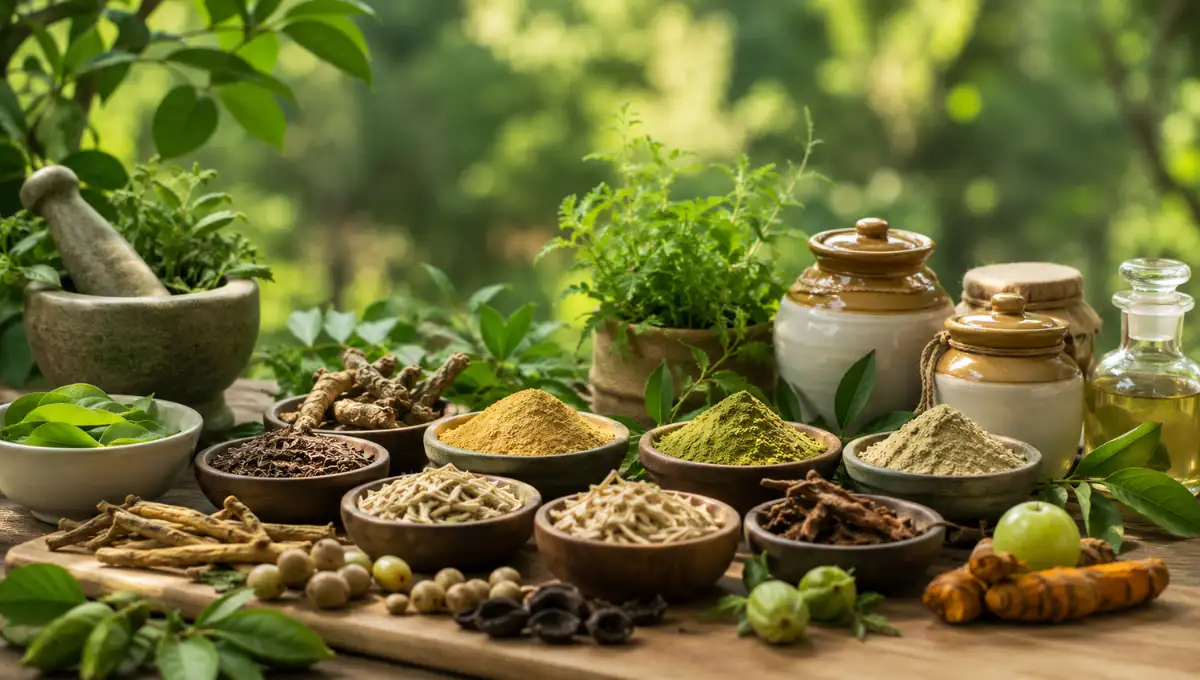
Ayurvedic herbs are plants, and in some cases plant parts combined with minerals or animal derived substances, used within the framework of Ayurveda, a traditional system of medicine that originated in the Indian subcontinent. What separates Ayurvedic herbal use from herbalism in general is not the plants themselves, many of which are also used in other traditional systems, but the underlying framework used to select, combine and prescribe them.
In Ayurveda, a herb is never evaluated in isolation. Its taste, temperature effect on the body, post digestive effect and overall energetic quality are all considered together, alongside the specific constitution and current state of the person who will be taking it. This is a fundamentally different approach from simply matching a herb to a symptom, and it is part of why Ayurvedic herbal medicine has remained a coherent, internally consistent system across thousands of years rather than a loose collection of folk remedies.
It also helps to understand what Ayurvedic herbs are not. They are not automatically interchangeable with any plant based supplement simply because both are "natural." A herb becomes part of Ayurvedic pharmacology specifically because it has been documented, classified and used within this framework across generations, with an understood profile of taste, potency and effect that guides how and when it should be used. This documented, systematic quality is what distinguishes Ayurvedic herbal medicine from more general folk or regional plant use, even when the exact same plant species happens to overlap between traditions.
Ayurveda is one of the world's oldest continuously practised medical systems, combining herbal formulations, diet, lifestyle guidance and body based therapies within a holistic framework aimed at balance rather than isolated symptom treatment.
The History of Ayurvedic Herbal Medicine
Ayurveda's roots stretch back several thousand years on the Indian subcontinent, with its foundational texts compiled and refined over many centuries rather than written at a single point in time. The word Ayurveda itself combines two Sanskrit terms, ayus meaning life and veda meaning knowledge or science, together forming something closer to "the science of life" than a narrow medical discipline focused only on disease.
The Classical Texts
Much of what we know about early Ayurvedic herbal practice comes from three foundational texts, collectively referred to as the Brihat Trayi, or the Great Trilogy. The Charaka Samhita focuses heavily on internal medicine and details hundreds of herbs alongside their properties and combinations. The Sushruta Samhita, attributed to the physician Sushruta, is particularly notable for its surgical detail but also documents herbal preparations used for wound care and recovery. The later Ashtanga Hridaya consolidates and refines material from both earlier texts into a more systematic, accessible format that became widely used in later Ayurvedic education.
These texts were not static. They were copied, commented on and expanded by generations of physicians, creating a layered tradition of clinical observation passed down through direct teacher to student transmission alongside the written record. This is part of why regional variations exist in how certain herbs are used or classified, reflecting local plant availability and the accumulated clinical experience of different lineages of practitioners over time.
Ayurveda in the Modern Era
Ayurveda continued as a living medical tradition through the colonial period, when it existed alongside and sometimes in tension with introduced Western biomedicine, and it remains a formally recognised system of medicine in India today, regulated and taught through dedicated academic institutions under the Ministry of AYUSH. Outside India, Ayurveda is generally categorised as a complementary or traditional medicine system, used alongside rather than in place of conventional healthcare in most countries where it has gained popularity.
How Ayurveda Spread Globally
Ayurvedic concepts and herbs began reaching a wider international audience through several overlapping routes across the twentieth century, including trade, migration of Indian communities abroad, and a broader Western interest in yoga and Eastern philosophy that grew significantly from the 1960s onward. This interest accelerated considerably in the past two decades, driven partly by growing consumer demand for natural wellness products and partly by a small but steadily growing body of scientific research examining individual herbs outside their traditional cultural context.
This global spread has been a double edged development. On one hand, it has brought genuine benefit to many people and created economic opportunity for growers and producers in Ayurveda's countries of origin. On the other hand, it has also led to a considerable amount of decontextualised marketing, where individual herbs are sold purely on a single trending benefit, stripped of the broader framework, taste, potency, constitutional suitability, that traditionally guided their use. Understanding that broader framework, as this guide aims to do, is part of what allows a modern buyer to use these herbs more thoughtfully rather than simply chasing whichever ingredient is trending that season.
The World Health Organization's Global Traditional Medicine Strategy for 2025 to 2034 recognises that traditional systems including Ayurveda are used widely around the world and are deeply embedded in culture and local practice, and the strategy specifically prioritises building stronger research evidence and safety regulation for these systems as they become more integrated into modern health services globally.
Core Principles That Guide Ayurvedic Herb Selection
Understanding why a specific Ayurvedic herb is recommended for a specific purpose requires at least a basic grasp of the framework Ayurveda uses to evaluate both people and plants. This section covers the core concepts in plain language, without assuming any prior background.
The Three Doshas: Vata, Pitta and Kapha
Ayurveda describes three fundamental biological energies, or doshas, present in every person in a unique proportion that defines their individual constitution, known as Prakriti. Vata is associated with movement and is linked to qualities like dryness, lightness and coldness. Pitta is associated with transformation and metabolism, linked to heat and intensity. Kapha is associated with structure and stability, linked to heaviness, moisture and coolness. Most people have one or two doshas that are more dominant in their constitution, and imbalance in any of these doshas, according to Ayurvedic theory, is what underlies disease or discomfort.
Herbs are chosen partly based on how they are believed to influence these doshas. A herb considered warming and stimulating might be used to balance excess Kapha, while a cooling, calming herb might be chosen to pacify excess Pitta. This is why the same symptom in two different people might lead an Ayurvedic practitioner to recommend two entirely different herbs, since the underlying constitutional picture is different even if the surface complaint looks similar.
| Dosha | Core Qualities | Herb Approach When Excess |
|---|---|---|
| Vata | Dry, light, cold, mobile, irregular | Warming, grounding, moistening herbs favoured |
| Pitta | Hot, sharp, oily, intense, penetrating | Cooling, calming, mildly bitter herbs favoured |
| Kapha | Heavy, slow, cool, moist, stable | Stimulating, warming, lighter herbs favoured |
Rasa, Guna, Virya and Vipaka
Beyond the doshas, classical Ayurvedic pharmacology evaluates herbs across four additional properties. Rasa refers to taste as perceived on the tongue, categorised into six types: sweet, sour, salty, pungent, bitter and astringent, each believed to have a distinct effect on the doshas. Guna refers to the physical qualities of a substance, such as heavy or light, oily or dry, hot or cold. Virya refers to the potency of a herb, generally categorised as either heating or cooling in its immediate effect on the body. Vipaka refers to the post digestive effect, the way a substance continues to influence the body after it has been metabolised, which can sometimes differ from its initial taste and immediate potency.
Together, these four properties form a detailed profile for every herb described in classical texts, allowing practitioners to predict how a substance will behave in the body beyond simply matching it to a named health concern. This is a considerably more nuanced system than the "herb for symptom" approach that dominates a lot of modern herbal marketing.
The Six Tastes in Detail
Because Rasa, or taste, plays such a central role in Ayurvedic herb classification, it is worth understanding each of the six tastes and its general associated effect a little more closely.
| Taste (Rasa) | General Effect | Example Herbs |
|---|---|---|
| Sweet (Madhura) | Nourishing, building, calming to Vata and Pitta | Licorice, shatavari |
| Sour (Amla) | Stimulates digestion, increases Pitta and Kapha | Amla, tamarind |
| Salty (Lavana) | Softening, digestive, increases Pitta and Kapha | Rock salt in formulations |
| Pungent (Katu) | Heating, stimulating, increases Pitta, reduces Kapha | Ginger, black pepper |
| Bitter (Tikta) | Cooling, detoxifying, reduces Pitta and Kapha | Neem, guduchi |
| Astringent (Kashaya) | Drying, binding, reduces Pitta and Kapha | Triphala, turmeric |
Most Ayurvedic herbs carry more than one taste at once, and their overall classification reflects the combined and often dominant taste profile rather than a single isolated flavour. This layered taste system is part of what makes Ayurvedic pharmacology considerably more detailed than simply describing a herb as "bitter" or "sweet" in a general sense.
Agni: The Concept of Digestive Fire
Agni, often translated as digestive fire, is a central concept in Ayurveda referring to the body's capacity to properly process and metabolise food, herbs and experience more broadly. Strong, balanced Agni is considered essential for deriving benefit from any herb, which is why many Ayurvedic herbal formulations include digestive support alongside the primary therapeutic herb, and why timing herbs around meals is often emphasised in traditional guidance rather than treated as an afterthought.
Ayurvedic Herbs Compared to Western Herbalism and TCM
Ayurveda is often mentioned alongside other traditional herbal systems, particularly Traditional Chinese Medicine and Western herbalism, and while all three share an obvious common thread, using plants therapeutically, the underlying frameworks differ in meaningful ways worth understanding.
| System | Core Framework | Herb Selection Approach |
|---|---|---|
| Ayurveda | Doshas (Vata, Pitta, Kapha), taste, potency, post digestive effect | Matched to individual constitution and current imbalance |
| Traditional Chinese Medicine | Yin and Yang, Qi, Five Elements, organ meridian systems | Matched to pattern diagnosis across meridian and organ systems |
| Western Herbalism | Varies by tradition, often organised around body systems and actions | Frequently matched to specific physiological actions, such as diuretic or anti-inflammatory |
These differences matter practically. A herb widely used in Western herbalism for a specific isolated action might be approached quite differently in Ayurveda, where the same herb would also be evaluated for its dosha effect and long term suitability for a given constitution, not just its immediate physiological action. This is worth keeping in mind when comparing research or recommendations across traditions, since a herb's classification and traditional dosing guidance in one system does not automatically transfer cleanly to another.
How Ayurveda Classifies Herbs
Classical Ayurvedic pharmacology groups herbs into several broad functional categories, and understanding these categories makes it much easier to navigate the enormous range of herbs available today. Rather than organising herbs primarily around a single symptom or body part the way a modern supplement aisle often does, this classification reflects the herb's overall action within the body, which is often broader and more nuanced than a single targeted use.
Rasayana: Rejuvenative Herbs
Rasayana herbs are traditionally associated with supporting vitality, resilience and healthy aging over sustained use. Ashwagandha, amla and guduchi are commonly cited examples. These herbs are generally used as part of a long term daily routine rather than for acute, short term symptom relief, reflecting the traditional understanding that their benefits build gradually with consistent use.
Vajikarana: Herbs for Reproductive and Hormonal Support
This category traditionally covers herbs used to support reproductive health and vitality, historically discussed for both men and women, with shatavari and ashwagandha frequently mentioned in this context alongside their broader Rasayana applications. Classical texts describe Vajikarana as one of the eight traditional branches of Ayurvedic medicine in its own right, reflecting how significant reproductive and hormonal health was considered within the overall system, rather than treated as a minor or secondary concern.
Deepana and Pachana: Digestive Herbs
Deepana herbs are traditionally used to stimulate Agni, or digestive fire, while Pachana herbs support the digestion of accumulated toxins, referred to as Ama in Ayurvedic terminology. Ginger, black pepper and long pepper, together forming the classical combination known as Trikatu, are commonly used within this category.
Balya: Strength Promoting Herbs
Balya herbs are traditionally associated with building physical strength and stamina, often used to support recovery after illness or periods of physical exertion. Ashwagandha and shatavari both appear in this category as well as their Rasayana classification, reflecting how a single herb can serve more than one traditional function depending on how it is prepared, dosed and combined.
Shodhana and Shamana: Detoxifying and Palliative Herbs
Shodhana herbs support the body's natural elimination and cleansing processes, often used as part of structured seasonal or therapeutic cleansing protocols, while Shamana herbs are used to pacify or calm an imbalance without an active elimination process, making them more suitable for gentler, ongoing use.
Widely Used Ayurvedic Herbs and Their Traditional Roles
With the underlying framework in mind, it becomes much easier to understand why specific herbs are used the way they are. Below is an overview of some of the most widely used Ayurvedic herbs today, along with their traditional classification and common modern use.
| Herb | Botanical Name | Traditional Category | Common Modern Use |
|---|---|---|---|
| Ashwagandha | Withania somnifera | Rasayana | Stress support, sleep, general vitality |
| Shatavari | Asparagus racemosus | Rasayana, Vajikarana | Women's hormonal and reproductive health |
| Turmeric | Curcuma longa | Deepana, Shamana | Joint comfort, general antioxidant support |
| Brahmi | Bacopa monnieri | Medhya (cognitive) | Memory, focus, mental clarity |
| Tulsi | Ocimum sanctum | Rasayana, Shamana | Respiratory support, daily wellness |
| Guduchi | Tinospora cordifolia | Rasayana, Shodhana | Immune support, general resilience |
| Triphala | Three fruit blend | Shodhana, Deepana | Digestive health, gentle elimination |
| Shilajit | Mineral pitch exudate | Rasayana | Energy, vitality, mineral support |
This is far from an exhaustive list. Classical texts describe several hundred herbs across their pharmacological classification systems, but these represent some of the most widely researched and commercially available options today, and understanding their traditional context helps explain why they are so often recommended together in combination formulations rather than used strictly on their own.
A Closer Look at Eight Widely Used Herbs
Ashwagandha is one of the most extensively studied Ayurvedic herbs today, traditionally classified as a Rasayana and used to support overall resilience, restful sleep and a calm response to daily stress. Its root is the primary plant part used, typically standardised for withanolide content in modern extracts.
Shatavari, whose name is often translated as "she who possesses a hundred roots," is traditionally associated with women's reproductive and hormonal health across different life stages, valued in classical texts for its sweet, cooling, nourishing qualities that make it particularly suited to balancing excess Pitta and Vata.
Turmeric needs little introduction given its global popularity, but within Ayurveda it is traditionally used well beyond its modern reputation as an antioxidant, valued historically for supporting healthy digestion, skin and general vitality, typically used alongside black pepper to support the absorption of its primary active compound, curcumin.
Brahmi, botanically Bacopa monnieri, falls into the Medhya Rasayana category, herbs traditionally associated with supporting memory, focus and mental clarity, and remains one of the more actively researched herbs for cognitive support in modern clinical literature.
Tulsi, also known as holy basil, holds a unique cultural and spiritual significance in Indian households beyond its herbal use, traditionally valued for respiratory support and general daily resilience, often consumed as a simple tea as part of an everyday wellness routine rather than a targeted, short term remedy.
Guduchi, botanically Tinospora cordifolia, is traditionally classified as both a Rasayana and a Shodhana herb, valued for its role in supporting the body's natural resilience and its bitter, detoxifying qualities, commonly used during seasonal transitions in classical practice.
Triphala, meaning "three fruits," is a classical combination of amla, bibhitaki and haritaki, valued for gentle digestive and elimination support, and remains one of the most widely used and researched Ayurvedic compound formulations precisely because it balances all three doshas rather than favouring one over another.
Shilajit, while technically a mineral pitch exudate rather than a botanical herb, is classified within the Rasayana category due to its traditional association with vitality and its origin from long term plant biomass transformation under mountain rock, making it a unique bridge between the herbal and mineral branches of Ayurvedic pharmacology.
Ritucharya: How Season Influences Herb Selection
Classical Ayurveda includes a detailed seasonal framework known as Ritucharya, which adjusts dietary and herbal recommendations according to the qualities of each season. Warming, stimulating herbs are traditionally favoured during the cooler, heavier months associated with Kapha accumulation, while cooling, calming herbs are favoured during the hottest months associated with rising Pitta. This seasonal layer adds another dimension to herb selection beyond individual constitution alone, reflecting Ayurveda's broader emphasis on aligning with natural cycles rather than applying a fixed, year round approach to herbal use.
What Modern Research Says About Ayurvedic Herbs
Interest in Ayurvedic herbs has grown considerably in scientific research over the past two decades, though it is important to be honest about the current state of evidence rather than overstating what has been established.
The National Center for Complementary and Integrative Health notes that while Ayurvedic medicine combines herbal products with diet, exercise and lifestyle guidance, only a limited number of well designed clinical trials and systematic reviews currently exist, though the research that is available, including a 2013 trial comparing Ayurvedic formulations against a conventional drug for knee osteoarthritis, has shown some promising comparable outcomes worth further study.
Among individual herbs, ashwagandha has attracted particularly strong research interest in recent years, especially around stress and anxiety. Multiple systematic reviews and meta-analyses of randomised controlled trials have looked specifically at its effect on cortisol, a key stress hormone, alongside standardised anxiety and stress rating scales.
A health professional fact sheet from the National Institutes of Health Office of Dietary Supplements summarises that research suggests ashwagandha extracts may help lower stress, anxiety and cortisol levels, noting that a taskforce from the World Federation of Societies of Biological Psychiatry has provisionally recommended specific ashwagandha doses for generalized anxiety disorder, while also cautioning that stronger recommendations require more extensive data before they can be considered conclusive.
Other well studied herbs include turmeric, particularly its curcumin content, which has been researched extensively for its antioxidant and anti-inflammatory activity, and Bacopa monnieri, commonly known as Brahmi, which has been studied for cognitive performance and memory in several small to moderate sized clinical trials. Across most of these individual herb studies, a consistent pattern emerges. Promising, often statistically significant results exist for specific outcomes, but sample sizes tend to be moderate, study designs vary considerably in quality, and long term safety data remains more limited than researchers would ideally want before making strong clinical recommendations.
Curcumin research specifically has faced a well documented challenge around bioavailability, since the compound is poorly absorbed on its own when taken orally. This is part of why so many modern turmeric supplements are formulated with black pepper extract or specialised delivery systems designed to improve absorption, a modern solution to a problem classical Ayurvedic preparation had already addressed in its own way through the traditional pairing of turmeric with black pepper in cooking and herbal formulations alike. Brahmi research has generally focused on measures like working memory and information processing speed over supplementation periods of several weeks to a few months, with several trials reporting modest but measurable improvements, though as with much of the wider Ayurvedic herb research landscape, researchers continue to call for larger, longer duration studies before conclusions can be considered fully settled.
This does not mean Ayurvedic herbs lack scientific support entirely. It means the honest, accurate framing is that many of these herbs have genuinely promising early to moderate strength evidence, particularly for specific applications like stress, cognitive support and joint comfort, while still requiring larger, more rigorous studies before they can be considered as well established as many conventional pharmaceutical interventions. This is precisely the kind of nuance worth keeping in mind rather than either dismissing Ayurvedic herbs outright or treating early research as definitive proof.
Adaptogens: A Modern Term for an Old Concept
Many popular Rasayana herbs, including ashwagandha, are now widely marketed using the modern term adaptogen, a category defined in twentieth century pharmacological research to describe substances believed to help the body adapt to stress and maintain balance across multiple physiological systems, without a narrow, single target action. While the term adaptogen itself originates from Soviet era pharmacology rather than classical Ayurvedic terminology, the underlying concept overlaps considerably with how Rasayana herbs have traditionally been described, as substances that support overall resilience and balance rather than treating one isolated symptom. This overlap is part of why so much contemporary research on Ayurvedic Rasayana herbs is published under the adaptogen framework, effectively translating an old traditional concept into language more familiar to modern pharmacology and consumer wellness marketing alike.
How Ayurvedic Herbs Are Traditionally Prepared
Classical Ayurvedic pharmacy describes a wide range of preparation methods, each suited to different types of herbs and intended uses. Understanding these formats helps explain why the same herb might be sold today as a powder, tablet, oil or fermented liquid, each reflecting a distinct traditional preparation category.
Churna: Powders
Churna refers to finely ground herbal powder, typically made from dried plant material. This is one of the most common and versatile traditional formats, easy to combine with other herbs, mix into water, milk or honey, and dose flexibly according to individual need.
Kwath and Hima: Decoctions and Infusions
Kwath refers to a decoction made by simmering herbs in water, often reducing the liquid to concentrate its properties, while Hima refers to a cold infusion, typically used for more delicate herbs whose properties might be diminished by heat. Both formats are traditionally prepared fresh rather than stored for extended periods.
Ghrita and Taila: Medicated Ghee and Oil
Ghrita refers to herbs infused into clarified butter, or ghee, while Taila refers to herbs infused into oil, typically sesame oil in classical formulations. Both preparations are used for their ability to carry fat soluble herbal compounds effectively, and Taila in particular is widely used for external application in traditional Ayurvedic body therapies.
Asava and Arishta: Fermented Preparations
These preparations involve a controlled natural fermentation process, typically using jaggery or a similar sugar source to initiate fermentation of an herbal decoction over an extended period. The resulting liquid preparations are considered to have improved bioavailability and shelf stability compared to unfermented decoctions, reflecting a level of pharmaceutical sophistication in classical Ayurvedic practice that is often underappreciated.
Vati and Gutika: Tablets and Pills
These solid, rolled preparations, typically made by combining herbal powders or extracts with a binding agent, represent the traditional precursor to the modern tablet format most people are familiar with today, adapted for easier dosing and storage compared to loose powders.
Anupana: The Role of the Carrier Substance
Classical Ayurvedic pharmacology places real emphasis on Anupana, the substance a herb is taken with, since this carrier is believed to influence how the herb's properties are delivered and expressed in the body. Warm water is one of the most common general purpose Anupanas, while warm milk is traditionally favoured for many Rasayana herbs due to its nourishing, grounding qualities. Honey is often used as an Anupana for herbs intended to reach deeper tissues, while ghee is favoured for herbs meant to support the nervous system, reflecting its traditional association with carrying fat soluble compounds effectively. This is part of why traditional guidance for a herb like ashwagandha or shatavari so often specifies taking it with warm milk rather than leaving the carrier substance unspecified, since the Anupana is considered part of the formulation itself, not an arbitrary preference.
Dinacharya: Daily Routine and Herb Timing
Alongside seasonal routine, Ayurveda places significant emphasis on Dinacharya, or daily routine, as a framework that also influences when herbs are best taken. Morning, particularly shortly after waking and before breakfast, is traditionally considered a favourable time for many Rasayana herbs, aligning with a period when digestive fire is beginning to activate for the day. Evening use is more commonly associated with calming, grounding herbs intended to support restful sleep. This structured approach to timing, much like the emphasis on Anupana, reflects how thoroughly Ayurvedic herbal medicine integrates herbs into a broader daily and seasonal rhythm, rather than treating dosing time as incidental to the herb's overall effect.
Want Ayurvedic herbs sourced and processed the traditional way, with modern quality standards?
Shop ACTIZEET® Pure HerbsQuality and Safety: What to Look For Before You Buy
The growing global popularity of Ayurvedic herbs has, unfortunately, also created real quality control challenges. Botanical misidentification, adulteration with cheaper look alike plants, pesticide residue and heavy metal contamination have all been documented in various studies and regulatory reports covering herbal supplements, including Ayurvedic products specifically.
These issues rarely announce themselves obviously on packaging. A poorly sourced or adulterated herb product can look, and sometimes even smell, very similar to a genuine one, which is exactly why relying on a combination of sourcing transparency, ingredient list scrutiny and lab documentation matters more than judging a product by appearance or price alone. The subsections below break down each of these quality factors individually, so you know specifically what to look for rather than relying on a vague general sense of trust in a brand name.
Botanical Accuracy
Correct plant species identification is the foundation of any genuine Ayurvedic herb. Many plants share common names across regions and languages, which creates real potential for confusion or, in some cases, deliberate substitution with a cheaper, related species that does not carry the same traditional or researched properties. A trustworthy product will state the botanical Latin name clearly, not just a common or trade name.
Growing Conditions and Pesticide Exposure
Herbs grown under heavy chemical input carry a higher risk of pesticide residue, which can be particularly relevant for herbs consumed regularly over long periods as part of a daily wellness routine. Organic or chemical free growing practices, where verifiable, reduce this risk meaningfully.
Heavy Metal and Contaminant Testing
Herbal and mineral based Ayurvedic products have occasionally been associated with elevated heavy metal levels in documented cases, sometimes linked to contaminated growing soil, and in other cases linked to traditional mineral processing methods used in certain compound formulations rather than single herb products. Regardless of the source, batch specific lab testing for lead, arsenic, cadmium and mercury is an important safeguard, particularly for any product intended for regular, ongoing use.
Extraction and Standardisation
Many modern Ayurvedic herb products are standardised to a specific percentage of a key active compound, such as withanolide content in ashwagandha or curcuminoid content in turmeric. Standardisation helps ensure consistency between batches, though it is worth remembering that classical Ayurvedic use historically relied on whole herb preparations rather than isolated compound percentages, so standardisation should be considered a useful quality marker rather than the only measure of a good product.
The Regulatory Landscape
In India, Ayurvedic products are regulated under the Ministry of AYUSH, which sets manufacturing and quality standards specific to traditional formulations. In the United States and many other countries, Ayurvedic herbs are typically sold as dietary supplements, which fall under a different, generally lighter regulatory framework than conventional pharmaceuticals. This means that, outside India, there is often no requirement for pre-market approval or standardised licensing of practitioners, which places more responsibility on the individual buyer to evaluate a brand's sourcing and testing practices directly rather than assuming a baseline level of oversight exists everywhere by default.
Sustainability and Ethical Sourcing
Rising global demand for popular Ayurvedic herbs has placed real pressure on wild populations of certain species, some of which grow slowly or are harvested from increasingly limited natural habitats. Brahmi, certain wild varieties of ashwagandha, and several less common Rasayana herbs have all faced sustainability concerns in various regions at different times. Choosing brands that prioritise cultivated sourcing over wild harvesting where appropriate, and that maintain long term relationships with growing communities, supports both consistent herb quality and the long term availability of these plants for future use, which is worth considering alongside purity and potency when evaluating a brand's overall practices.
Proper Storage to Preserve Potency
Ayurvedic herbs, whether in powder, resin or oil form, are generally sensitive to moisture, heat and direct light, all of which can gradually reduce their potency over time. Powders should be kept in airtight containers away from humidity, oils and ghee based preparations benefit from cool, dark storage, and any herb nearing the end of its labelled shelf life should be treated with appropriate caution rather than assumed to retain full potency indefinitely.
Seven Checks for Choosing Genuine Ayurvedic Herbs
Confirm the product clearly states the Latin botanical name of the herb, not just a common name, which helps rule out confusion with similarly named but botanically different plants.
Look for details about where and how the herb was grown or collected. Brands confident in their supply chain are generally willing to share this information rather than relying on vague claims alone.
A genuine single herb product should contain the herb itself, with minimal necessary excipients if in tablet or capsule form. Check the full ingredient list, not just the front label claims.
Ask whether a Certificate of Analysis is available for the specific batch you are purchasing, covering heavy metals, microbial testing and, where relevant, standardised active compound content.
Genuine herbal powders and extracts should have a texture, colour and smell consistent with the plant they claim to be. Significant deviation from what is expected can indicate poor processing, old stock or adulteration.
Look for evidence of good manufacturing practice certification or equivalent quality systems, which reflect a brand's investment in consistent, controlled production rather than informal, unverified processing.
Be cautious of products claiming to cure or definitively treat serious medical conditions. Genuine Ayurvedic herb brands typically describe traditional use and general wellness support rather than making unsubstantiated medical claims.
Common Myths About Ayurvedic Herbs
Myth: "Natural Always Means Completely Safe"
Being derived from a plant does not automatically mean a herb is safe in all circumstances or for all people. Several Ayurvedic herbs can interact with medications or are not recommended during pregnancy, which is why professional guidance matters regardless of a substance's natural origin.
Myth: "More Herbs in a Formula Always Means Better Results"
Classical Ayurvedic formulations are carefully balanced combinations, not simply a long list of trendy herbs combined for marketing appeal. A well designed, simpler formulation grounded in traditional combination principles is often more coherent than an overloaded blend of unrelated ingredients.
Myth: "If It Is Traditional, It Does Not Need Modern Testing"
Traditional use and modern quality testing are not in conflict. Classical Ayurvedic pharmacy itself included purification steps precisely because raw, untested materials were understood to carry risk. Modern lab testing simply extends this same principle using more precise tools.
Myth: "All Ayurvedic Herbs Work the Same Way for Everyone"
Because Ayurveda emphasises individual constitution, a herb well suited to one person's dosha balance may not suit another's in the same way. General wellness use of common herbs is generally fine for most healthy adults, but more targeted or higher dose use is traditionally guided by individual assessment rather than a one size fits all approach.
Myth: "A Higher Dose Always Produces a Stronger Effect"
Classical Ayurvedic dosing guidance is generally conservative and specific, reflecting centuries of accumulated clinical observation about what dose range delivers benefit without unnecessary risk. Taking significantly more than the recommended amount of a herb does not reliably produce a proportionally stronger benefit, and in some cases simply increases the likelihood of digestive discomfort or other unwanted effects without any added advantage.
Integrating Ayurvedic Herbs Into a Modern Routine
You do not need to fully restructure your life around classical Ayurvedic principles to benefit from incorporating well sourced Ayurvedic herbs into a modern wellness routine. A few practical guidelines make this integration considerably easier and safer.
- Start with one herb at a time rather than combining several new ones simultaneously, so you can observe how your body responds.
- Take herbs consistently, since many traditional benefits, particularly from Rasayana herbs, are described as building gradually over weeks of regular use.
- Pay attention to timing around meals, since Ayurvedic tradition places real emphasis on digestive capacity when it comes to absorbing a herb's benefits.
- Choose products with transparent sourcing and available lab testing rather than relying on packaging claims alone.
- Speak with a doctor or qualified Ayurvedic practitioner before combining herbs with prescription medication, or if you are pregnant, breastfeeding, or managing a chronic health condition.
Building a Simple Daily Ritual
Rather than treating an Ayurvedic herb as an isolated supplement swallowed alongside everything else in a busy morning, consider building a small, deliberate ritual around it, similar to how it would traditionally have been taken. A few quiet minutes stirring a herb into warm milk or water, taken at a consistent time each day, does more than support absorption and Agni. It also reflects the broader Ayurvedic principle that how a substance is taken matters alongside what is taken, turning a simple supplement habit into a small, grounding daily practice.
Pairing Herbs With a Balanced Diet
Ayurvedic herbs were never traditionally meant to compensate for an otherwise poor diet, and this remains true today. Classical texts consistently place diet, or Ahara, as a foundational pillar alongside herbs and lifestyle, not a secondary consideration. Herbs tend to be most meaningfully supportive when paired with a generally balanced, whole food diet suited to your own constitution, rather than treated as a shortcut that offsets other health habits entirely.
Why ACTIZEET® Is a Trusted Choice for Ayurvedic Herbs
ACTIZEET® Pure Herbs is built around the same principles discussed throughout this guide: correct botanical sourcing, careful processing that respects each herb's traditional preparation method, and batch tested quality control before any product reaches your shelf. Whether you are looking for a single herb like ashwagandha or shatavari, or exploring the wider Ayurvedic herb range, every ACTIZEET® product is made to bring the depth of this traditional system into your daily routine with real transparency about what you are actually consuming.
Explore ACTIZEET® Pure Herbs →Frequently Asked Questions
Understanding Ayurvedic Herbs Makes Choosing Them Far Easier
Ayurvedic herbs carry a depth of history and internal logic that is easy to miss when a herb is reduced to a single trending benefit online. Once you understand the basic framework, doshas, taste and potency, the traditional categories herbs fall into, and what current research actually supports, choosing and using these herbs becomes a far more informed process than simply picking whatever is trending. Quality sourcing and lab testing matter just as much as tradition itself, since even a herb with thousands of years of documented use can only help you if the product in your hand is genuinely what it claims to be.
Whether your interest lies in a single herb like ashwagandha for daily stress support, shatavari for hormonal balance, or a broader exploration of Ayurveda's classical herbal pharmacy, the same underlying approach applies: understand the traditional context, respect what current research can and cannot yet confirm, and choose products from brands willing to be transparent about sourcing and testing rather than relying on marketing language alone.
ACTIZEET® Pure Herbs is built around exactly this balance of traditional grounding and modern quality standards, so you can bring Ayurvedic herbs into your daily routine with real confidence and understanding.