Ashwagandha has been a cornerstone of Ayurvedic medicine for more than 3,000 years. Today, modern science is catching up — and the findings are remarkable. Whether you are new to herbal supplements or a seasoned wellness enthusiast, understanding the nutritional value of ashwagandha powder gives you a clearer picture of why this root has earned its legendary reputation.
In this guide, we break down the full nutritional profile of ashwagandha powder, explore its key bioactive compounds, and explain how each component supports your health. We also cut through the noise so you know exactly what to look for when choosing a quality product.
What Is Ashwagandha Powder?
Ashwagandha (Withania somnifera) is a small evergreen shrub native to India, North Africa, and the Mediterranean region. The name itself comes from Sanskrit, loosely translating to "smell of the horse" — a nod both to its distinctive earthy scent and to the traditional belief that consuming it would grant the strength and vitality of a horse.
The powder is made by drying and grinding the root of the plant. This concentrated form retains all of the plant's natural compounds and is widely used in herbal teas, capsules, smoothies, and traditional formulations known as churnas.
What makes ashwagandha stand out from most other herbs is its classification as an adaptogen — a natural substance that helps the body adapt to physical, chemical, and biological stress. This adaptogenic property is directly tied to its unique nutritional and phytochemical makeup.
Full Nutritional Profile of Ashwagandha Powder (Per 100g)
Before exploring individual benefits, it helps to look at the raw nutritional data. Research published in the Journal of Home Science and confirmed by studies indexed on the National Center for Biotechnology Information (NCBI) provides a clear breakdown of what ashwagandha root powder contains per 100 grams:
| Nutrient | Amount (per 100g) |
|---|---|
| Energy | 245 kcal |
| Carbohydrates | 49.9 g |
| Crude Fiber | 32.3 g |
| Protein | 3.9 g |
| Fat | 0.3 g |
| Moisture | 7.45% |
| Ash | 4.41 g |
| Iron (Fe) | 3.3 mg |
| Calcium (Ca) | 23 mg |
| Vitamin C | 5.8 mg |
| Total Carotene | 75.7 µg |
These numbers reflect the baseline nutritional content. But the true power of ashwagandha powder lies not just in conventional nutrients — it lies in its rich array of bioactive phytochemicals that most other foods simply do not contain.
Key Bioactive Compounds in Ashwagandha Powder
The nutritional value of ashwagandha powder extends far beyond calories and macros. A 2025 review published in eFood (Wiley Online Library) confirms that ashwagandha is a multipurpose herb whose medicinal and nutritional value stems from its rich composition of withanolides, alkaloids, and essential minerals. Here is a closer look at each compound class.
1. Withanolides
Withanolides are naturally occurring steroidal lactones unique to the Withania genus. They are the primary reason ashwagandha behaves as an adaptogen. Withaferin A and withanolide D are the most studied. These compounds interact with stress-signaling pathways in the body, helping to regulate cortisol production, reduce inflammation, and support nerve function.
The concentration of withanolides varies depending on the plant part, growing conditions, and processing method. Root powder from organically grown plants tends to yield higher withanolide concentrations — which is why sourcing matters.
2. Alkaloids
Ashwagandha contains several alkaloids including isopelletierine, anaferine, cuscohygrine, and anahygrine. These nitrogen-containing compounds contribute to the herb's calming and neuroprotective properties. They work alongside withanolides to modulate the nervous system and support a balanced stress response.
3. Saponins
Saponins are glycosides with a soap-like quality that help improve the absorption of other nutrients in the gut. In ashwagandha, saponins also display antifungal and immune-modulating properties. They play a supporting role in the herb's overall anti-inflammatory action.
4. Flavonoids and Antioxidants
Ashwagandha is a natural source of flavonoids — plant-based antioxidants that protect cells from oxidative stress. The powder also contains natural antioxidant enzymes including superoxide dismutase, catalase, and glutathione peroxidase. These enzymes actively neutralize free radicals at the cellular level, reducing the cumulative damage that leads to premature aging and chronic disease.
5. Dietary Fiber
With 32.3 grams of crude fiber per 100g, ashwagandha powder is surprisingly rich in roughage. This fiber content supports gut motility, feeds beneficial gut bacteria, and plays a role in regulating blood sugar levels. For anyone concerned about metabolic health, this is an underappreciated aspect of the herb's nutritional profile.
6. Bioactive Peptides
Ashwagandha contains bioactive peptides that show both antioxidant and anti-inflammatory activity at the cellular level. These peptides help strengthen cell walls and support cellular repair processes — benefits that become increasingly relevant as we age.
Vitamins and Minerals in Ashwagandha Powder
While ashwagandha is not typically consumed in large enough quantities to meet your full daily vitamin and mineral requirements, its micronutrient content complements a balanced diet in meaningful ways.
Iron
At 3.3 mg per 100g, ashwagandha provides a useful dose of iron. Iron is essential for producing hemoglobin, the protein in red blood cells that carries oxygen throughout the body. Low iron is one of the most common nutritional deficiencies worldwide, particularly in women. Including ashwagandha as part of an iron-rich diet can help fill small nutritional gaps over time.
Calcium
Ashwagandha contains 23 mg of calcium per 100g. While this is modest compared to dairy or leafy greens, calcium from herbal sources is often well-absorbed. Calcium supports bone density, muscle contraction, and nerve signaling — all of which become particularly important with age.
Vitamin C
With approximately 5.8 mg of vitamin C per 100g, ashwagandha contributes a small but steady supply of this immune-essential antioxidant. Vitamin C is required for collagen synthesis, iron absorption, and immune cell function. It also acts as a free radical scavenger, working in synergy with the flavonoids already present in the powder.
Carotene (Provitamin A)
The 75.7 µg of total carotene found in ashwagandha root powder gives the herb mild provitamin A activity. Carotenoids are powerful antioxidants associated with eye health, skin integrity, and immune resilience. This micronutrient is rarely discussed in the context of ashwagandha but adds genuine value to its nutritional profile.
Potassium and Magnesium
Ashwagandha also contains trace amounts of potassium and magnesium. Potassium helps regulate fluid balance and blood pressure, while magnesium supports over 300 enzymatic reactions in the body including those involved in energy production, muscle function, and nerve transmission. For people under chronic stress — who often deplete magnesium faster — this micronutrient support is particularly relevant.
Health Benefits Backed by Research
Understanding the nutritional value of ashwagandha powder becomes more meaningful when you see how those nutrients translate into real-world health outcomes. Here are the most well-supported benefits.
Stress Reduction and Cortisol Regulation
This is ashwagandha's most celebrated benefit — and one of the most clinically supported. A study reviewed by Healthline found that participants who took 250 to 600 mg of ashwagandha extract daily for eight weeks experienced significantly lower perceived stress and measurably reduced cortisol levels compared to those on a placebo. The same participants also reported better sleep quality.
This cortisol-lowering action is primarily attributed to withanolides, which modulate the hypothalamic-pituitary-adrenal (HPA) axis — the system that governs the body's stress response.
Cognitive Function and Memory
The antioxidants and bioactive peptides in ashwagandha powder actively protect nerve cells from oxidative damage. Studies show that regular consumption can improve memory, attention span, and processing speed. This neuroprotective effect is especially relevant for older adults and individuals experiencing mental fatigue from chronic stress.
Energy and Physical Performance
Ashwagandha's adaptogenic properties support mitochondrial function and reduce exercise-induced oxidative stress. Research has shown that supplementation can lead to improvements in muscular strength, endurance, and speed. One study found that participants using ashwagandha showed improvements in both muscle power output and body composition, including lower body fat percentage.
Immune System Support
The combination of vitamin C, carotene, saponins, and flavonoids gives ashwagandha meaningful immune-supporting properties. Its anti-inflammatory and antioxidant action helps reduce the burden on the immune system, allowing it to respond more effectively when needed. Historically, ashwagandha was used to protect against infections and manage fevers — actions now increasingly supported by modern research.
Thyroid and Hormonal Balance
Emerging research points to ashwagandha's ability to support healthy thyroid function, particularly in people with subclinical hypothyroidism. The herb appears to stimulate thyroid hormone production naturally, making it a popular choice in integrative thyroid protocols.
Blood Sugar Regulation
The high fiber content and specific phytochemicals in ashwagandha contribute to better blood glucose management. The dietary fiber slows carbohydrate absorption and supports a healthy gut microbiome, both of which play roles in insulin sensitivity. Some research also indicates that withanolides may have direct hypoglycemic effects.
Sleep Quality
Ashwagandha's Latin species name, somnifera, literally means "sleep-inducing." True to its name, multiple studies have found that supplementation significantly improves sleep onset, duration, and quality. This effect appears linked to the herb's ability to reduce cortisol and calm an overactive stress response.
How to Use Ashwagandha Powder Every Day
Getting the nutritional benefits of ashwagandha powder does not require complicated rituals. A typical daily dose ranges from 300 mg to 600 mg of a concentrated extract, or roughly half a teaspoon of pure root powder for a more traditional approach.
Here are some practical ways to work it into your routine:
- Golden milk: Stir ashwagandha powder into warm milk (dairy or plant-based) along with turmeric and a pinch of black pepper for a calming bedtime drink.
- Morning smoothie: Blend it into your banana, almond butter, or berry smoothie to start the day with an adaptogenic boost.
- Herbal tea: Mix with warm water, honey, and ginger for a soothing after-dinner tea.
- Pre-workout: Add to your pre-workout shake to support energy, stamina, and recovery.
- Oatmeal or porridge: Stir a small amount into morning porridge for a subtle earthy flavor with nutritional uplift.
For best results, take ashwagandha consistently over several weeks. Most research shows benefits developing within four to eight weeks of daily use.
What to Look for When Choosing Ashwagandha Powder
Not all ashwagandha powders are equal. The nutritional value of ashwagandha powder is heavily dependent on how the plant was grown, which part of the plant was used, and how the powder was processed.
Here are the key factors to check:
- Root-only powder: The root contains the highest concentration of withanolides and other bioactive compounds. Avoid blends that use leaf material as a filler.
- Withanolide content: Look for a product that specifies its withanolide concentration. A standardized extract with 5% withanolides or higher is a mark of quality.
- Organic certification: Research confirms that organic cultivation enhances the concentration of desirable compounds in ashwagandha. Choosing certified organic also means you avoid pesticide residues.
- Third-party testing: A reputable brand will have its products tested by an independent laboratory for purity, potency, and the absence of heavy metals or contaminants.
- Minimal processing: Cold-processed or low-heat-dried powders retain more of the volatile and heat-sensitive compounds that contribute to the herb's full nutritional profile.
Who Can Benefit from Ashwagandha Powder?
Given the breadth of its nutritional profile, ashwagandha powder is genuinely useful for a wide range of people:
- Working professionals dealing with chronic work stress and mental fatigue
- Students looking for natural cognitive support during exam periods
- Athletes and gym-goers who want to accelerate recovery and improve performance
- Older adults seeking to support bone density, cognitive function, and hormonal balance
- Women managing hormonal fluctuations related to the menstrual cycle or menopause
- Anyone wanting to strengthen their immune system naturally through consistent, long-term supplementation
If you are pregnant, breastfeeding, or on medication for thyroid conditions, blood sugar, or immunosuppressants, speak to a healthcare provider before starting ashwagandha supplementation.
Why Choose ACTIZEET® Ashwagandha Powder?
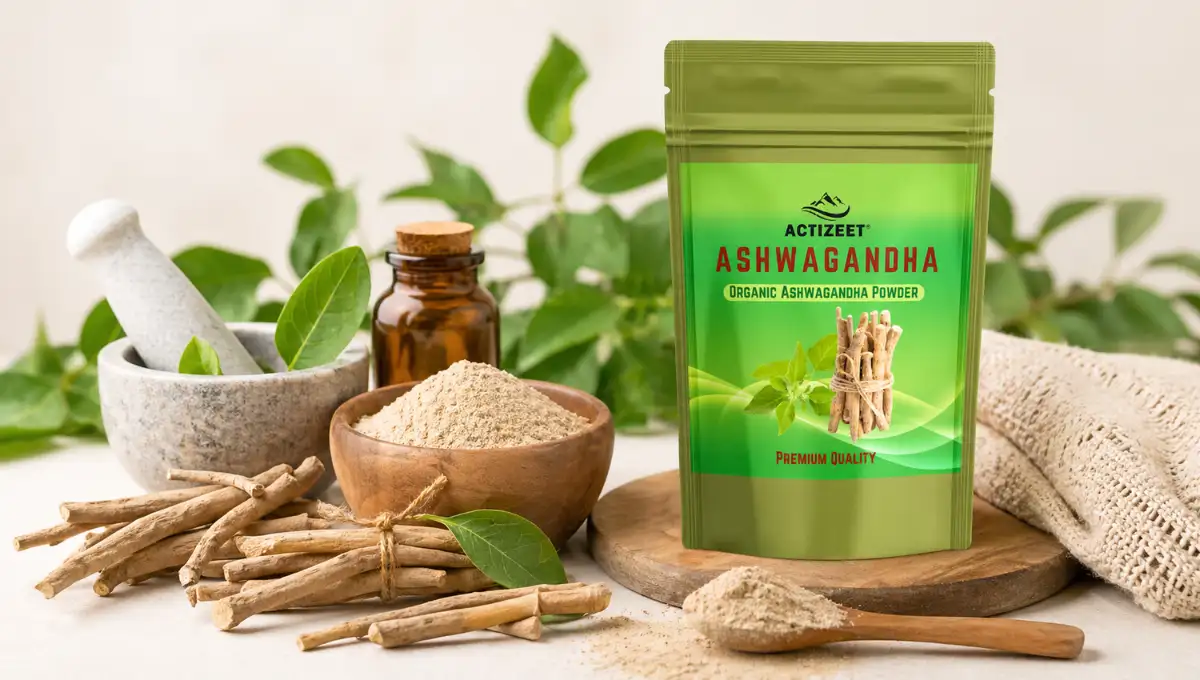
When it comes to realizing the full nutritional value of ashwagandha powder, the quality of your source makes all the difference. ACTIZEET® Ashwagandha Powder is crafted from organically grown, pure Withania somnifera roots — with no fillers, no artificial additives, and no compromise on potency.
What sets ACTIZEET® apart:
- 100% pure root powder — no leaf blending, no dilution
- Organically cultivated to maximize withanolide concentration
- Minimally processed to preserve volatile bioactive compounds
- Rigorously tested for heavy metals, microbial safety, and potency
- Traceable from farm to shelf — complete supply chain transparency
Whether you stir it into your morning smoothie, blend it into golden milk, or use it as part of your pre-workout routine, ACTIZEET® Ashwagandha Powder delivers the full nutritional and adaptogenic potential that this ancient herb is known for.
Safety, Dosage, and Possible Side Effects
Ashwagandha has an excellent safety record across thousands of years of traditional use and a growing body of clinical research. Most people tolerate it well at standard doses.
Recommended dosage: Most studies use between 300 mg and 600 mg of standardized ashwagandha root extract per day. For pure powder, a half to one teaspoon (approximately 1 to 2 grams) daily is a common traditional dose.
Possible side effects: At high doses, some individuals may experience mild digestive discomfort, drowsiness, or loose stools. These effects are typically dose-dependent and resolve with dosage adjustment.
Who should avoid it: Ashwagandha is not recommended during pregnancy due to its potential uterine-stimulating properties. It may also interact with sedative medications, thyroid drugs, and immunosuppressants. Always consult your healthcare provider if you have a pre-existing medical condition.
Frequently Asked Questions About the Nutritional Value of Ashwagandha Powder
Is ashwagandha powder a good source of protein?
Ashwagandha contains about 3.9 grams of protein per 100g, but because it is used in small doses (typically 1 to 3 grams per day), its contribution to daily protein intake is minimal. Think of it as a phytonutrient supplement, not a protein source.
Can ashwagandha powder replace other supplements?
Ashwagandha complements other supplements rather than replacing them. It pairs particularly well with magnesium (for stress and sleep), vitamin D (for immunity and mood), and B vitamins (for energy). It is not a substitute for a balanced diet or primary nutritional supplements.
How long does it take to feel the effects of ashwagandha?
Most people begin noticing effects — particularly reduced stress and improved sleep — within two to four weeks of consistent daily use. The full range of benefits, including cognitive improvements and physical performance gains, typically become apparent after six to eight weeks.
Is ashwagandha powder safe for daily use?
Yes, for most healthy adults ashwagandha powder is safe for daily use at standard doses. It has a strong safety profile in both traditional use and clinical settings. Taking occasional breaks (one week off every two to three months) is a common practice among long-term users, though not strictly necessary.
What is the best time to take ashwagandha powder?
There is no universally "best" time. Taking it in the morning supports energy and focus throughout the day. Taking it in the evening leverages its cortisol-lowering and sleep-promoting properties. Many people find consistent timing — same time each day — produces the most reliable results.
Final Thoughts
The nutritional value of ashwagandha powder is genuinely multifaceted. Beyond the conventional vitamins and minerals it contains, ashwagandha delivers a unique constellation of bioactive compounds — withanolides, alkaloids, saponins, and antioxidant enzymes — that work together to support stress resilience, cognitive function, physical performance, immune health, and hormonal balance.
What sets this ancient herb apart is that its benefits are not theoretical. They are backed by a growing body of peer-reviewed research and validated by millennia of traditional use. And unlike many supplements that target a single pathway, ashwagandha works systemically — supporting the entire body's ability to adapt, recover, and thrive.
Choosing a high-quality, pure product is the single most important step you can take to access those benefits reliably. That is where ACTIZEET® comes in.
References & Further Reading
-
NCBI / PMC — Extraction of Bioactive Compounds From Withania somnifera: Nutritional Composition and Potential Application in the Food Industry.
https://www.ncbi.nlm.nih.gov/pmc/articles/PMC12048197/ -
Wiley / eFood — Functional, Nutraceutical, and Health-Endorsing Perspectives of Ashwagandha (Arshad et al., 2025).
https://iadns.onlinelibrary.wiley.com/doi/10.1002/efd2.70061 -
Healthline — 9 Proven Health Benefits of Ashwagandha.
https://www.healthline.com/nutrition/ashwagandha