Processing Methods That Affect Purity
Sun Drying vs Controlled Drying
Traditional sun drying can be effective but only when done hygienically. Poor sun drying may cause:
- Microbial contamination
- Loss of active compounds
Controlled low-temperature drying preserves:
- Natural oils
- Flavonoids
- Nutritional integrity
Premium brands use controlled drying rather than open-air exposure.
Grinding and Sieving Standards
Pure lemon peel powder undergoes:
- Multiple grinding stages
- Fine sieving for uniformity
Low-quality powders skip this step, resulting in uneven texture and reduced usability.
Common Adulteration Practices in the Indian Market
Being aware of common tricks helps you avoid them.
Artificial Color Addition
Some sellers add food color to make the powder appear fresh and vibrant. This is especially common in very cheap products.
Mixing with Lemon Pulp or Waste Material
Pure lemon peel powder should be made from the outer rind only. Some manufacturers mix:
- Lemon pulp residue
- Citrus waste powder
This reduces effectiveness and quality.
Added Citric Acid
Citric acid is cheap and enhances sourness, but it is not the same as natural lemon peel compounds. Its presence changes taste and effects.
Packaging Quality as a Purity Indicator
Good packaging protects purity.
Look for:
- Airtight, resealable pouches
- Food-grade material
- Light-protective design
Poor packaging may allow moisture entry, leading to clumping, spoilage, and reduced shelf life.
Certifications and Trust Signals to Look For
While lemon peel powder is a natural product, reliable brands often follow quality standards.
Look for:
Lack of basic details is a red flag.
How Price Reflects Purity
Extremely low-priced lemon peel powder often compromises:
- Raw material quality
- Processing hygiene
- Storage standards
Pure lemon peel powder is affordable in India, but it cannot be unrealistically cheap. Reasonable pricing usually reflects better sourcing and safety checks.
Homemade Lemon Peel Powder vs Store-Bought
Homemade lemon peel powder may seem appealing but has limitations.
Homemade challenges:
- Uncertain pesticide residue removal
- Inconsistent drying
- Short shelf life
- Risk of contamination
Store-bought powder from a trusted brand offers:
- Better hygiene
- Consistency
- Longer shelf life
- Clear usage guidance
How ACTIZEET Ensures Pure Lemon Peel Powder
ACTIZEET follows a quality-first approach that aligns with Indian wellness traditions and modern safety expectations.
ACTIZEET Lemon Peel Powder is:
- Made from carefully selected lemon peels
- Processed under hygienic conditions
- Free from artificial additives and fillers
- Finely milled for smooth texture
- Suitable for internal and external use
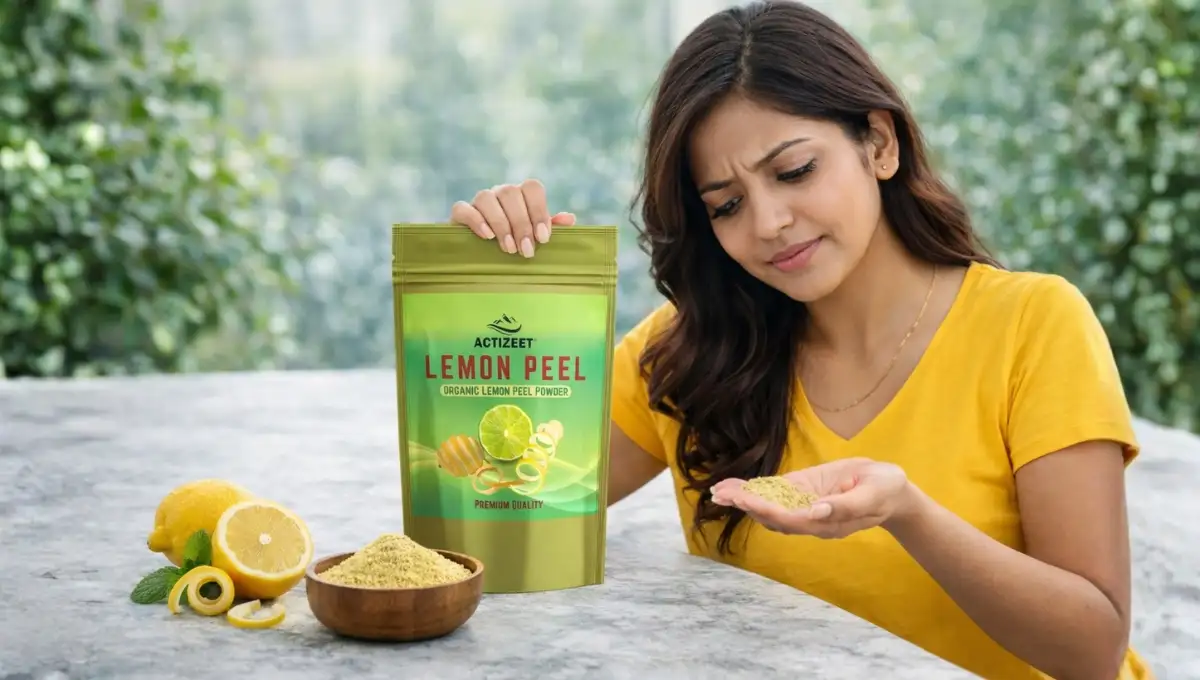
For customers searching for how to identify pure lemon peel powder, ACTIZEET provides transparency and trust.
Storage Tips to Maintain Purity After Purchase
Even pure powder can degrade if stored incorrectly.
Best storage practices:
- Keep in a cool, dry place
- Close the pouch tightly after use
- Avoid moisture exposure
- Do not use wet spoons
Proper storage preserves aroma, texture, and effectiveness.
Signs Your Lemon Peel Powder Has Gone Bad
Discard the product if you notice:
- Foul or moldy smell
- Clumping due to moisture
- Change in color
- Bitter or unpleasant taste
Using spoiled powder can cause irritation or digestive discomfort.
Frequently Asked Buyer Concerns
Is organic labeling necessary?
Organic certification is beneficial but not mandatory. Processing hygiene and purity matter more.
Can lemon peel powder be used daily?
Yes, when pure and used in moderation as per guidance.
Is lemon peel powder safe for children?
Consult a healthcare professional before giving to children.
Final Thoughts
Knowing how to identify pure lemon peel powder empowers you to make safer, smarter purchasing decisions. In India’s growing natural wellness market, not all products are created equal. Purity depends on sourcing, processing, packaging, and brand integrity.
By checking color, aroma, texture, labeling, and trust signals, you can avoid adulterated products and enjoy the true benefits of lemon peel powder. Choosing a reliable brand like ACTIZEET ensures that what you consume or apply aligns with both traditional wisdom and modern quality standards.
When purity comes first, results follow naturally.